







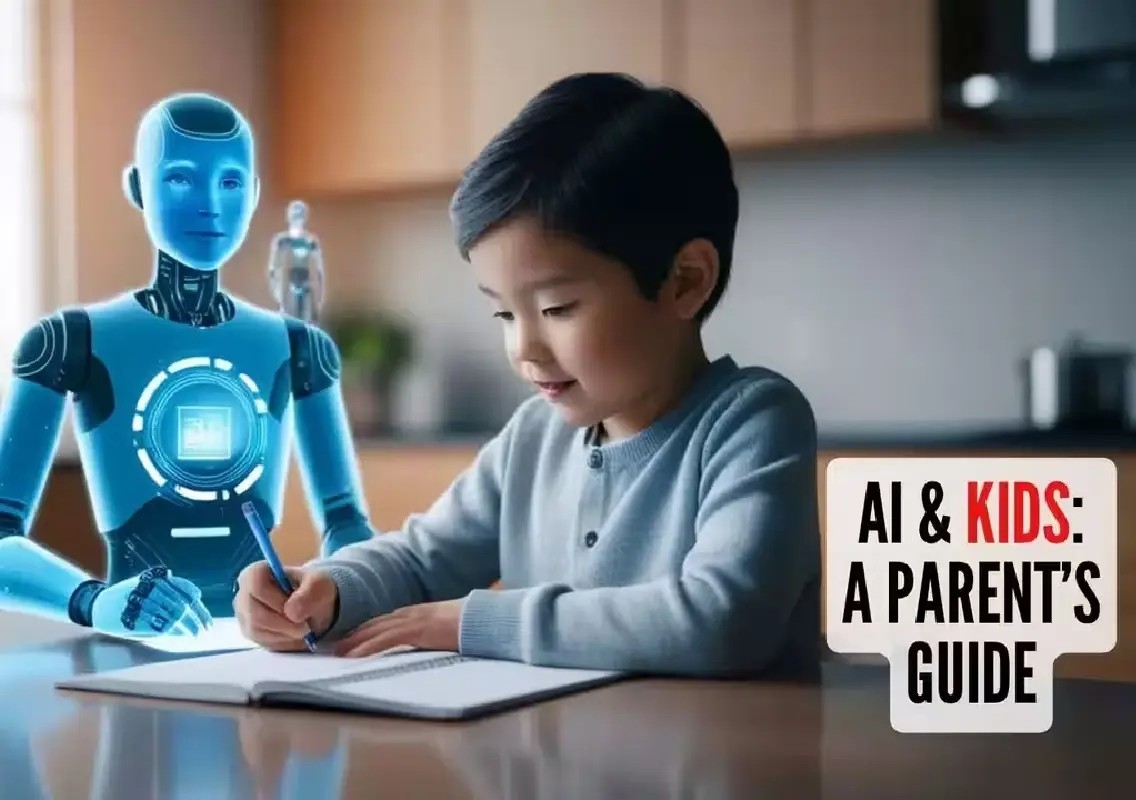


A father’s observation about his seven-year-old daughter’s growing reliance on artificial intelligence (AI) has sparked an online conversation about how children learn and whether instant answers could replace the valuable process of discovering things together.
LinkedIn user Karan Dhundia shared that his daughter believes AI knows everything. When her parents do not have an answer, her first instinct is to ask AI rather than suggest finding the answer together.
Dhundia admitted that the habit makes him laugh, while acknowledging that AI may indeed know more facts than an individual parent.
The answer is not always the most important part
According to Dhundia, the real concern is not whether AI can provide correct information, but what children may miss when answers arrive instantly.
He said children need opportunities to pause, make guesses and look for answers alongside their parents. The process of struggling with a question can itself become an important part of learning.
For a child, watching adults admit that they do not know something and then work towards an answer can demonstrate curiosity, patience and problem-solving.
AI cannot replace human learning moments
Dhundia also drew a comparison with the workplace, saying people increasingly turn to tools for quick answers instead of asking colleagues.
While technology can make information available faster, he argued that the process of asking another person can create opportunities for conversation, mentoring and learning.
He said AI can provide his daughter with an answer, but it cannot recreate the experience of watching two adults face uncertainty and work out a solution together.
Learning to be comfortable with uncertainty
Dhundia believes this human element should not be automated away, either at home or at work.
He added that some of the best leaders he knows are not necessarily those who have the quickest answers, but those who are willing to sit with uncertainty openly in front of their teams.
His observation has therefore raised a broader question for parents and educators: in an age of instant AI answers, how can children continue to develop the patience and curiosity to discover answers for themselves?