







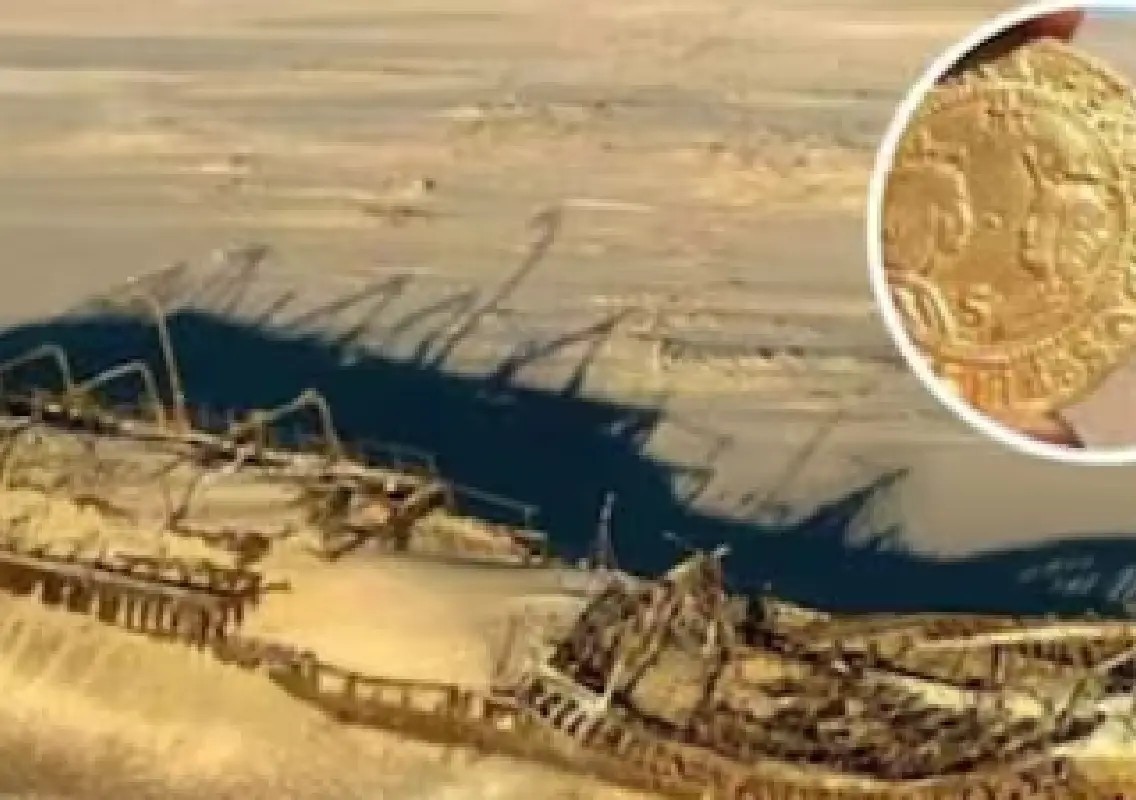


One of Africa‘s most remarkable archaeological discoveries continues to captivate historians and researchers after a 16th-century Portuguese shipwreck was found buried beneath the sands of Namibia.
The vessel, believed to be the Bom Jesus (“Good Jesus”), was accidentally uncovered in 2008 during diamond mining operations near Namibia’s coast. Hidden for nearly 500 years, the ship has provided an extraordinary glimpse into the global trade networks of the Renaissance era.
Treasure hidden beneath the sand
When miners drained seawater from a section of land near Oranjemund, they unexpectedly revealed the remains of a large wooden ship.
Archaeologists later uncovered a remarkable collection of artefacts, including more than 2,000 gold and silver coins, around 1,845 copper ingots weighing nearly 17 tonnes, and 105 elephant tusks.
DNA analysis traced the ivory to West Africa, offering valuable insights into historic trade routes that connected Europe, Africa and Asia.
The excellent state of preservation surprised researchers, making the wreck one of the most significant maritime archaeological finds on the continent.
A voyage that never reached India
Experts identified the vessel as a Portuguese carrack, a large ocean-going ship commonly used during the Age of Exploration.
Historical records suggest the Bom Jesus departed Lisbon on March 7, 1533, bound for India as part of Portugal’s expanding maritime trade network.
Researchers believe the ship was caught in a violent storm off the Namibian coast and driven ashore, where it sank along with its valuable cargo.
Mystery of the missing crew
Despite the discovery of the ship and its treasures, the fate of its crew remains unknown.
Historians estimate that up to 200 people may have been aboard the vessel, yet no human remains have been found. Researchers continue to wonder whether some crew members survived and reached the remote coastline.
Today, many artefacts from the wreck are displayed at the Jasper House Museum in Oranjemund, helping preserve a fascinating chapter of maritime history for future generations.