







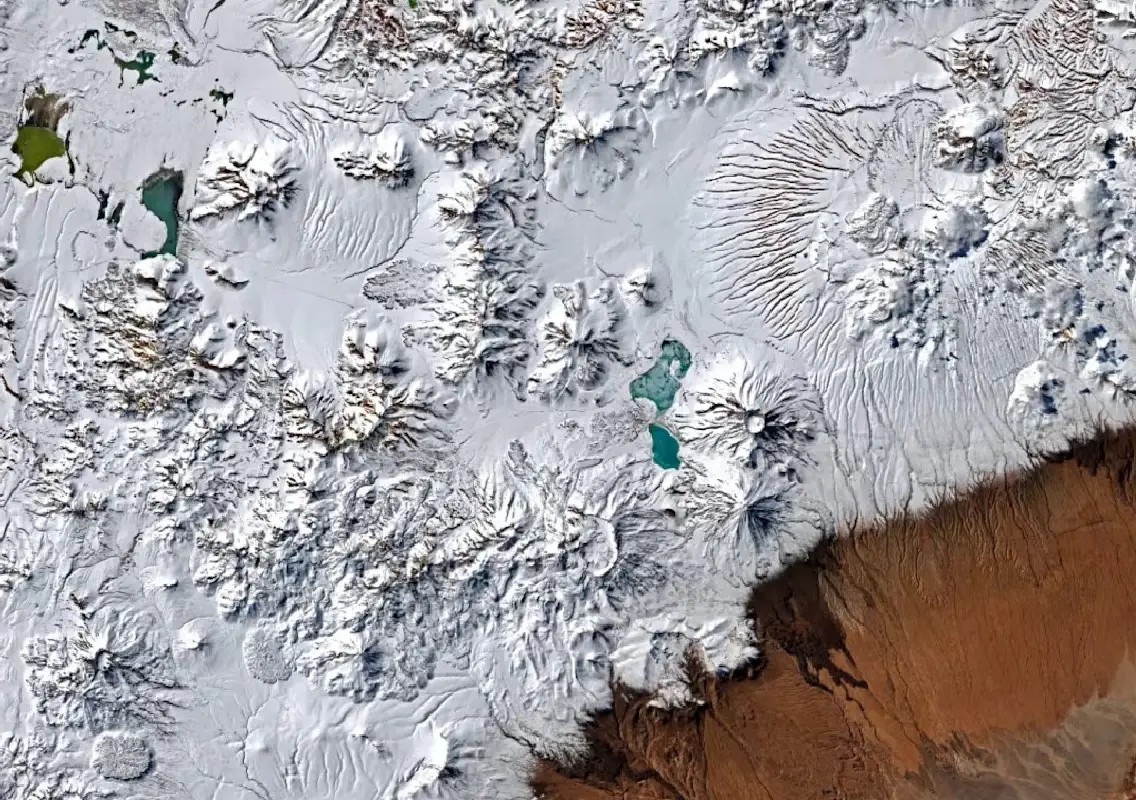


One of the driest places on Earth has witnessed an extraordinary change as snow covered large parts of Chile’s Atacama Desert during a series of unusual winter storms in August.
NASA satellite images captured vast stretches of the normally barren landscape covered in white, creating a striking contrast across northern Chile.
Snow spreads across the dry desert
The unusual event was not simply about snowfall in a desert. What made it remarkable was how far the weather system travelled.
The snow first affected high-altitude areas of the Andes, including the Chajnantor plateau, home to the Atacama Large Millimeter/submillimeter Array (ALMA), a major astronomical observatory. Heavy snow and strong winds forced the facility to suspend operations and place its antennas in protective mode.
A second storm later in August pushed the snow much farther west, across the heart of the Atacama and towards the Pacific coast near Antofagasta.
The Atacama Desert is renowned for its extreme dryness, with some areas receiving almost no rainfall. Its Mars-like terrain has even been used to test spacecraft and scientific instruments.
What caused the rare weather?
Scientists attribute the unusual conditions to a combination of atmospheric factors.
A pocket of low pressure known as a cutoff low developed after separating from the main jet stream. At the same time, unusually large amounts of moisture were present near the Chilean coast.
The combination of cold air and moisture allowed rain and snow to reach areas that normally remain exceptionally dry.
The developing El Niño conditions also played a role by weakening the subtropical Pacific high-pressure system that usually helps maintain the Atacama’s arid climate.
The rainfall was equally extraordinary. In Taltal, nearly 40 mm of rain fell over three days — around 10 times the city’s average annual rainfall.
A rare sight, but not impossible
Snow in deserts is unusual but not unheard of. Northern Saudi Arabia also experienced snowfall in December 2025, while the Atacama itself recorded another snowstorm in June that year.
However, the 2026 event stands out because of its remarkable reach.
For a landscape famous for almost complete dryness, the sight of snow stretching across the desert offers a striking reminder of how dramatically unusual atmospheric conditions can transform even the planet’s most extreme environments.