







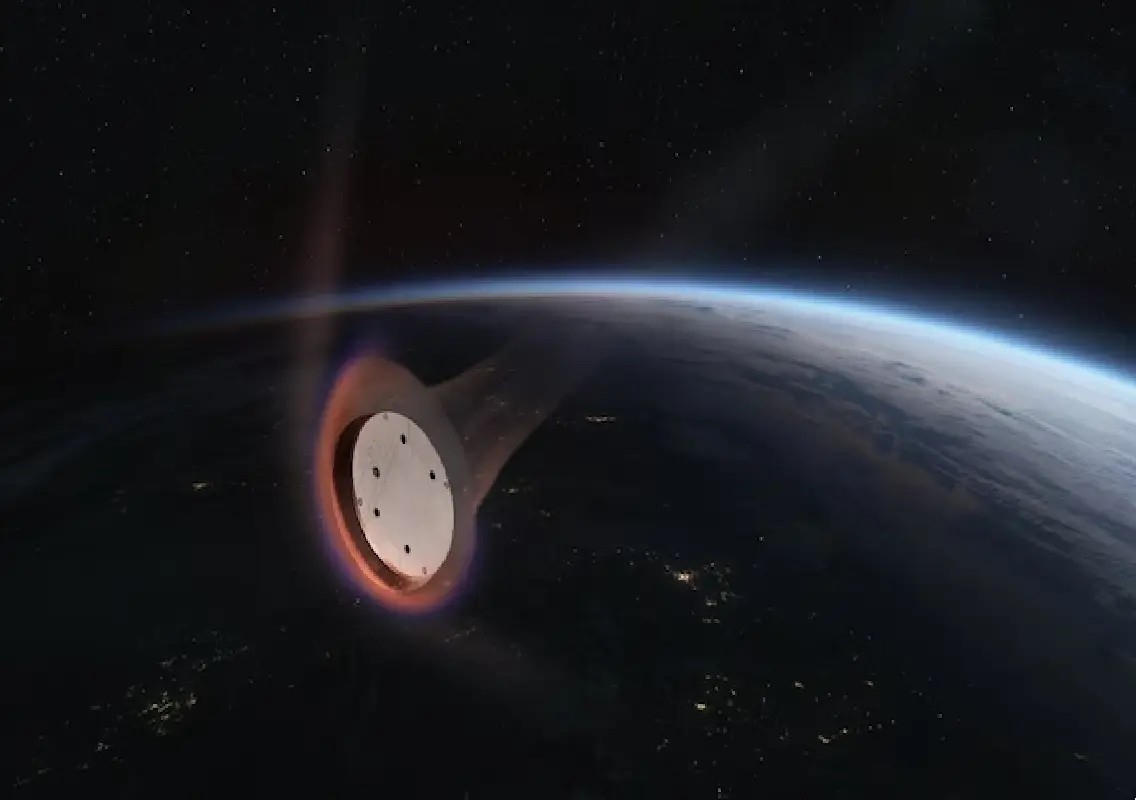


Florida: SpaceX has successfully launched the first test flight of its new Starfall re-entry capsule, a mission that has attracted widespread attention due to the company’s unusual secrecy surrounding the spacecraft and its objectives.
The spacecraft was launched aboard a Falcon 9 rocket from the Cape Canaveral Space Force Station on June 23.
Unlike most of SpaceX’s high-profile missions, the company cut its live broadcast shortly after launch and provided very limited information about the spacecraft, confirming only that Starfall has been designed to return cargo from space.
Designed to bring cargo back from orbit
According to the information released by the company, Starfall is a reusable re-entry vehicle intended to provide “affordable, routine access to the microgravity environment for scientific research and in-space manufacturing.”
After completing its mission in orbit, the capsule is expected to re-enter Earth’s atmosphere and splash down in the Pacific Ocean, where it will be recovered.
The spacecraft has been designed to return up to 1,000 kilograms of cargo to Earth.
Unlike the SpaceX Dragon capsule, which transports astronauts and supplies to the International Space Station, Starfall is built exclusively to bring payloads back from orbit.
The spacecraft uses a carbon-fibre heat shield to withstand the intense temperatures generated during atmospheric re-entry before deploying parachutes for a controlled ocean landing.
Secrecy fuels speculation
SpaceX has disclosed little else about the mission, including the payload, customers or the specific objectives of the demonstration flight.
The company has also refrained from releasing detailed photographs of the capsule or indicating when the spacecraft is expected to return to Earth.
The lack of information has made Starfall one of SpaceX’s most closely watched missions this year, with industry observers and space enthusiasts attempting to piece together clues from regulatory filings and limited public statements.
While the secrecy has fuelled speculation online, SpaceX has not suggested that the mission has any military objective.
Potential role in space manufacturing
Experts believe the limited disclosures may reflect the commercially sensitive nature of a spacecraft that could become central to the rapidly growing in-space manufacturing industry.
Products such as advanced pharmaceuticals, fibre optics, semiconductor materials and specialised alloys can benefit from manufacturing in the microgravity environment of space.
However, these products need reliable and cost-effective methods to return them safely to Earth for research and commercial applications.
If the maiden demonstration proves successful, Starfall could position SpaceX as a major player in the emerging market for routine cargo return missions by offering a lower-cost and more frequent alternative for transporting materials from orbit.
A significant new spacecraft
The Starfall mission represents another step in SpaceX’s efforts to expand its portfolio of space transportation systems beyond crewed missions and satellite launches.
The company, founded by Elon Musk, has revolutionised the commercial space industry through reusable rockets and spacecraft.
However, much about Starfall remains known only to the company itself, making it one of the most secretive projects undertaken by SpaceX in recent years.
Industry experts say the mission’s eventual outcome and the details revealed after its recovery could provide valuable insights into the future of commercial space manufacturing and cargo return services.