







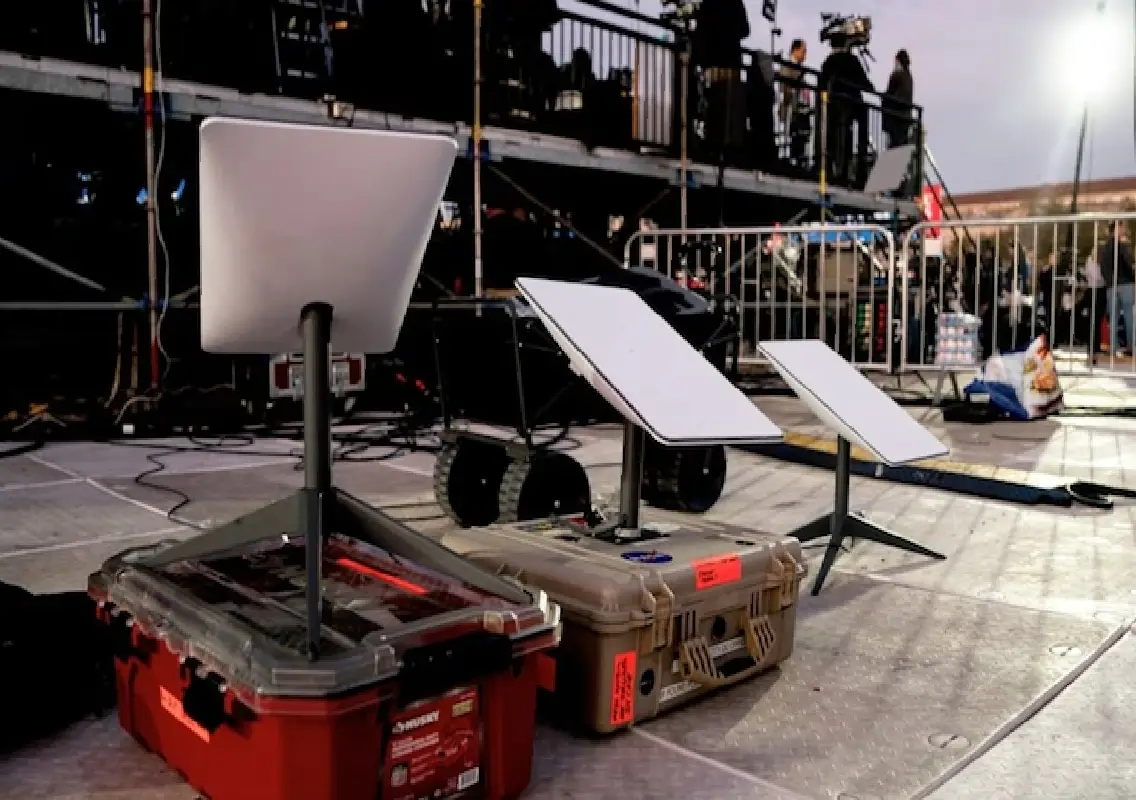


Elon Musk-led SpaceX has begun offering free Starlink satellite internet services in Iran, as the country grapples with deadly nationwide protests and a prolonged internet shutdown imposed by authorities. The move has drawn global attention, highlighting how satellite-based connectivity is increasingly shaping geopolitics, digital rights, and protest movements in authoritarian states.
According to Ahmad Ahmadian, executive director of the US-based group Holistic Resilience, SpaceX has waived the Starlink subscription fee for users inside Iran. This means individuals who already possess Starlink receivers can now access satellite internet without paying for the service. A person familiar with Starlink’s operations also confirmed the development, speaking on condition of anonymity as the information has not been officially announced.
SpaceX did not respond to media queries seeking comment on the matter.
Internet blackout amid escalating unrest
Tehran Iran has been under an extensive internet blackout for five consecutive days, according to NetBlocks, an organisation that monitors global internet connectivity. The shutdown has cut off millions of Iranians from access to messaging platforms, social media, and international news at a time when unrest across the country has intensified sharply.
Over the past two weeks, hundreds of thousands of people have reportedly taken to the streets demanding the downfall of Supreme Leader Ayatollah Ali Khamenei. Activist groups and rights organisations have warned that the death toll from the violent crackdown may run into the thousands, although independent verification has been difficult due to the communications blackout.
The Iranian government has defended the restrictions, arguing that they are necessary to maintain public order and prevent what it describes as foreign-backed unrest.
Starlink as a tool of soft power
Tehran Starlink’s presence in Iran, despite being officially banned, underscores how the satellite internet service has emerged as a tool of soft power for both the United States government and Elon Musk, the world’s richest person. US President Donald Trump has openly urged Iranians to continue protesting and has repeatedly criticised Tehran’s handling of the unrest.
Trump earlier called on Starlink to help restore communications in Iran. Speaking to reporters aboard Air Force One on Sunday, he said, “We may speak to Elon because, as you know, he’s very good at that kind of thing. He’s got a very good company, so we may speak to Elon Musk.” Trump added that he intended to call Musk shortly after speaking to the press.
The free Starlink service is seen by observers as aligning with Washington’s broader push to support protesters by enabling access to uncensored information and communication tools.
Thousands of Starlink units inside Iran
Tehran While Starlink receivers are illegal in Iran, many have reportedly been smuggled into the country despite significant risks. Ahmadian estimated that more than 50,000 Starlink units are currently available within Iran. These devices allow users to bypass state-controlled internet infrastructure by directly connecting to SpaceX’s satellite network.
However, using Starlink in Iran comes with serious dangers. Amir Rashidi, director of digital rights at the Miaan Group, said Iranian security forces are actively attempting to jam Starlink signals and identify users. “The military is hunting down Starlink users,” Rashidi said, confirming that free access to the service has indeed been enabled.
Iran’s state-run IRIB News reported on Tuesday that authorities had seized what it described as “a large consignment of electronic equipment used for espionage and sabotage”. Footage broadcast by the channel appeared to show Starlink receivers among the seized items.
A familiar role for Starlink in conflicts
Tehran This is not the first time Starlink has been deployed in politically sensitive or conflict-ridden regions. Since Russia’s invasion of Ukraine, Starlink satellites have provided critical internet connectivity for Ukrainian civilians and military units, particularly after conventional networks were damaged or destroyed.
More recently, in January, Starlink announced it was offering free broadband service to Venezuelan citizens through February 3, following political turmoil and US actions against President Nicolás Maduro. These interventions have placed Musk and SpaceX at the centre of global debates about the role of private companies in international crises.
Analysts note that while Starlink can empower civilians and protesters by restoring connectivity, it also raises questions about accountability, sovereignty, and the concentration of influence in the hands of private tech leaders.
Risks and implications for protesters
Tehran For protesters and activists inside Iran, access to Starlink could be a lifeline, enabling coordination, documentation of abuses, and communication with the outside world. At the same time, experts warn that possession of Starlink equipment could expose users to severe punishment if caught.
Despite these risks, demand for uncensored internet access appears to be growing as the unrest continues and authorities tighten control over traditional networks.
Conclusion
Tehran SpaceX’s decision to offer free Starlink internet service in Iran marks a significant moment in the intersection of technology, protest movements, and global politics. As Iran remains largely cut off from the global internet and protests show no sign of abating, satellite connectivity has emerged as both a symbol of resistance and a new battleground. Whether Starlink can meaningfully alter the course of events on the ground remains uncertain, but its role in Iran has once again highlighted how digital access has become central to modern struggles for power and freedom.