







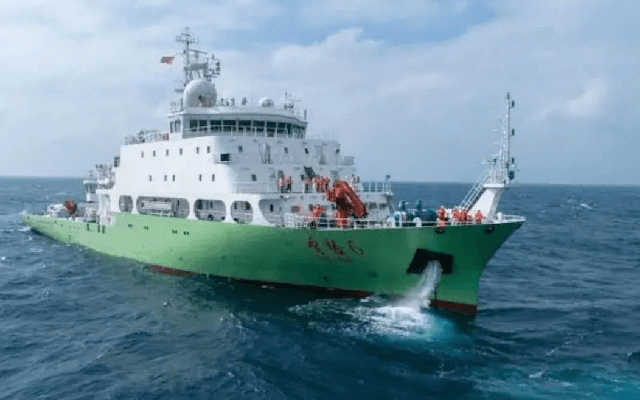


Sri Lanka has reportedly decided to lift its ban on foreign research ships starting next year, following concerns raised by India and the US over the frequent docking requests from advanced Chinese surveillance vessels. The decision was communicated by Sri Lankan Foreign Minister Ali Sabry during his visit to NHK World Japan.
The ban, imposed earlier this year in response to security worries voiced by New Delhi about potential espionage activities, specifically targeted Chinese research vessels seeking port access in Sri Lanka. Despite a recent exception made for one Chinese vessel, Sri Lanka had maintained the ban until now.
Sabry emphasized the need for consistent policies across all countries and expressed his government’s stance of impartiality in disputes involving other nations, as reported by NHK World Japan. He confirmed that the moratorium on foreign research vessels will be in effect until January next year, after which Sri Lanka plans to fully rescind the ban.
Recent instances included two Chinese ships docking in Sri Lanka, one in need of replenishment and another for scientific research purposes. The latter, Chinese research ship Shi Yan 6, arrived in Colombo in October 2023 for geophysical research in collaboration with Sri Lanka’s National Aquatic Resources Research and Development Agency (NARA). The docking of these vessels has drawn scrutiny and concern from both the US and India.
Acknowledging Sri Lanka’s strategic position in the Indian Ocean and its importance in global maritime traffic, Sabry also expressed gratitude to Japan for its assistance in providing a sonar-equipped ship. This vessel will enable Sri Lanka to conduct independent surveys, gather data, and explore its maritime resources transparently.
The decision to lift the ban comes amidst Sri Lanka’s ongoing economic challenges, including a severe financial crisis exacerbated by a shortage of foreign exchange reserves since 2022. Sri Lanka views both India and China as crucial partners in its efforts to address external debt restructuring.
In summary, Sri Lanka’s decision marks a shift in its policy towards foreign research vessels, balancing geopolitical concerns with the need for maritime research and economic cooperation.