


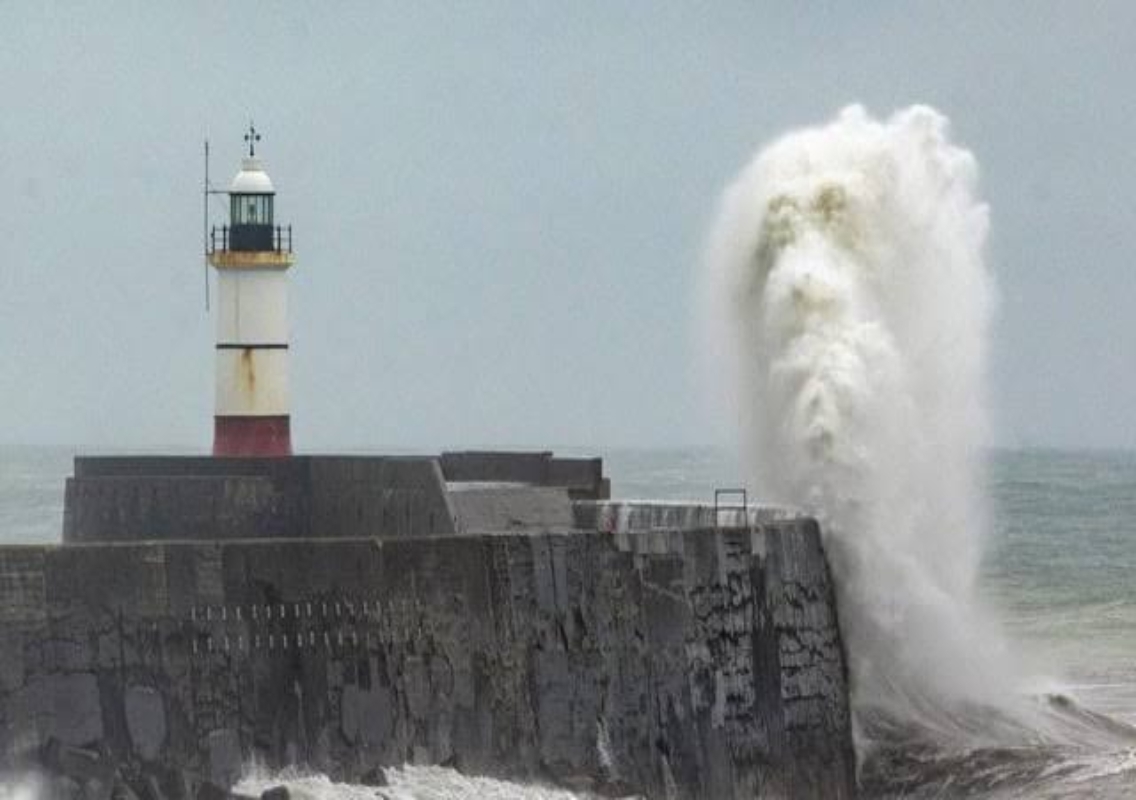


London: Storm Austen has brought powerful winds, widespread power cuts and travel disruption across parts of the United Kingdom, with gusts reaching 84 mph (135 kmph) at Jersey Airport. More than 18,000 homes in parts of England and Wales were without electricity, while millions of people remained under a yellow weather warning for strong winds.

The storm has also damaged coastal infrastructure, disrupted railway services and created hazardous conditions for travellers. In Brighton, a section of the historic West Pier collapsed into the sea after large waves battered the structure.
Rail operators have warned passengers of delays caused by fallen trees and adverse weather conditions. Disruption has been reported on several routes in Devon and Cornwall, while Network Rail Scotland has announced that trains will operate at reduced speeds along parts of the West Coast and East Coast main lines.
The unsettled weather is also expected to continue into the weekend. A separate storm, named Boelo, is forecast to bring further strong winds to parts of the UK on Saturday, with an amber wind warning scheduled to come into effect across several regions.
Storm Austen causes widespread power cuts
Strong winds associated with Storm Austen have disrupted electricity supplies across parts of England and Wales, leaving more than 18,000 homes without power, according to the latest reported figures.
The outages have added to the difficulties faced by communities as emergency and utility teams respond to the storm. Powerful gusts can damage overhead power lines, bring down trees and interfere with electricity infrastructure, potentially leaving households without essential services.
Jersey Airport recorded wind gusts of 84 mph, equivalent to approximately 135 kmph. The measurement highlights the strength of the storm as it moved across the region.
Millions of people remained covered by a yellow weather warning for wind. Such warnings indicate that potentially disruptive weather is expected and that people should remain alert to changing conditions.
Residents have been advised to take care around exposed coastal areas and avoid unnecessary risks during periods of particularly strong winds. Fallen branches, loose outdoor objects and damaged structures can pose hazards even after the strongest gusts have passed.
The extent of the disruption will depend on how conditions develop and how quickly electricity providers can restore supplies to affected properties.
Brighton’s historic West Pier damaged by powerful waves
One of the most visible consequences of Storm Austen has been the collapse of a section of Brighton’s iconic West Pier into the sea.
The historic structure, located on the Sussex coast, has long been exposed to the effects of coastal weather and the sea. Large waves generated during the storm battered the pier, causing part of the remaining structure to collapse.
The incident highlights the risks posed by a combination of strong winds and rough seas along the UK coastline. Coastal structures can face considerable pressure when powerful waves strike them repeatedly, particularly during severe weather.
Authorities and visitors are expected to exercise caution around exposed seafront areas while rough conditions persist. Strong winds and waves can make promenades, beaches and coastal paths dangerous, even when conditions appear manageable from a distance.
The damage at Brighton comes as communities along the coast contend with difficult weather and transport disruption. The storm’s effects are not limited to inland power networks and railways, with coastal infrastructure also vulnerable to the conditions.
Fallen trees disrupt train services in England and Scotland
Rail travel has also been affected by Storm Austen, with fallen trees obstructing railway lines in parts of southwest England.
Great Western Railway warned passengers of disruption on several routes in Devon and Cornwall because of trees coming down on railway lines. Such incidents can require safety inspections, clearance work and repairs before normal services can resume.
The disruption may result in delays, cancellations and changes to planned journeys. Passengers travelling through affected areas have been advised to check the latest service information before leaving home.
Network Rail Scotland has also warned that trains will operate at reduced speeds along sections of the West Coast and East Coast main lines. Speed restrictions are a precaution used during severe weather to reduce risks to railway operations.
Strong winds can affect railway infrastructure through fallen trees, flying debris and damage to equipment. Even when tracks remain clear, operators may need to slow trains until conditions improve or inspections confirm that routes are safe.
The railway problems are adding to broader travel disruption caused by the storm, with passengers facing uncertainty as operators respond to changing weather conditions.
Storm Boelo forecast to bring another spell of strong winds
The UK is preparing for another period of severe weather, with a separate storm named Boelo forecast to bring strong winds on Saturday.
The forecast areas include Scotland, Northern Ireland, northwest England and northeast England. The arrival of a second storm could extend the period of difficult weather and increase the pressure on transport networks and local emergency services.
An amber wind warning is scheduled to begin at 9 pm on Saturday, October 24, and remain in effect until Sunday evening across much of Scotland, parts of Northern Ireland and northern England.
Amber warnings indicate a greater likelihood of significant disruption and potentially dangerous conditions than yellow warnings. People in affected areas may need to adjust travel plans and take additional precautions, particularly in exposed locations.
The forecast underlines the importance of monitoring official weather updates as the situation develops. Conditions can vary considerably between regions, and the timing and severity of the strongest winds may differ across the warning area.
Residents urged to prepare for continuing disruption
The succession of storms is expected to keep weather-related risks high across parts of the UK through the weekend. Storm Austen has already caused power outages, coastal damage and railway disruption, while Storm Boelo is forecast to bring further strong winds to several regions.
People in areas covered by weather warnings should secure loose outdoor items, remain cautious around trees and damaged structures, and avoid exposed coastal locations during rough seas. Motorists should be prepared for difficult driving conditions, while rail passengers should check for service updates before travelling.
Households experiencing power cuts should follow advice from their electricity provider and avoid approaching fallen power lines, which can remain dangerous even when they appear inactive.
The immediate priority remains the restoration of electricity supplies, the clearance of railway lines and the assessment of damage caused by the storm. With another spell of strong winds forecast, residents and travellers are likely to face continued disruption as authorities monitor conditions and prepare for further adverse weather.