







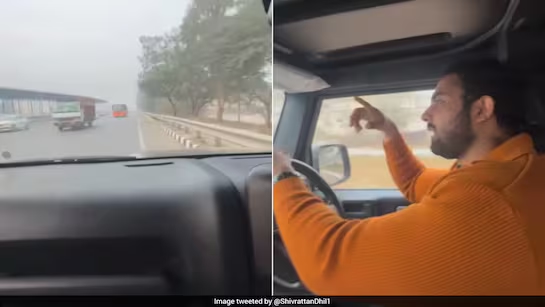


A viral video showing a man openly flouting traffic rules while driving a Mahindra Thar has triggered widespread outrage on social media, with users demanding strict action against what they describe as a dangerous display of entitlement on Indian roads.
In the self-recorded clip, the driver is seen driving on the wrong side of the road and boasting that owning a Thar gives him immunity from legal consequences. He claims the “biggest advantage” of the vehicle is that “no one will bother you even if you drive on the wrong side”, remarks that have alarmed viewers and road safety advocates alike.
Social media calls for action
Although the exact location of the video has not been confirmed, several users have tagged traffic authorities, including the Delhi Traffic Police, urging them to identify the driver and suspend his driving licence.
Sharing the clip on X, user Rattan Dhillon criticised what he termed a growing “Thar entitlement mindset”, saying reckless behaviour on roads has become an epidemic. “How does buying a vehicle suddenly delete common sense? It’s honestly shocking and dangerous,” he wrote.
Netizens slam ‘entitlement on wheels’
The video quickly gained traction, with thousands of comments condemning the act. Many users stressed that the issue lies not with the vehicle but with irresponsible drivers. “The problem isn’t the Thar or Scorpio. It’s the entitlement some drivers think comes free with it,” one user commented.
Others called for stricter driving licence norms and tougher enforcement, arguing that such behaviour puts innocent road users at serious risk.
Pattern of past violations
The incident has revived memories of previous cases involving Thar drivers. In December 2025, a driver in Ballabhgarh was fined ₹7,000 for steering his Thar with his feet. In March 2025, another Thar driver in Noida was arrested and fined ₹38,000 for wrong-side driving and ramming multiple vehicles.
Road safety experts say viral glorification of traffic violations normalises dangerous behaviour and underlines the urgent need for consistent enforcement and public accountability.