







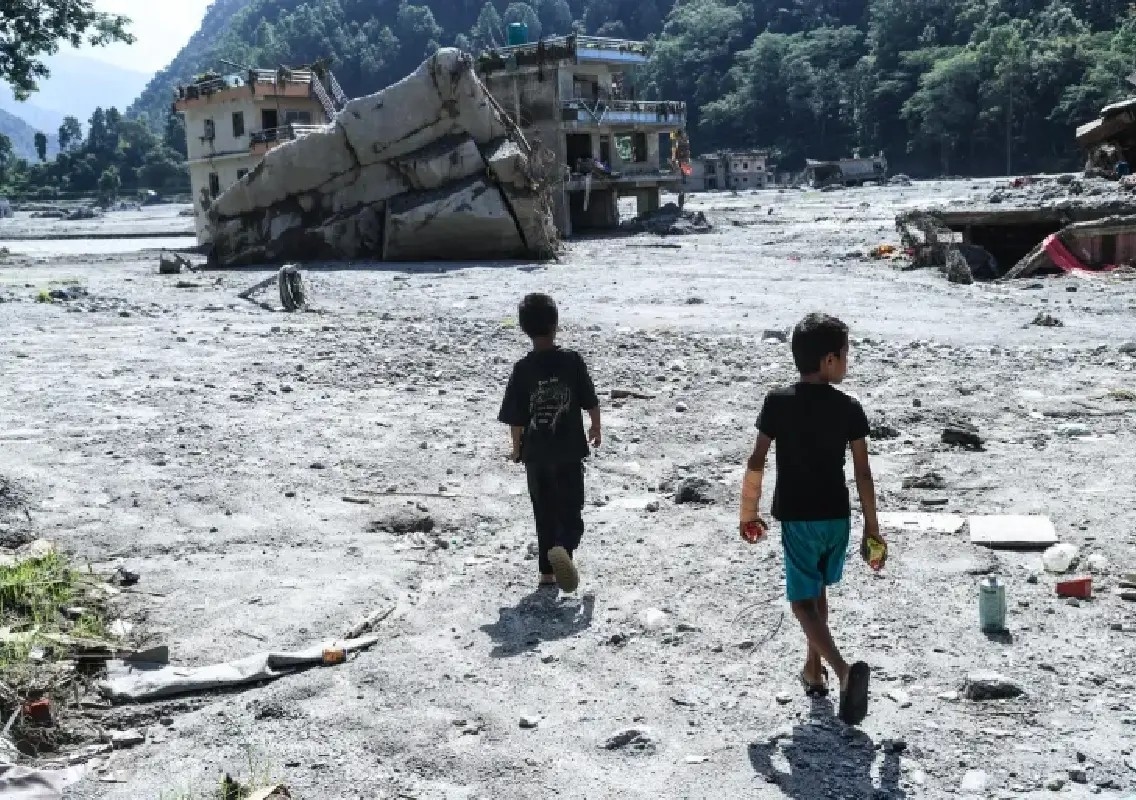


Kathmandu: Three weeks after devastating flash floods swept through parts of Nepal, an estimated 17,000 children require urgent mental health and psychosocial support, UNICEF has said, highlighting the less visible impact of the disaster on young survivors.
The floods affected children who witnessed the loss of loved ones, destruction of homes and schools, displacement and uncertainty over missing family members. UNICEF said many children are experiencing fear, anxiety and grief, with some struggling to speak about what they went through.
Children face an invisible burden
The flash floods struck on August 26 across areas including Rasuwa, Nuwakot and Dhading. The disaster damaged homes, schools, roads, health facilities and essential infrastructure, disrupting the routines that normally provide children with a sense of safety.
UNICEF said 541 unaccompanied and separated children remain at heightened risk and require protection services. The organisation is working with government authorities and partners on family tracing, reunification and alternative family-based care.
Safe spaces help children begin healing
Mental health teams are providing psychological first aid and counselling to children and families in affected communities and displacement sites.
UNICEF and its partners have established 18 child-friendly spaces, including 13 supported by UNICEF, where children can play, learn, express themselves and gradually return to familiar routines. Psychologists, counsellors and frontline workers are also helping identify children who need specialised support.
So far, 18 unaccompanied or separated children have been reunited with their families, while community protection teams are monitoring displacement routes to help prevent trafficking, exploitation and further family separation.
The response underlines that recovery from a disaster is not limited to rebuilding homes and infrastructure. For thousands of children, healing from fear, grief and uncertainty will also require sustained care, safe spaces and the reassurance that they are not alone.