







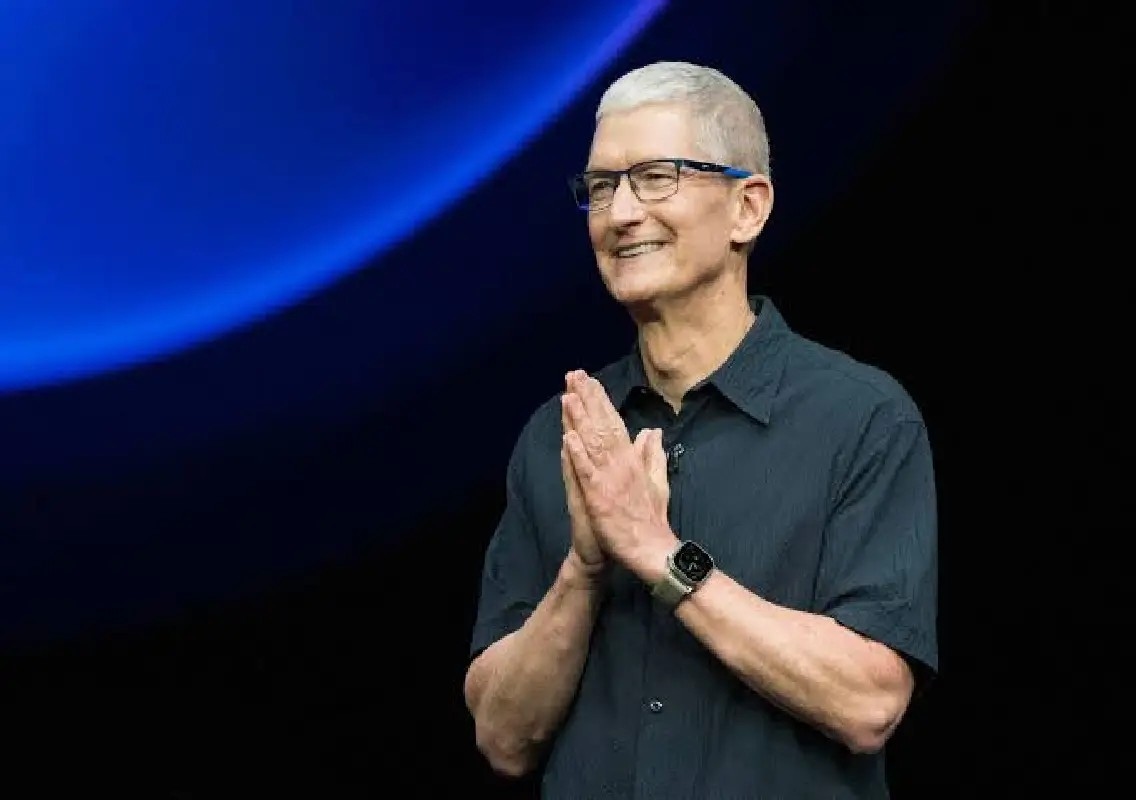


Cupertino: After nearly 15 years at the helm, Tim Cook is set to step down as chief executive officer of Apple on August 31, 2026, bringing an end to one of the most consequential leadership eras in the technology company’s history. John Ternus, Apple’s senior vice president of Hardware Engineering, will take over as CEO from September 1.
Cook became Apple’s CEO on August 24, 2011, after Steve Jobs stepped down because of ill health. Jobs died later that year, leaving Cook to lead the company without its iconic co-founder.
Rather than attempting to replicate Jobs’ product-focused leadership style, Cook built a different version of Apple, centred on operational efficiency, global scale, services, custom silicon and an increasingly integrated ecosystem.
From operations chief to Apple CEO
Cook was already a crucial figure at Apple before becoming its chief executive. He joined the company in 1998 as senior vice president for worldwide operations and played a major role in transforming its supply chain and manufacturing systems.
His expertise in operations became increasingly valuable as Apple expanded its global footprint. The company needed to manage enormous production volumes, coordinate suppliers across multiple countries and deliver products to consumers around the world.
When Cook succeeded Jobs, the transition was closely watched because Jobs had been so closely identified with Apple’s revival and product philosophy.
Cook, however, established his own leadership approach. His tenure focused heavily on execution, financial performance, expanding the ecosystem and developing new recurring revenue streams.
Apple grew dramatically under Cook
The scale of Apple’s growth during Cook’s tenure has been remarkable.
When he became CEO in 2011, Apple was valued at roughly $350 billion, while its annual revenue was about $108 billion. By July 2026, the company’s market capitalisation had reached approximately $5 trillion, while annual revenue had climbed to nearly $400 billion.
The figures demonstrate how significantly Apple expanded during Cook’s leadership.
Much of that growth came from strengthening the existing iPhone business while simultaneously building additional sources of revenue around Apple’s hardware ecosystem.
Cook’s Apple therefore became less dependent on consumers purchasing a new device every year and increasingly benefited from the services and products surrounding those devices.
Services become a major growth engine
One of Cook’s most important strategic achievements was the expansion of Apple’s services business.
Products such as the iPhone, Mac and iPad remained at the centre of Apple’s ecosystem, but services including Apple Music, iCloud, Apple Pay, Apple TV+, Apple Arcade, AppleCare and the App Store became increasingly important to the company’s financial performance.
The Services segment generated $109.1 billion in revenue in the latest fiscal year, providing Apple with a substantial recurring revenue stream.
This was particularly significant as smartphone replacement cycles lengthened and consumers increasingly kept their existing devices for longer periods.
The expansion of services helped Apple monetise its enormous installed base even when customers were not buying new hardware.
Apple Silicon transformed the Mac
Another defining decision during Cook’s tenure was Apple’s move away from Intel processors.
In 2020, Apple announced that it would transition its Mac computers to processors designed in-house under the Apple Silicon programme. The transition was completed across the Mac range by 2023.
The move gave Apple greater control over the hardware and software powering its computers. Apple Silicon also delivered improvements in performance, battery life and power efficiency.
More importantly, designing its own chips strengthened Apple’s ability to integrate its devices and operating systems. The technology also became an important foundation for Apple’s growing emphasis on on-device artificial intelligence.
The decision represented a major shift in Apple’s computing strategy and demonstrated Cook’s willingness to make long-term investments in areas that could reduce the company’s dependence on external technology suppliers.
Watch and AirPods expand Apple’s ecosystem
Cook’s tenure also saw Apple successfully expand into several categories beyond its traditional computing and smartphone products.
The Apple Watch became a major wearable product, while AirPods developed into another significant business. Both products reinforced Apple’s ecosystem by encouraging customers to remain within the company’s hardware and software environment.
Apple also ventured into mixed reality with the Vision Pro.
However, the Vision Pro has not achieved the same level of commercial success as products such as the iPhone, Apple Watch or AirPods. Since its 2024 launch, the headset has struggled to achieve widespread adoption.
That makes Vision Pro one of the more challenging elements of Cook’s product legacy, particularly when compared with Apple’s strongest category expansions.
Privacy becomes a key part of Apple’s identity
Cook also made privacy a central element of Apple’s public positioning.
Under his leadership, Apple increasingly presented itself as a technology company that prioritised user privacy and security. The company highlighted features designed to limit data collection and protect personal information.
Apple’s emphasis on on-device processing also became increasingly important as artificial intelligence capabilities expanded.
The privacy strategy helped distinguish Apple from several major technology competitors and became a significant component of the company’s brand identity.
Cook’s leadership was different from Jobs’
Cook’s tenure cannot simply be viewed as an extension of the Jobs era.
Jobs was strongly associated with breakthrough product launches, design and Apple’s transformation from a struggling computer company into one of the world’s most influential technology brands.
Cook inherited that foundation but concentrated on scaling it.
His Apple expanded its services business, strengthened its supply chain, developed its own processors, entered new hardware categories and built a vast global ecosystem.
That approach helped Apple become a much larger and more financially diversified company.
At the same time, critics have questioned whether Apple’s product innovation under Cook matched the transformational impact of products introduced during Jobs’ tenure. The mixed reception to Vision Pro and Apple’s slower progress in some areas of artificial intelligence have intensified those questions.
Cook moves to executive chairman
Cook is not leaving Apple entirely.
From September 1, he will become executive chairman of Apple’s board and is expected to continue assisting the company, including in areas such as engagement with global policymakers.
His move therefore represents a change in executive responsibility rather than a complete departure from the company.
For Apple, the transition marks another major leadership change after nearly a decade and a half under the same CEO.
John Ternus takes charge amid AI challenge
John Ternus will succeed Cook as Apple’s CEO. Ternus, who has served as Apple’s senior vice president of Hardware Engineering, takes charge at a particularly important moment.
Artificial intelligence has emerged as one of the technology industry’s defining competitive battles, and Apple faces pressure to demonstrate that it can keep pace with rivals.
The company is working to strengthen Apple Intelligence and address the delayed upgrade to Siri. AI is therefore likely to become one of the defining challenges of Ternus’ early tenure.
The new CEO will inherit a company with enormous financial strength, a powerful global brand and a deeply integrated ecosystem. But maintaining Apple’s growth while delivering meaningful advances in artificial intelligence will be a significant test.
The end of a major Apple era
Tim Cook’s final day as Apple CEO closes a chapter that began with one of the technology industry’s most difficult successions.
He took over from Steve Jobs at a moment when Apple was already a global technology powerhouse. Nearly 15 years later, he leaves behind a company that is substantially larger, more diversified and more dependent on services and proprietary technology.
Cook’s legacy is therefore defined less by a single revolutionary product and more by the transformation of Apple’s scale and business model.
As John Ternus takes over, Apple’s next chapter will be shaped by artificial intelligence, new hardware categories and the continuing evolution of its ecosystem. Whether the company can produce another major technological breakthrough while preserving the enormous business Cook built will be among the key questions of the years ahead.