







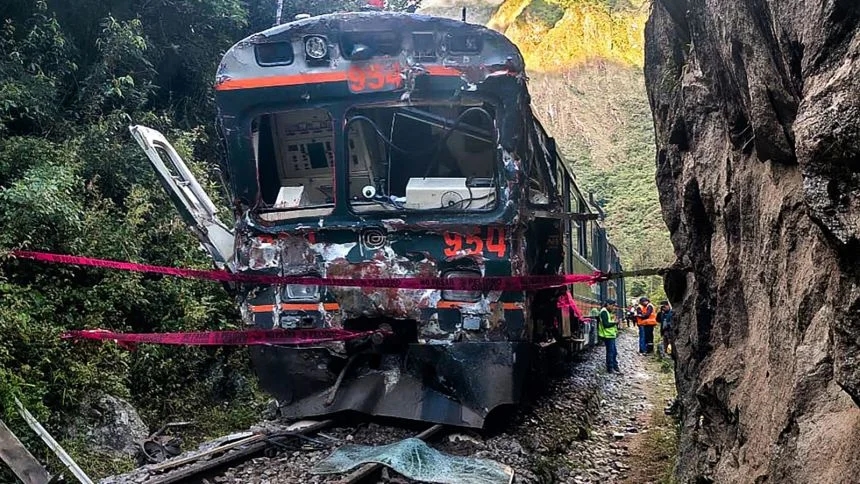


At least one person was killed and around 30 others injured on Tuesday after two tourist trains travelling to and from Machu Picchu collided in southern Peru, prompting authorities to suspend rail services on the busy route.
Police said the deceased was a railway worker. The injured included several tourists returning from or heading towards the famed archaeological site, one of the most visited heritage destinations in South America.
Collision near archaeological zone
According to the railway operator, a train travelling from Machu Picchu collided with another heading towards the site in the early afternoon near Qoriwayrachina, itself an archaeological area located along the narrow mountain rail corridor.
Captain Jhonathan Castillo Gonzalez of the Cuzco Police Department confirmed that services on the line connecting Machu Picchu with the city of Cuzco were immediately suspended following the crash. The injured were shifted to nearby medical facilities for treatment.
Cause still unclear
Authorities said the exact cause of the collision was not immediately known. Visuals shared by local media showed train coaches with shattered windows and dented sides, stranded on tracks flanked by dense forest and steep rock faces.
The region is known for sudden fog and difficult terrain, though officials have not confirmed whether weather or signalling issues played a role.
Tourism lifeline disrupted
Machu Picchu attracts around 1.5 million visitors annually, with most tourists reaching the site by train to Aguas Calientes, the nearest town. Built in the 15th century by the Incas, the UNESCO-listed monument is renowned for its precisely fitted stone architecture and historical significance.
Tourist footfall at Machu Picchu has risen by nearly 25 per cent over the past decade. However, rail access to the site has periodically been disrupted by political protests and disputes over tourism management, with demonstrators occasionally blocking the tracks.
While Machu Picchu can also be accessed via a four-day trek from Ollantaytambo, the rail line remains the primary transport route for visitors. Officials said services would resume only after safety inspections are completed.