







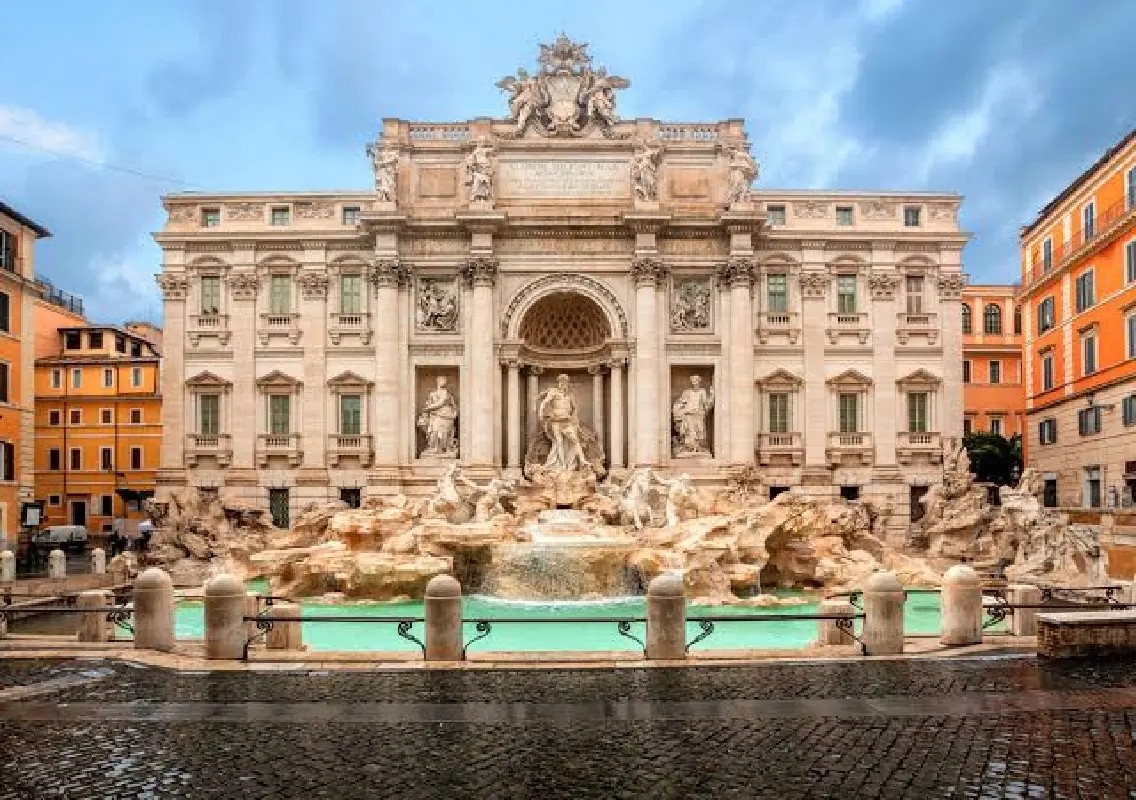


Rome: Millions of visitors travel to Rome each year to stand before the iconic Trevi Fountain, toss a coin into its waters and make a wish. But the coins gathered from the famous fountain do more than symbolise hopes and dreams — they help provide food for people facing hardship in the Italian capital.
The Trevi Fountain collects roughly €3,000 in coins each day, according to estimates cited in recent reports. Over a year, that can amount to approximately €1.5 million. Rather than allowing the money to remain in the fountain, Rome collects it and donates the proceeds to a charitable organisation that supports people in need.
The tradition has therefore created an unusual connection between tourism and social welfare: visitors make wishes, while the money they leave behind helps fund meals for vulnerable residents.
A daily ritual with a charitable outcome
Throwing a coin into the Trevi Fountain is one of Rome’s best-known tourist traditions.
The custom is often associated with the belief that tossing a coin over one’s shoulder into the fountain ensures a future return to Rome. Other variations of the tradition attach different meanings to the number of coins thrown.
For the thousands of visitors who participate each day, the gesture is usually a small personal ritual. A single coin may seem insignificant, but the combined contributions of millions of tourists create a substantial sum.
With approximately €3,000 entering the fountain each day, the accumulated value becomes significant over the course of a year. The proceeds are then redirected towards charitable purposes rather than being treated simply as money left behind at a tourist attraction.
How the coins are collected
The money does not simply remain at the bottom of the fountain until it is removed periodically.
A dedicated team collects the coins from the basin as part of the city’s regular maintenance operation. Workers use long-handled brooms and suction hoses to move and gather the coins from the water.
The process has become a familiar part of life around the monument. The fountain must be cleaned and maintained regularly, while the large quantity of coins needs to be removed safely and efficiently.
Once collected, the coins are separated and counted before being transferred for their charitable purpose.
The operation turns what might otherwise be considered loose change into a considerable source of funding for people experiencing poverty.
From fountain coins to food assistance
The money collected from the Trevi Fountain has traditionally been directed towards Caritas Roma, the charitable organisation associated with the Catholic Church in Rome.
Caritas operates services supporting people experiencing poverty, including food assistance and other forms of social support.
The organisation’s work includes helping people who may struggle to meet basic needs. Funds generated from the fountain therefore contribute to programmes that have a direct impact on vulnerable members of the community.
This gives the famous tourist tradition an unexpected second life. A coin tossed into the fountain as a personal wish can eventually help provide food or other assistance to someone who may have no connection at all to the tourist who threw it.
A famous monument with a practical purpose
The Trevi Fountain is one of the most recognisable landmarks in Rome and attracts enormous numbers of visitors.
Designed by Nicola Salvi and completed in 1762, the Baroque monument dominates the Piazza di Trevi. Its dramatic sculptures and cascading water have made it one of the most photographed locations in the city.
The fountain’s fame has also made the coin-throwing tradition an important part of the tourist experience.
The sheer volume of visitors means that the tradition produces a surprisingly large amount of money. What begins as individual acts of superstition becomes, collectively, a substantial charitable resource.
It is an example of how a cultural tradition can acquire a practical social dimension without changing the meaning it holds for those who participate.
Why tourists keep throwing coins
For many visitors, tossing a coin into the Trevi Fountain is less about financial value and more about participating in a tradition.
The most popular version of the custom involves turning one’s back to the fountain and throwing a coin over the left shoulder with the right hand. The belief is that doing so will ensure a return to Rome.
The ritual has been reinforced through popular culture and generations of tourism. As a result, even visitors who are not particularly superstitious may take part simply because it has become an expected part of experiencing Rome.
A small coin is therefore transformed into something symbolic: a wish for a future journey, good fortune or a return to a beloved city.
A lesson in collective giving
The charitable use of the fountain’s coins offers an interesting lesson about the power of small contributions.
No individual tourist is required to make a large donation. A single coin may have little purchasing power on its own. But thousands of visitors making the same small contribution every day can create a sizeable annual fund.
At approximately €1.5 million a year, the total demonstrates how collective participation can turn an almost insignificant individual action into meaningful support for a community.
The arrangement also creates a connection between Rome’s enormous tourism economy and the needs of its residents.
Visitors come to the city for its history, architecture, art and culture. Some of the money they leave behind subsequently supports people living in the same city who may not benefit directly from tourism.
More than just a wish
The story of the Trevi Fountain’s coins is ultimately about the unexpected journey of money.
A tourist drops a coin into the water, perhaps thinking only about returning to Rome. Workers later collect it using brooms and suction equipment. The money is counted and transferred to charity. Eventually, it can help support a person or family facing hardship.
That journey gives an ancient-looking tourist ritual a distinctly modern social purpose.
The fountain continues to represent wishes, romance and the promise of returning to Rome. At the same time, its waters quietly accumulate a form of community contribution.
For visitors, it may be only a coin.
For someone in need, the combined value of those coins can mean a meal, assistance and a reminder that even small acts can contribute to something larger.
In a city celebrated for centuries of art and architecture, the Trevi Fountain has therefore become more than a monument. It is also an unusual example of tourism-generated charity — where thousands of wishes each day ultimately help put food on the table for people who need it most.