









Washington: US President Donald Trump has abandoned the interim peace agreement with Iran, citing fresh intelligence that Tehran attacked commercial vessels in the Strait of Hormuz, according to a report by The Wall Street Journal. The decision marks a dramatic reversal just two weeks after Trump had hailed the agreement as a diplomatic breakthrough aimed at reducing tensions in the Gulf.
The White House has since begun rolling back key concessions made under the ceasefire framework, while the United States has intensified military operations targeting Iranian positions near the Strait of Hormuz. Iran, however, has accused Washington of violating the agreement first, deepening uncertainty over the future of the fragile truce.
Oval Office briefing prompted policy reversal
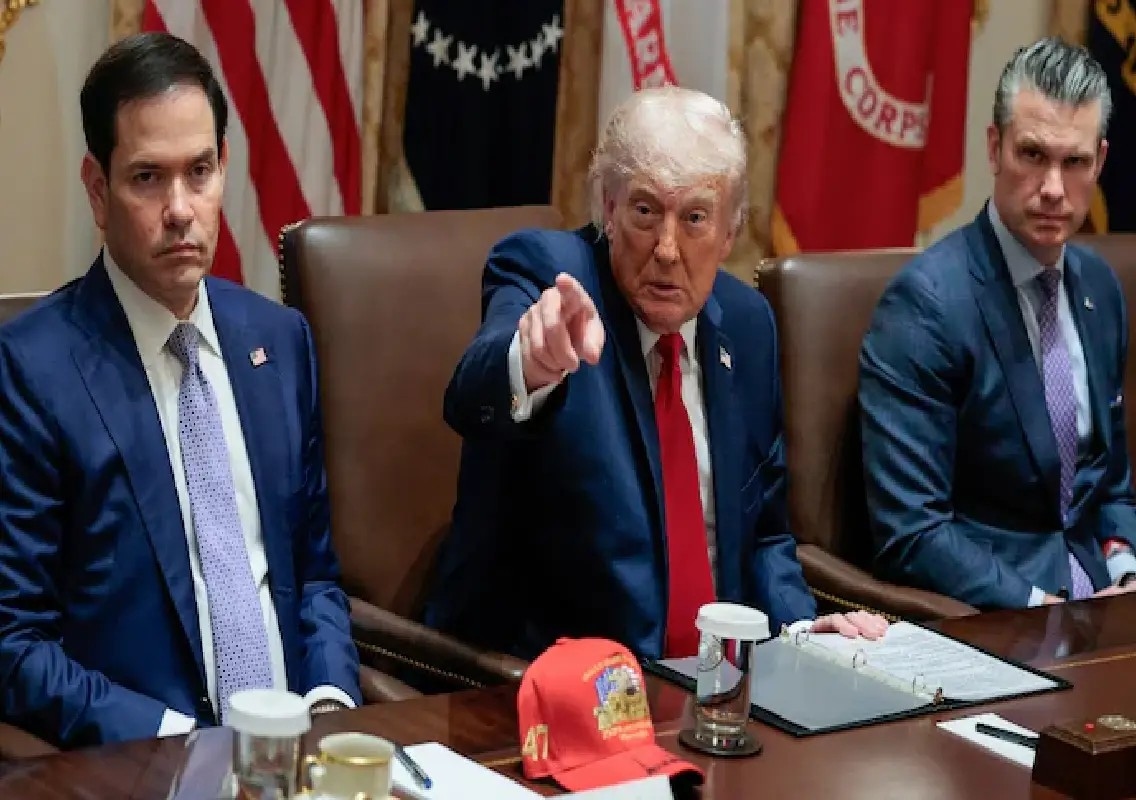
According to The Wall Street Journal, Trump was preparing to leave for the NATO summit in Ankara when Secretary of State Marco Rubio and Defence Secretary Pete Hegseth briefed him in the Oval Office on fresh intelligence regarding Iranian actions in the Strait of Hormuz.
The briefing reportedly stated that Iranian forces had launched anti-ship cruise missiles and one-way attack drones against commercial vessels using the southern shipping corridor through the Strait. Three ships, including a liquefied natural gas (LNG) tanker, were reportedly struck within hours.
The developments reportedly angered Trump, who questioned whether Tehran remained committed to negotiating a lasting peace agreement.
After consulting senior national security officials, the US President concluded that Iran was no longer acting in good faith, prompting a major shift in Washington’s policy.
White House rolls back concessions
Following the Oval Office meeting, the Trump administration reportedly moved swiftly to dismantle key aspects of the interim agreement reached at France’s Palace of Versailles.
Among the immediate measures taken were:
- Revocation of Iran’s licence to sell oil.
- Authorisation of multiple rounds of US military strikes on Iranian targets near the Strait of Hormuz.
- Warnings that additional Iranian infrastructure, including desalination plants and electricity facilities, could be targeted if hostilities continued.
Speaking at the NATO summit, Trump signalled that he no longer believed the agreement could survive.
“To me, I think it’s over,” he said.
“I don’t want to deal with them. They’re liars, they’re cheats, they’re sick people.”
Iran blames the United States
Iran rejected Washington’s account of the breakdown.
According to The Wall Street Journal, an Iranian diplomat claimed that the United States had violated the agreement by establishing a commercial shipping corridor through the Strait of Hormuz without coordinating with Tehran.
Iran argued that the move breached the memorandum of understanding reached under the interim agreement and justified its response against vessels using that route.
The dispute has exposed ambiguities within the agreement regarding responsibility for managing commercial navigation through one of the world’s busiest maritime corridors.
Strait of Hormuz remains strategic flashpoint
The Strait of Hormuz is among the world’s most critical energy chokepoints, handling roughly one-fifth of global oil shipments.
According to US officials, the US Navy had been quietly assisting commercial vessels in navigating a southern shipping corridor along Oman’s coastline over recent weeks.
More than 125 commercial vessels reportedly completed the passage under US guidance.
Officials said the operations were conducted primarily at night, with ships switching off their automatic identification systems while maintaining radio communication with US naval assets.
Washington maintained that the arrangement was designed to safeguard international shipping.
Iran opposed the route, insisting that vessels should instead use the northern passage closer to its coastline and warning that the southern corridor was unsafe.
US military operations intensify
Following the reported attacks on commercial shipping, the US military launched multiple strikes targeting Iranian military infrastructure near the Strait of Hormuz.
US Central Command stated that the operations were intended to reduce Iran’s ability to threaten international maritime traffic.
According to US officials, more than 170 Iranian military targets have been struck over the past two days.
Defence Secretary Pete Hegseth warned that the military campaign could expand further if required.
“The military would strike even more, and even deeper,” he said.
Vice President JD Vance also warned that any further attacks on commercial shipping would invite a stronger American response.
Trump accuses Iran of betraying goodwill
Trump later said he had delayed negotiations for a week to allow Iran to conduct funeral ceremonies for former Supreme Leader Ayatollah Ali Khamenei, believing the gesture would create space for diplomacy.
Instead, he alleged, Iran launched attacks on commercial shipping.
“Instead of that, they start shooting rockets at ships,” Trump said.
Iran has meanwhile reportedly launched retaliatory attacks against US military installations in Bahrain, Kuwait, Qatar and Jordan, further escalating regional tensions.
Uncertain future for diplomacy
The collapse of the interim agreement has significantly raised concerns over stability in the Gulf region, with renewed military operations threatening one of the world’s most vital energy supply routes.
As both Washington and Tehran continue to exchange accusations, prospects for reviving negotiations remain uncertain, while global markets and regional allies closely monitor developments in the Strait of Hormuz.