







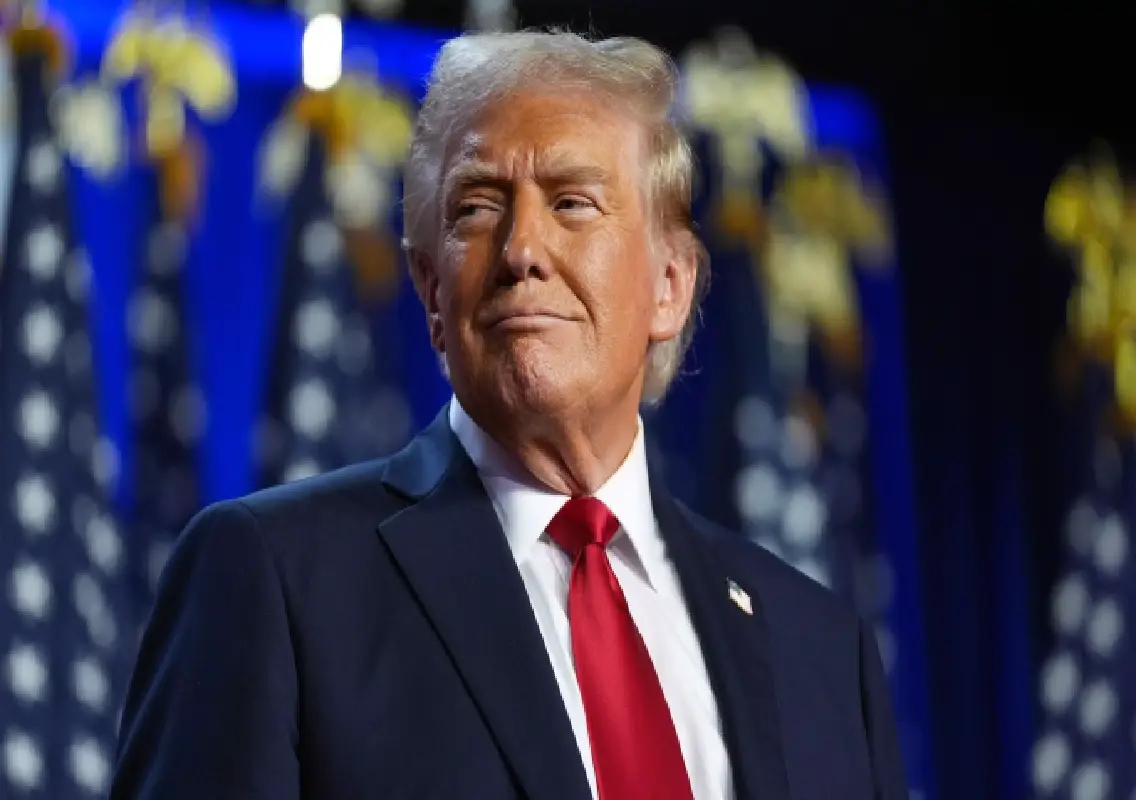


Washington: US President Donald Trump has called on major global powers to deploy naval forces to safeguard shipping through the strategically important Strait of Hormuz, warning that the United States will escalate military strikes along Iran’s coastline if Tehran attempts to block or disrupt maritime traffic in the region.
In a lengthy message posted on his social media platform Truth Social, Trump said several countries affected by the crisis were preparing to send warships to operate alongside US naval forces to ensure the continued movement of commercial vessels through the critical waterway.
The Strait of Hormuz is considered one of the most important energy corridors in the world, carrying a significant share of global oil shipments. Any disruption in the passage could have serious consequences for international trade, energy markets and geopolitical stability.
Global naval cooperation proposed
According to Trump, nations that rely heavily on the shipping route are expected to contribute naval assets to help maintain security in the area.
“Many countries, especially those affected by Iran’s attempted closure of the Hormuz Strait, will be sending warships, in conjunction with the United States of America, to keep the strait open and safe,” he wrote.
The proposal suggests the creation of a multinational naval presence aimed at deterring potential threats to commercial vessels and oil tankers passing through the narrow waterway.
The Strait of Hormuz connects the Persian Gulf with the Gulf of Oman and the Arabian Sea, making it a crucial link for oil exports from countries such as Saudi Arabia, the United Arab Emirates, Kuwait, Iraq and Qatar.
Experts estimate that nearly one-fifth of the world’s oil supply passes through the strait each day, making its security vital for global energy stability.
US warning to Iran
Trump’s remarks also included a direct warning to Iran, cautioning that the United States would intensify military operations if Tehran attempted to disrupt maritime traffic.
He claimed that Iran’s military capabilities had already been significantly weakened due to recent US strikes, but acknowledged that the country could still launch limited attacks.
“We have already destroyed 100% of Iran’s military capability, but it’s easy for them to send a drone or two, drop a mine, or deliver a close-range missile somewhere along, or in, this waterway,” Trump said in his post.
The US president suggested that even small-scale attacks could pose a serious risk to shipping, particularly in a narrow and heavily trafficked passage such as the Strait of Hormuz.
Strategic importance of the Strait
The Strait of Hormuz is widely regarded as one of the most sensitive geopolitical choke points in the world.
At its narrowest point, the strait is about 33 kilometres wide, with designated shipping lanes that allow oil tankers and cargo vessels to pass through in opposite directions.
Because of its strategic importance, the waterway has long been a focal point of tensions between Iran and Western powers.
Iran has previously warned that it could block the strait if its security or economic interests were threatened. Such a move would have far-reaching consequences, potentially disrupting global oil supply chains and causing sharp increases in energy prices.
Concerns over global energy supply
The latest developments come at a time when global energy markets are already facing uncertainty due to geopolitical tensions in the Middle East.
Shipping disruptions in the Strait of Hormuz could impact not only oil shipments but also the transport of liquefied natural gas (LNG) and other commodities.
Energy analysts say any prolonged disruption in the strait could lead to higher fuel prices worldwide and affect economies that rely heavily on imported energy.
Countries in Asia and Europe, which depend significantly on Middle Eastern oil, would likely be among the most affected.
Diplomatic and military implications
Trump’s call for international naval cooperation signals a possible escalation in military coordination among countries concerned about the security of maritime trade routes.
A multinational naval deployment could serve as a deterrent against potential attacks while also providing escort and surveillance for commercial vessels passing through the region.
However, such a move could also increase tensions with Iran, which has repeatedly criticised foreign military presence near its territorial waters.
Diplomatic observers say the coming weeks will be crucial in determining whether the situation stabilises or leads to further military confrontation.
Conclusion
With the Strait of Hormuz playing a critical role in global energy supply, any attempt to disrupt shipping in the region carries significant economic and geopolitical implications.
Trump’s call for allied naval forces to help secure the waterway underscores the seriousness of the situation and highlights the growing international focus on protecting vital maritime routes amid rising tensions with Iran.