







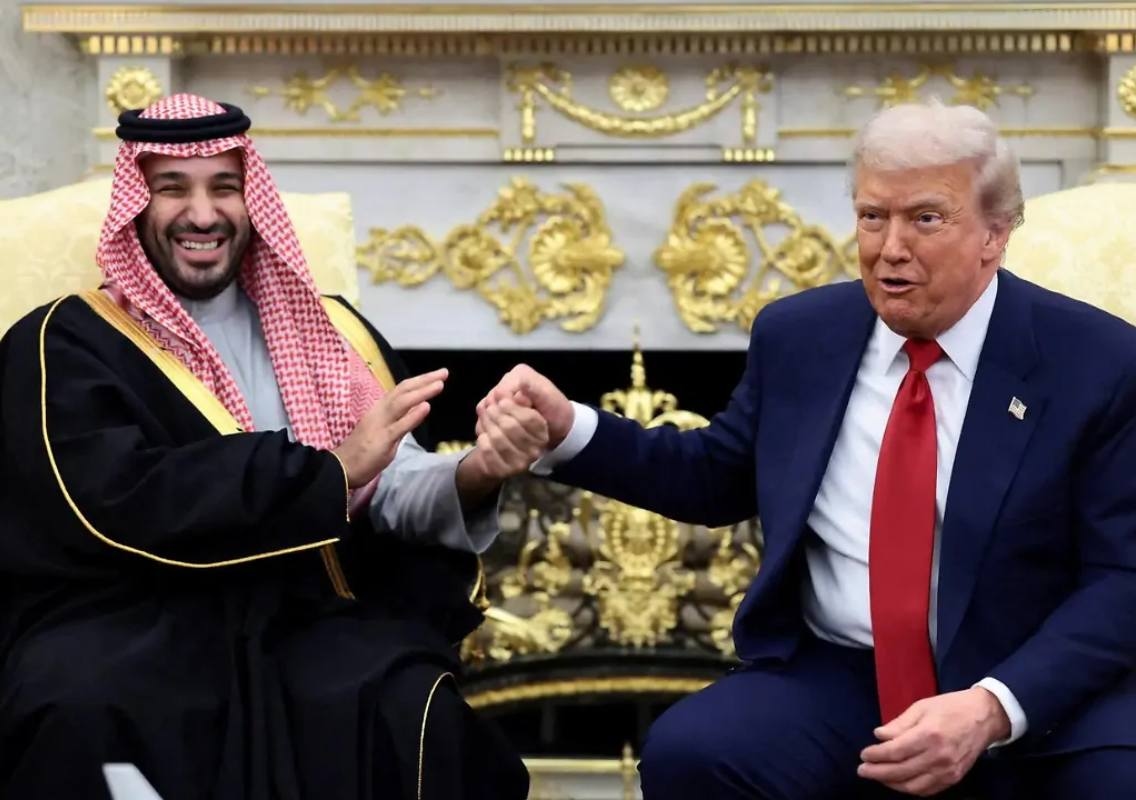


Washington: US President Donald Trump reportedly came close to ordering airstrikes against Iran-backed Houthi targets in Yemen after Saudi Crown Prince Mohammed bin Salman urged Washington to intervene, but reversed course at the last moment as the US weighed the risks of opening another military front in the Middle East.
According to The New York Times, Trump had initially opposed direct US strikes against the Houthis. His position changed after a call with Mohammed bin Salman, Saudi Arabia’s de facto ruler, following the group’s rapid territorial advances in Yemen and attacks linked to Saudi Arabia.
Trump then directed the Pentagon to prepare for possible airstrikes. By Sunday, however, he had decided to hold off, with US officials saying there would be no strikes for the time being.

US military preparations had reached an advanced stage
The reversal reportedly came after preparations for an attack had already begun.
US officials cited by The New York Times said target lists had been approved and military personnel were loading munitions onto aircraft assigned to the operation. The strikes were therefore close to being carried out before Trump halted the plan.
The decision reflects the competing pressures facing the administration. The US is already engaged in a wider conflict with Iran, while the Houthi offensive in Yemen has created another potential theatre involving a major American ally, Saudi Arabia.
Reuters reported on Monday that the Houthi advance has threatened strategic areas along Yemen’s Red Sea coast and increased pressure on Saudi Arabia, including over important energy-export routes.
Trump says Houthis do not want a fight with US
Trump has publicly indicated that Washington remains in contact with the Houthis.
Speaking to Fox News on Sunday, Trump said the US was in “constant communication with the Houthis” and that the group had agreed not to fight the United States. He had made a similar statement during his visit to Ireland earlier this month, saying the Houthis had contacted Washington and did not want the US to target them.
The comments came as the Houthis continued fighting Saudi-backed forces and launching attacks against Saudi Arabia.
A senior Houthi official, Mohamed al-Bukhaiti, also told The Associated Press that the group had assured Washington it would not target US vessels in the Red Sea. He said the Houthis’ conflict was directed against Saudi Arabia and warned that the group could respond if other countries joined Riyadh militarily.
US had already held talks with Houthis in Oman
The latest developments follow an unusual channel of communication between Washington and the Houthis.
US officials met Houthi representatives in Muscat, Oman, over the weekend before the latest escalation, according to Reuters. Oman helped facilitate the meeting, with discussions focused on maintaining the existing US-Houthi ceasefire and maritime security.
The Houthis reportedly assured US officials that they would not target American or Israeli vessels and would maintain the 2025 ceasefire with Washington.
The talks provide additional context for Trump’s decision to hold off on direct military action, even as Saudi Arabia sought greater US involvement.
Saudi Arabia seeks a diplomatic option
Saudi Arabia has simultaneously explored a diplomatic route to contain the Houthi offensive.
According to reports citing the Lebanese newspaper Al Akhbar, Riyadh conveyed a proposal through Oman for a two-week ceasefire followed by direct talks with Houthi leaders. The proposal would first address humanitarian demands before attempting to negotiate a broader settlement.
The reported initiative came after Saudi Arabia sought assistance from several countries as Houthi forces expanded their territorial control.
The reported ceasefire proposal has not produced a comprehensive settlement. An assessment by the Institute for the Study of War said the Houthis had shown scepticism towards the reported offer and sought a more comprehensive resolution to the conflict.

Another front in an expanding regional conflict
The US decision not to strike the Houthis comes as Washington is already dealing with the wider conflict involving Iran.
Houthi advances along Yemen’s western coast have added pressure to the regional security situation, particularly around the Bab el-Mandeb Strait, one of the world’s important maritime chokepoints.
The Houthis’ growing control in the area has raised concerns over shipping and energy supplies. Reuters reported that their latest offensive has further threatened global energy routes while Saudi Arabia faces intensified pressure from attacks on its territory and infrastructure.
For now, the Trump administration has stopped short of directly joining Saudi Arabia’s military campaign against the Houthis. The decision could still change if the security situation deteriorates, but the latest move leaves Washington relying on communication, diplomatic channels and indirect support rather than launching the strikes that had been prepared.