







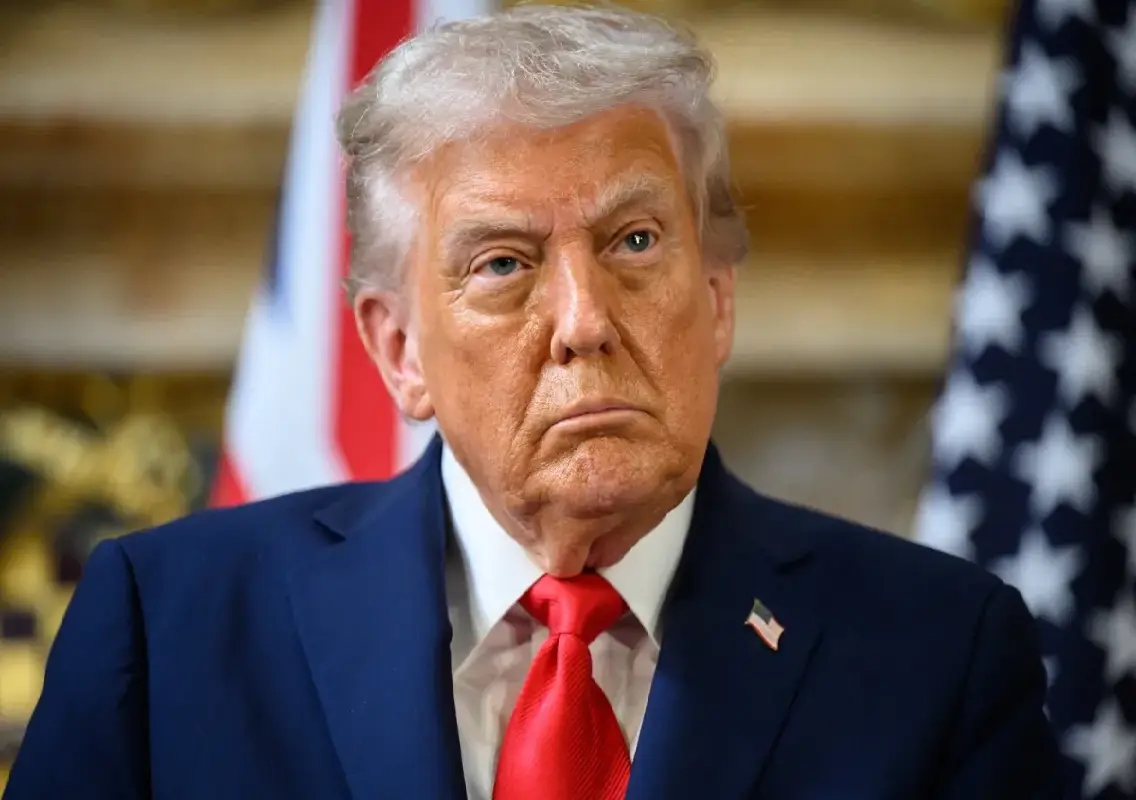


US President Donald Trump has announced that members of his newly created Board of Peace have pledged USD 5 billion (about ₹41,500 crore) toward rebuilding war-ravaged Gaza and will commit thousands of personnel to an international stabilisation and policing force for the territory. The formal announcement of contributions is expected at the board’s first official meeting later this week.
In a social media post, Trump said the Board of Peace would emerge as a highly consequential international body and confirmed that he would serve as its chairman. He described the financial and personnel commitments as a major step towards post-war recovery and long-term security management in the conflict-hit Palestinian territory.
First meeting and funding commitments
According to Trump’s statement, member countries of the Board of Peace will gather for their inaugural meeting on Thursday, where the USD 5 billion reconstruction pledge will be formally recorded. However, he did not specify which nations are contributing funds or how the burden will be divided among participating members.
The board is a newly formed multilateral grouping announced by the US administration with a stated focus on conflict resolution and post-war stabilisation. While initially framed around ending the Israel–Hamas war, it is now being projected as a broader crisis-resolution platform.
Officials indicated that apart from reconstruction funding, participating countries are also expected to commit trained personnel for policing, humanitarian coordination and security support roles once ground conditions permit deployment.
Troop contribution signals from Indonesia
In the first clear sign of military participation, the armed forces of Indonesia said up to 8,000 troops could be made ready by the end of June for possible deployment as part of a humanitarian and peace mission linked to the stabilisation framework.
This is being seen as the first firm operational commitment aligned with Trump’s proposed international force model. The proposed force is expected to focus on civilian protection, aid corridor security, and support for local policing structures during the reconstruction phase.
Security experts say actual deployment would depend on ceasefire durability, legal mandates, and acceptance by stakeholders on the ground.
Scale of reconstruction challenge
Rebuilding the devastated territory is expected to be a massive and long-term exercise. Estimates by the United Nations, the World Bank, and the European Union place total reconstruction costs at around USD 70 billion (roughly ₹5.8 lakh crore).
Large-scale damage to housing, hospitals, utilities, roads and civic systems has been reported after more than two years of sustained conflict and bombardment. Aid agencies say entire neighbourhoods will need to be rebuilt from scratch, alongside restoration of water, sanitation and power networks.
Analysts caution that funding pledges alone will not be sufficient unless accompanied by secure access, transparent monitoring and coordinated project execution.
Link to ceasefire and security force plan
The current ceasefire framework between Israel and Hamas includes provisions for an armed international stabilisation force tasked with maintaining order and ensuring the disarmament of militant groups — one of Israel’s central demands in negotiations.
So far, only a limited number of countries have publicly indicated willingness to participate in such a force. Questions remain over command structure, rules of engagement and legal authority for operations.
Israeli Prime Minister Benjamin Netanyahu, who recently held talks at the White House, is not expected to attend the first Board of Peace meeting, according to preliminary schedules.
Strategic shift away from UN-led models
Trump’s Board of Peace initiative is widely viewed as part of a broader US attempt to create alternative diplomatic platforms outside traditional UN Security Council-led mechanisms. Several American allies in Europe and elsewhere have reportedly declined to join, citing concerns that the body may duplicate or rival existing UN structures.
Supporters of the initiative argue that smaller, mission-focused coalitions can move faster than legacy institutions. Critics warn that parallel systems could weaken global consensus frameworks and complicate legitimacy.
The upcoming meeting is scheduled to be held at the US Institute of Peace, a think tank facility that has recently been the subject of internal restructuring and legal disputes after administrative takeover and staff dismissals.
Outlook and next steps
The Board of Peace’s credibility will depend on how many countries formally join, how much funding is actually deposited, and whether troop commitments translate into deployable missions. Ground realities, political acceptance and coordination with existing international agencies will shape outcomes.
If implemented with broad participation and oversight, the funding and stabilisation plan could accelerate recovery. If participation remains limited, the initiative may face operational and diplomatic hurdles.