







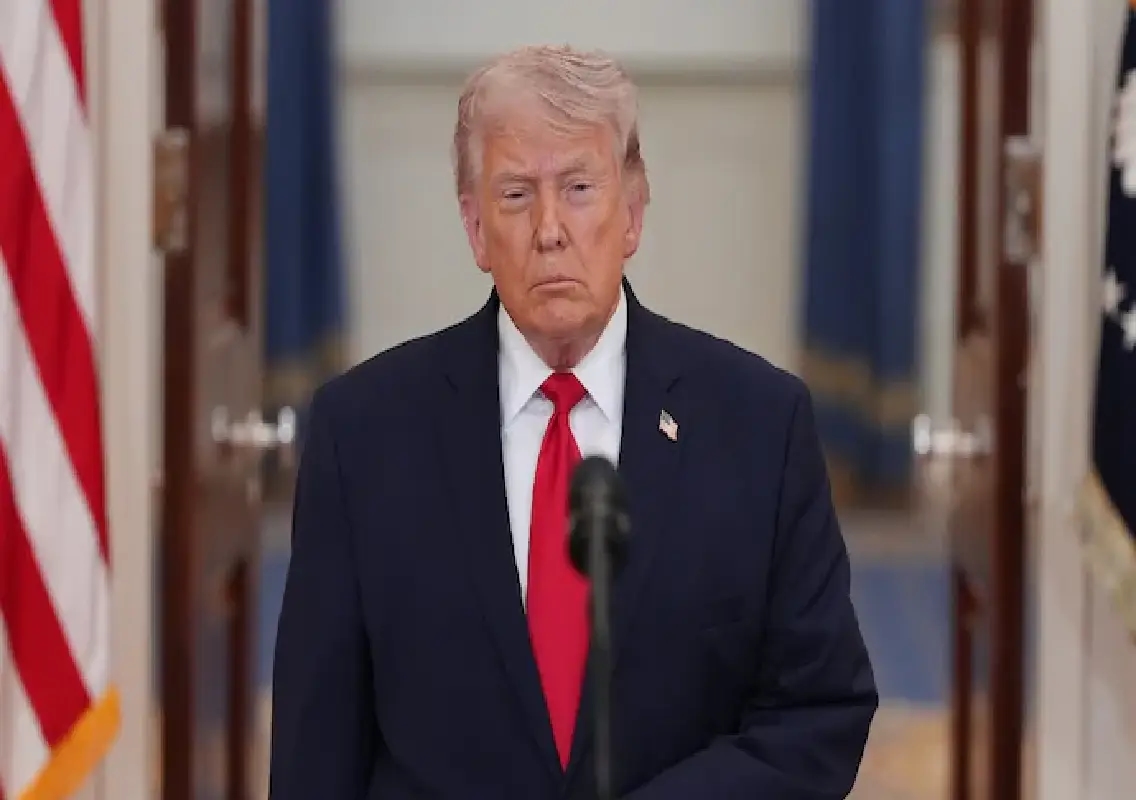


Washington: In a strong defence of the ongoing conflict with Iran, Donald Trump has said that US forces will “finish the job” soon, asserting that key strategic objectives are close to being achieved.
In his first national address since the outbreak of hostilities on February 28, Trump described the military campaign as an “investment” and urged Americans to view the current challenges as temporary.
President compares war timelines
Seeking to reassure a war-weary public, Trump drew comparisons with past US military engagements, including World War I, World War II, the Korean War, the Vietnam War, and the Iraq War.
He noted that those conflicts lasted significantly longer, suggesting that the current operation—now over a month old—remains relatively short. Trump indicated that he expects the Iran campaign to conclude within six weeks.
“We are in this military operation for 32 days… and the country has been eviscerated and essentially is really no longer a threat,” he said.
Rising concerns at home
The President’s remarks come amid growing concern within the United States over the human and economic costs of the war. Thirteen US soldiers have reportedly been killed so far, while global oil prices have surged due to instability in the region.
Trump’s approval ratings have also taken a hit, with criticism emerging not only from political opponents but also from sections of his conservative support base, who question the necessity of the conflict.
Some critics argue that US involvement is closely tied to regional alliances, particularly with Israel, and warn of prolonged engagement.
Mixed signals on escalation and diplomacy
Despite projecting confidence, the administration’s messaging has appeared inconsistent. Trump has at times suggested that the war could end soon, while also warning of possible escalation if objectives are not met.
Reports indicate that the US has increased troop deployments in the Middle East even as it explores diplomatic options.
On the negotiation front, Washington is said to have proposed a 15-point plan that includes reopening the Strait of Hormuz and rolling back Iran’s nuclear programme. Trump has also indicated that backchannel discussions are ongoing.
Iran rejects direct talks
However, Iranian officials have denied engaging in direct negotiations with the US. Abbas Araghchi, Iran’s Foreign Minister, stated that trust in Washington is “at zero”.
He emphasised that Iran would not compromise on its sovereignty, particularly over strategic assets like the Strait of Hormuz. He also warned against further US military action, indicating readiness to respond to any ground offensive.
Conclusion
As the conflict enters its second month, uncertainty continues to surround both its duration and outcome. While the US administration maintains that its objectives are within reach, diplomatic tensions and conflicting narratives suggest that a resolution may depend as much on negotiations as on military developments.