







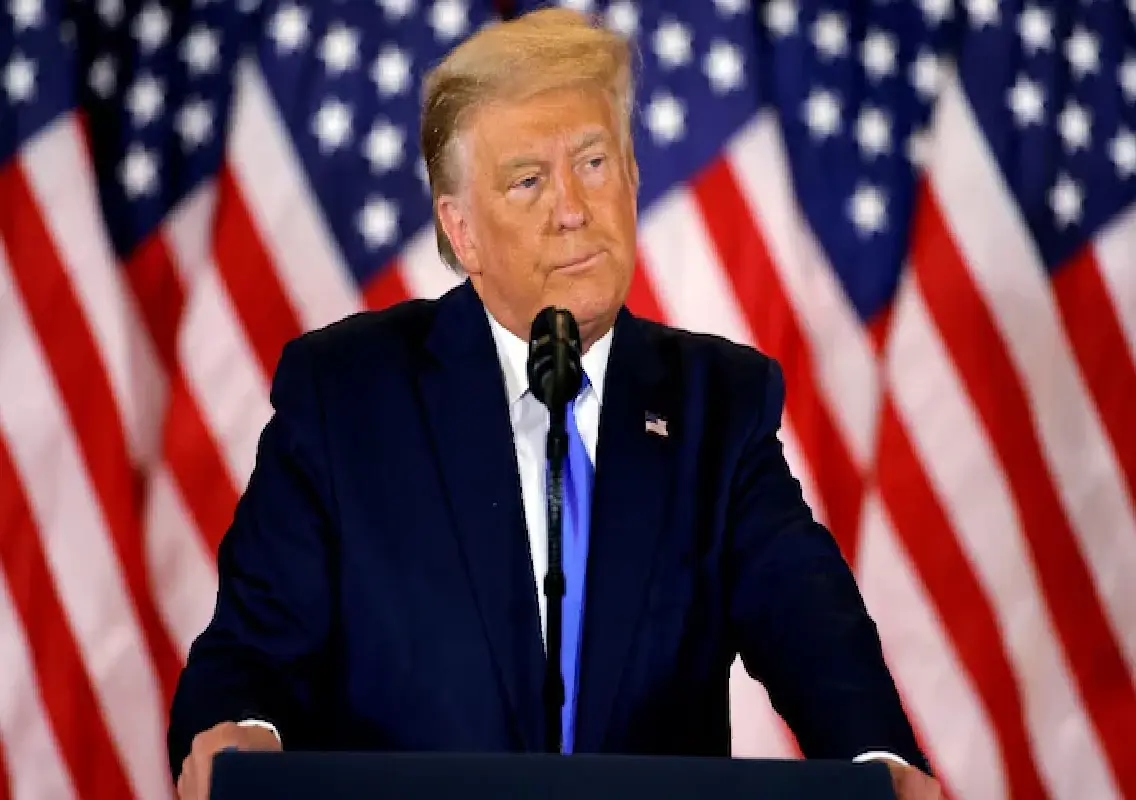


Washington: US President Donald Trump has indicated that the United States may shift its foreign policy focus towards Cuba after concluding the ongoing conflict with Iran, suggesting that Washington’s immediate priority remains the war in the Middle East.
Speaking at the White House during an event celebrating Major League Soccer champions Inter Miami CF, the US President said his administration intends to complete the ongoing military campaign involving Iran before addressing other geopolitical concerns.
“We want to finish this one first,” Trump said, referring to the conflict with Iran. “But that will be just a question of time before you and a lot of unbelievable people are going to be going back to Cuba.”
His remarks hinted at a potential shift in Washington’s foreign policy priorities once tensions in the Middle East ease.
Trump hints at renewed engagement with Cuba
During his speech, Trump suggested that Cuba may be interested in negotiating with the United States.
He claimed that authorities in Havana are eager to strike a deal with Washington, though he did not provide details on what such an agreement might involve.
“Cuba wants to make a deal so badly,” Trump said, adding that many Cuban Americans could eventually return to the island nation.
“We want you back, and we don’t want to lose you,” he said, addressing members of the Cuban-American community.
Relations between the United States and Cuba have historically been strained, particularly during the Cold War era. Although diplomatic relations were partially restored in the past decade, tensions have fluctuated depending on political leadership in Washington.
Trump’s recent comments come amid reports of increasing friction between the two countries during his second term as president.
Trump claims progress in Iran conflict
While discussing foreign policy, Trump also spoke about the ongoing war involving Iran and expressed confidence in the progress made by the United States and its allies.
According to the president, US forces along with Israeli partners have made significant advances against Iranian military capabilities.
“The United States military, together with the wonderful Israeli partners, continues to totally demolish the enemy, far ahead of schedule,” Trump said.
He further claimed that Iran’s military strength had been severely weakened during the conflict.
“They have no air force, they have no air defence,” Trump said, adding that Iran’s naval capabilities had also been destroyed.
The president claimed that US forces had eliminated 24 Iranian ships within three days, though he did not provide operational details. Independent verification of these claims was not immediately available.
Claims of possible negotiations with Iran
Despite his strong rhetoric about military progress, Trump also suggested that Iran may now be interested in negotiating a settlement to end the conflict.
According to the president, Iranian representatives have been reaching out to explore the possibility of a deal.
“They’re calling, they’re saying, ‘How do we make a deal?’” Trump said.
However, he indicated that Washington currently holds a strong position and is not rushing into negotiations.
“I said, ‘You’re being a little bit late, and we want to fight now more than they do,’” he added.
Trump also encouraged Iranian diplomats and officials to consider cooperating with the United States in shaping the future political direction of their country.
He said those willing to engage constructively could help create “a new and better Iran with great potential,” while warning that continued resistance could lead to severe consequences.
Oil markets and economic impact
The conflict has raised global concerns over energy supply and oil prices, given Iran’s strategic location and its influence in the global oil market.
Addressing these concerns, Trump said oil markets had largely stabilised despite the ongoing hostilities.
“The oil seems to have pretty much stabilised,” he said.
He acknowledged that the conflict had temporarily shifted the administration’s priorities, referring to the war as a “little detour” from other policy initiatives.
Trump also hinted that further steps could be taken to maintain stability in global energy markets if necessary.
Possible shift in US foreign policy
Trump’s remarks suggest that once the Iran conflict subsides, Washington may refocus its diplomatic and strategic attention on Latin America, particularly Cuba.
Observers note that US policy towards Cuba has historically been influenced by domestic political considerations as well as broader geopolitical calculations.
A renewed effort to negotiate with Cuba could signal a new phase in US-Cuba relations, though analysts say any major shift would depend on developments both in Washington and Havana.
For now, the White House appears to remain focused on the conflict with Iran, with Trump emphasising that resolving the war remains the administration’s immediate priority before addressing other global issues.