







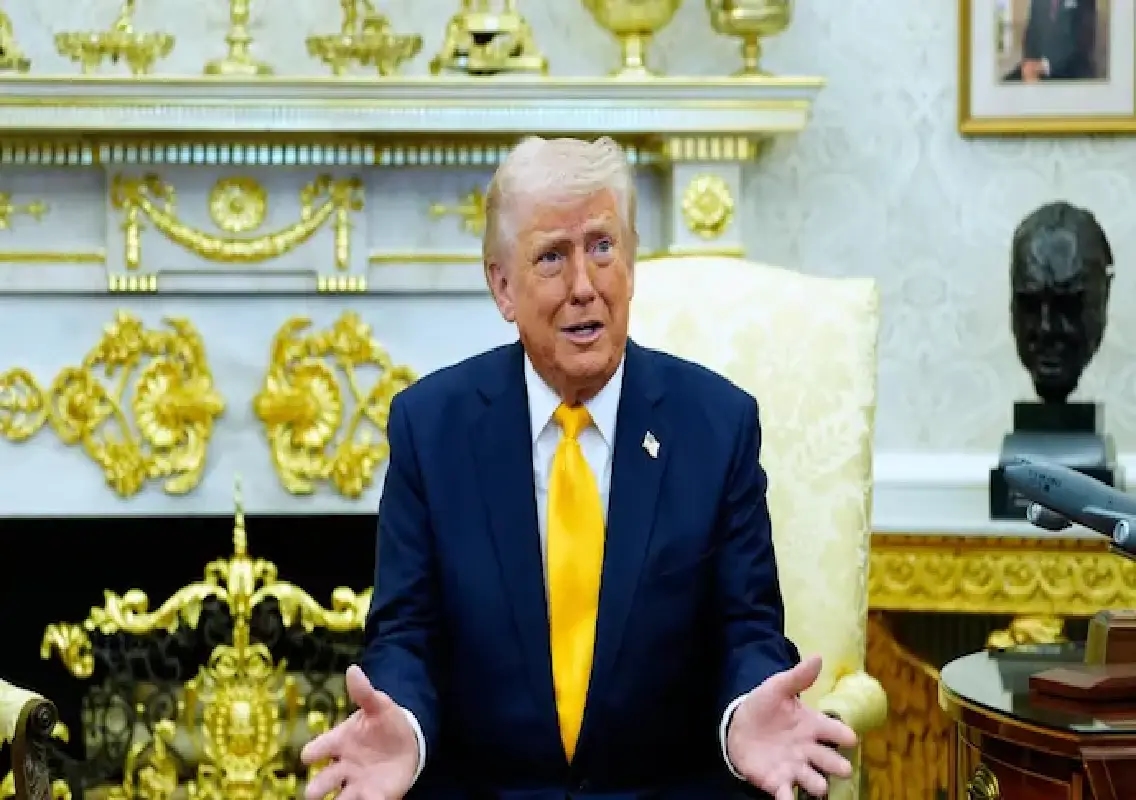


Washington: Donald Trump is set to address the United States on April 2 at around 7.30 am IST, with expectations that he will outline Washington’s next course of action in the ongoing conflict with Iran.
The announcement comes amid growing speculation that the US may soon scale down or end its military operations in the region following a month-long war that has significantly impacted geopolitical stability and global energy markets.
Indications of imminent withdrawal
Speaking at the White House on Tuesday, Trump hinted at a possible withdrawal of US forces. “We’ll be leaving very soon,” he said, suggesting that troop pullback could begin within the next two to three weeks.
The White House confirmed that the President would address the nation, sparking widespread anticipation that a formal announcement on ending or scaling back military action may be imminent.
The conflict, which began on February 28, has seen extensive military strikes targeting key Iranian leadership and infrastructure.
Conflict escalates with leadership strikes
Among the most significant developments in the war was the targeting of high-ranking Iranian officials, including the reported killing of Ali Khamenei.
The strikes marked a major escalation and drew global attention, with concerns rising over the broader implications for regional stability and international relations.
The war has reportedly resulted in thousands of casualties and has disrupted global oil supply chains, contributing to volatility in energy markets.
No deal needed, says Trump
In a notable shift from earlier diplomatic overtures, Trump stated that Iran does not need to enter into a formal agreement with the United States to end the conflict.
“Iran doesn’t have to make a deal,” he said, distancing himself from earlier suggestions that Washington was open to negotiating a settlement.
This stance appears to contradict remarks made by US Defence Secretary Pete Hegseth, who had indicated that a diplomatic agreement remained a possibility.
Previously, the US had proposed a 15-point truce plan that included restrictions on Iran’s nuclear programme, cessation of support for proxy groups, and reopening of the strategically crucial Strait of Hormuz.
Hardline stance on nuclear capability
Despite hints at withdrawal, Trump reiterated a strong position on Iran’s nuclear ambitions. He stated that military action would only conclude after ensuring that Iran’s capability to rapidly develop nuclear weapons is significantly diminished.
He warned that the US aims to “put Iran into the stone age” in terms of its nuclear infrastructure, underscoring Washington’s continued focus on preventing nuclear proliferation.
This suggests that any withdrawal plan may still be contingent on achieving key strategic objectives.
Regime change and leadership remarks
Trump also commented on political developments within Iran, claiming that the country has undergone two regime changes in recent months.
He referred to the current leadership under Mojtaba Khamenei as more “reasonable” compared to previous regimes, indicating a shift in tone from earlier criticisms.
In previous interviews, Trump had expressed dissatisfaction with the leadership transition and emphasised the need for a government that promotes stability and peace in the region.
His recent remarks suggest a recalibration of US messaging as the conflict potentially moves towards a conclusion.
Global attention on upcoming address
The anticipated address has drawn global attention, with governments, analysts, and markets closely watching for clarity on US policy.
Any announcement regarding troop withdrawal or cessation of hostilities is likely to have far-reaching implications for global security, diplomatic relations, and energy prices.
The Strait of Hormuz, a critical chokepoint for global oil shipments, remains a focal point in the conflict, and its reopening is seen as key to stabilising markets.
Conclusion
As the conflict enters a Decisive phase, Trump’s address is expected to provide crucial direction on the future of US involvement in the region. Whether it signals a full withdrawal, a strategic shift, or continued pressure on Iran, the announcement will play a pivotal role in shaping the next chapter of the crisis.