







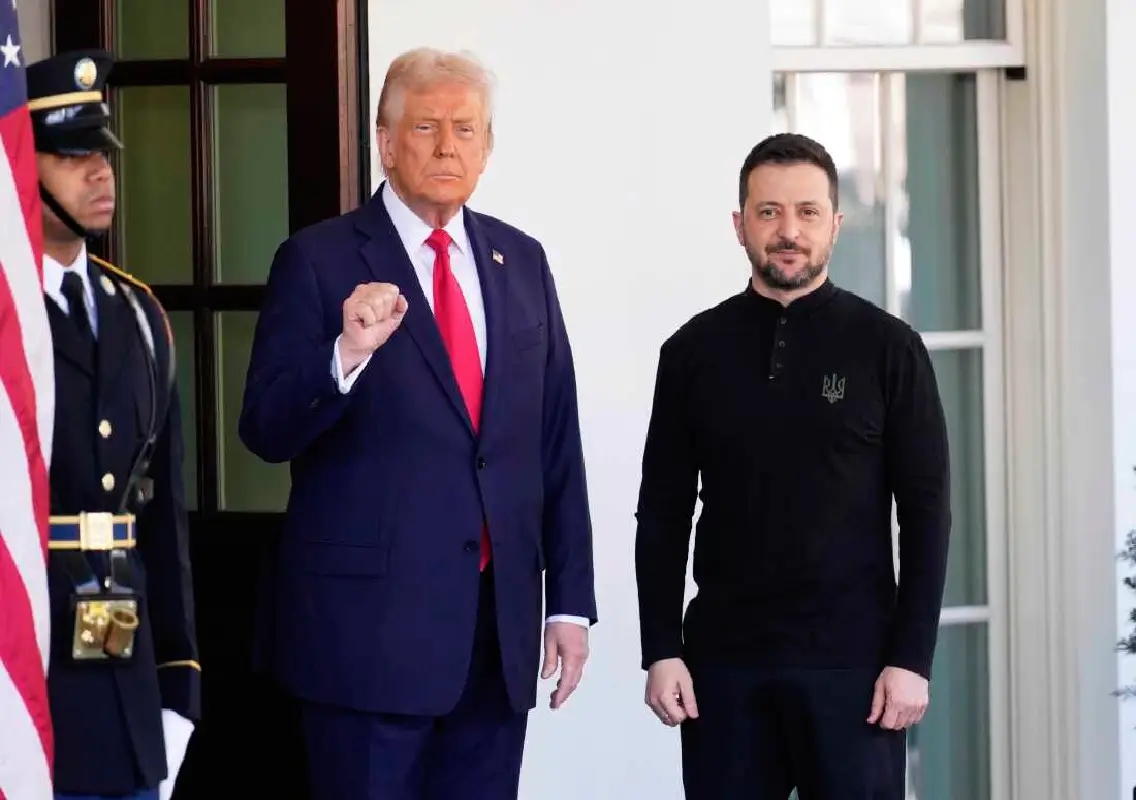


U.S. President Donald Trump will host Ukrainian President Volodymyr Zelenskyy on Sunday, December 28, 2025, in a high-stakes meeting aimed at pushing negotiations closer to a peace agreement that could end nearly four years of war between Ukraine and Russia. The talks will take place at Mar-a-Lago, Mr. Trump’s private club in Palm Beach, where he is spending the holiday season.
The meeting comes amid intensified Russian attacks on Ukraine, particularly on Kyiv, and growing international pressure to find a diplomatic solution to a conflict that began with Moscow’s full-scale invasion of Ukraine in February 2022.
High-level talks at a crucial juncture
President Zelenskyy said the discussions with Mr. Trump would focus on security guarantees, economic agreements and unresolved territorial issues, especially concerning the Donbas region in eastern Ukraine. Kyiv and Moscow remain sharply divided over the future of Donetsk and Luhansk, parts of which are currently under Russian control.
“Ukraine is willing to do whatever it takes to stop this war,” Mr. Zelenskyy said in a post on X ahead of the meeting. “We need to be strong at the negotiating table.”
The talks come as Russia has stepped up missile and drone strikes on the Ukrainian capital over the past several days, a move widely seen as an attempt to strengthen Moscow’s leverage ahead of negotiations. Ukrainian officials say the attacks underline Russia’s continued commitment to military pressure even as diplomatic channels remain open.
International support and pressure on Russia
In the days leading up to the Trump-Zelenskyy meeting, the Ukrainian president met Canadian Prime Minister Mark Carney in Halifax, Nova Scotia. Mr. Zelenskyy stressed that peace would only be possible through sustained pressure on Russia combined with strong international backing for Ukraine.
Mr. Carney announced an additional 2.5 billion Canadian dollars (about $1.8 billion) in economic assistance to support Ukraine’s reconstruction and recovery efforts. He also condemned Russia’s latest strikes on Kyiv as “barbaric” and said both Mr. Trump and Mr. Zelenskyy were playing key roles in creating conditions for a “just and lasting peace”.
Draft peace plan nearing completion
According to Ukrainian and U.S. officials, negotiators from both sides have been working on a 20-point draft peace proposal that is now “about 90% ready”. Mr. Zelenskyy confirmed that significant progress has been made, echoing comments from U.S. officials after recent meetings in Berlin between American negotiators and Ukrainian representatives.
Under the emerging framework, the United States has indicated a willingness to offer Ukraine security guarantees similar to those enjoyed by NATO members. Mr. Zelenskyy has suggested that Kyiv could drop its formal bid to join NATO if it receives robust, NATO-like security protections designed to deter future Russian aggression.
However, several sensitive issues remain unresolved. These include the status of occupied territories, the future of the Zaporizhzhia nuclear power plant, long-term funding for Ukraine’s postwar reconstruction and the mechanisms for monitoring and enforcing any ceasefire or demilitarised arrangements.
Trump’s role and evolving stance
President Trump has made ending the Ukraine war a central foreign policy objective during his first year back in office, though he has publicly acknowledged the complexity of the task. During the 2024 election campaign, he had claimed he could end the conflict within a day, a position he has since walked back.
After hosting Mr. Zelenskyy at the White House in October, Mr. Trump called on both Russia and Ukraine to halt fighting and “stop at the battle line”, remarks widely interpreted as suggesting that Moscow could retain some of the territory it currently occupies.
U.S. officials say Mr. Trump believes Russian President Vladimir Putin could be persuaded to end the war if Kyiv agrees to territorial concessions in the Donbas region and if Western countries offer economic incentives to reintegrate Russia into the global economy.
Russia’s demands and red lines
The Kremlin has maintained firm positions on several key issues. President Putin has demanded international recognition of Russia’s control over four Ukrainian regions partially occupied by Russian forces, as well as Crimea, which Moscow illegally annexed in 2014. He has also insisted that Ukraine withdraw from areas in eastern Ukraine still under Kyiv’s control.
Russia has repeatedly stated that Ukraine must abandon its NATO ambitions and has warned it would treat any deployment of NATO troops on Ukrainian soil as a “legitimate target”. Moscow has also called for limits on the size of Ukraine’s armed forces and for granting official status to the Russian language.
Kremlin spokesman Dmitry Peskov confirmed that Russia has been in contact with U.S. officials and agreed to continue dialogue. Meanwhile, President Putin’s foreign affairs adviser Yuri Ushakov cautioned that reaching a compromise could take considerable time, saying U.S. proposals accommodating Russian demands had been diluted by changes sought by Ukraine and its European allies.
Uncertain road ahead
Mr. Zelenskyy has said Ukraine is open to difficult compromises, including withdrawing troops from parts of eastern Ukraine as part of a demilitarised zone monitored by international forces, provided Russia does the same. However, Kyiv has firmly rejected Moscow’s maximalist territorial demands.
As Mr. Trump and Mr. Zelenskyy prepare for their face-to-face meeting in Florida, expectations are cautiously high but tempered by realism. While negotiators appear closer than ever to a framework agreement, deep disagreements remain, and the coming weeks are likely to be decisive in determining whether diplomacy can finally silence the guns in Europe’s deadliest conflict since World War II.