







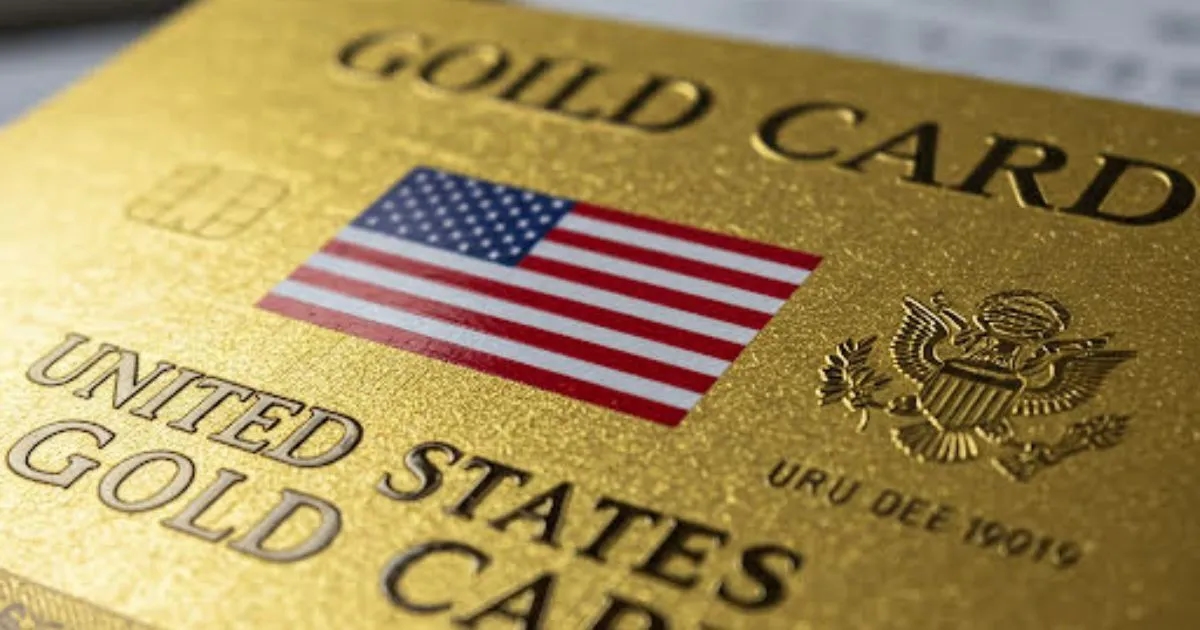


US President Donald Trump has launched a controversial new residency-for-investment programme allowing wealthy foreign nationals to obtain a “Gold Card” visa by paying $1 million, sparking debate over the administration’s mixed messaging on immigration. A higher-tier “Platinum Card” costing $5 million is also set to follow, offering expanded tax benefits.
What the new ‘Gold Card’ offers
According to an official government webpage, the “Trump Gold Card” provides US residency in record time, subject to applicants:
- paying a $15,000 processing fee to the Department of Homeland Security (DHS),
- clearing a background check, and
- contributing $1 million to the programme.
(See also: NK report on global migration policy | United States visa policy – Wikipedia)
For businesses sponsoring employees, the cost rises to $2 million, along with:
- a 1% annual maintenance fee of $20,000, and
- a 5% transfer fee of $100,000 each time the visa is reassigned from one employee to another.
Trump described the initiative as “a direct path to citizenship for all qualified and vetted people”, claiming it will help American companies retain top global talent.
A contrasting ‘Platinum Card’ on the way
A forthcoming “Trump Platinum Card”, priced at $5 million, will reportedly allow holders to stay in the US for up to 270 days a year without paying taxes on non-US income. The White House says these two programmes will generate “many billions of dollars” for the country.
However, critics argue that the initiative appears to contradict Trump’s ongoing immigration crackdown, which includes large-scale deportation efforts targeting undocumented workers.
Cheaper than earlier proposals — and global competition
When news of the programme first surfaced in early 2024, the proposed price tag was $5 million. The revised amount of $1 million significantly undercuts other nations’ “golden visa” schemes, potentially making the US more attractive to wealthy investors.
(See related: NK analysis on international residency programmes)
For comparison:
- New Zealand’s new investor visa programme costs nearly $3 million (USD) and has attracted strong interest, particularly from wealthy Americans following Trump’s re-election.
DHS endorses the programme
DHS Secretary Kristi Noem praised the initiative on X, stating that contributors of $1 million (individuals) or $2 million (corporations) will receive expedited EB-1 or EB-2 green cards after “rigorous vetting”. These categories typically include individuals with extraordinary ability or advanced professional qualifications.
Political and ethical criticism
The programme has sparked debate among immigration advocates, economists, and lawmakers. Critics say offering a fast-track to US residency for the rich contradicts long-standing American values that celebrate migrants of modest means seeking opportunity.
Advocacy groups also warn that “pay-to-stay” policies risk increasing inequality within the US immigration system by giving affluent applicants special privileges while harsher enforcement measures target vulnerable communities.
Trump defended the move by contrasting wealthy contributors with undocumented migrants, saying:
“They’re going to spend a lot of money to come in. They’re going to pay, as opposed to walking over the borders.”
Economic or exclusionary?
Supporters argue the scheme will boost federal revenue and attract high-skilled professionals. Opponents call it a “golden loophole”, allowing the wealthy to bypass normal immigration scrutiny while others face long waiting periods.
The administration maintains that proceeds will be deposited into “an account where we can do things positive for the country”.
As the programme rolls out, observers say it will test public sentiment around the balance between economic gain and equitable immigration policy.
Tags
US immigration, Trump administration, Gold Card visa, Platinum visa, investment residency, DHS, Kristi Noem, US policy, newskarnataka