







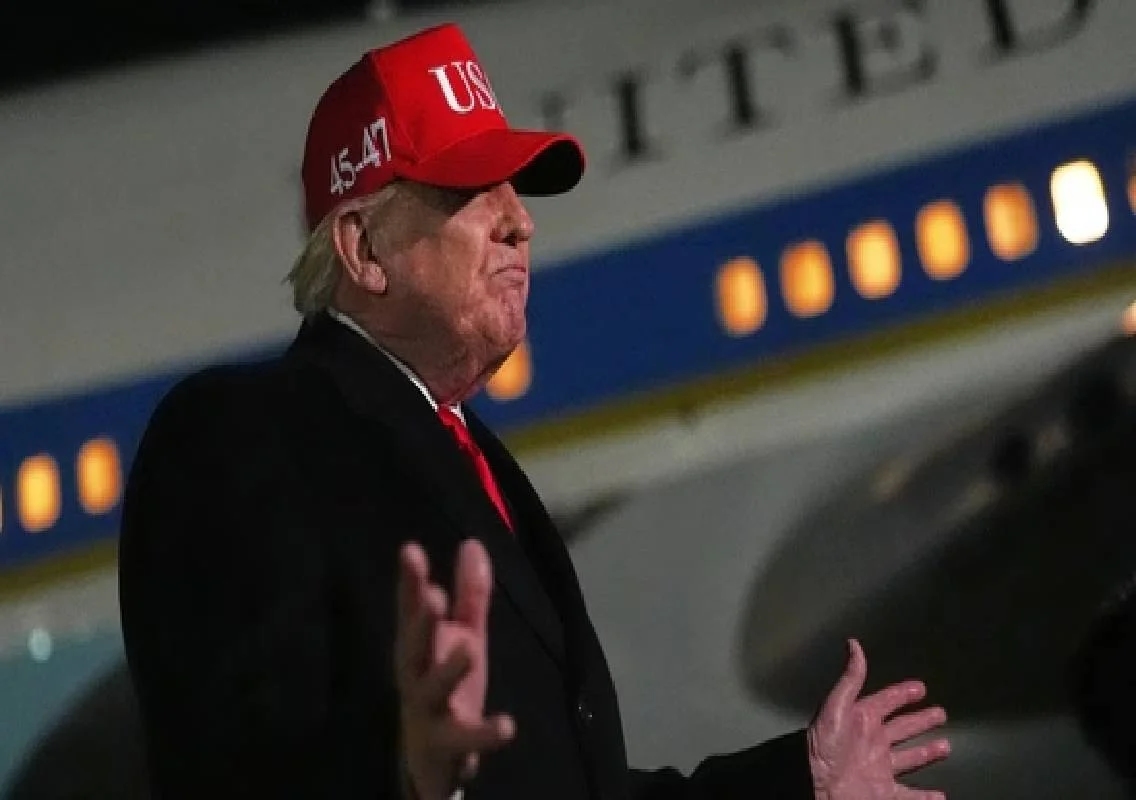


Washington: Donald Trump has issued a strong warning following the collapse of US-Iran talks in Pakistan, stating that he is unconcerned about whether Tehran returns to negotiations and announcing a blockade of the strategically vital Strait of Hormuz.
Speaking to reporters on Sunday after the talks failed to reach a breakthrough, Trump described Iran as being in a “very bad shape” and reiterated his administration’s firm stance against Tehran acquiring nuclear weapons.
Talks collapse despite long negotiations
The negotiations between the United States and Iran reportedly lasted around 21 hours but failed to produce an agreement, particularly on the nuclear issue, which Trump described as the most critical point.
“Iran will not have a nuclear weapon. There is no way,” Trump said, emphasising that Tehran’s intentions were made clear during the discussions.
When asked about the possibility of future talks, he added, “I don’t know. I don’t care if they come back or not. If they don’t come back, I’m fine.”
Iran, on the other hand, blamed the breakdown of talks on what it described as “unreasonable demands” from the US side. According to Iranian state media, the delegation engaged in detailed discussions but could not reach a consensus.
Announcement of Hormuz blockade
In a significant escalation, Trump announced that the US would begin implementing a blockade at the Strait of Hormuz from 10 am (local time) on Monday.
The waterway is considered one of the world’s most critical oil transit routes, with a large portion of global crude supply passing through it. Blocking access to the strait could have major implications for global energy markets and trade flows.
Trump stated that the move is aimed at preventing Iran from exporting oil and asserted that other countries are also working towards the same objective.
In a post on his social media platform, he said the US Navy would “begin the process” of blocking all ships attempting to enter or exit the strait. He described Iran’s earlier actions related to the route as “world extortion.”
Sharp criticism of Iran
Trump also made a series of strong claims about Iran’s military capabilities, stating that its missile stockpiles are “largely depleted” and its manufacturing capabilities for drones and missiles have been significantly weakened.
He further alleged that Iran had failed to honour its commitments regarding the opening of the Strait of Hormuz, accusing the country of breaking its word.
According to Trump, the US had exercised restraint in its military response, claiming that only limited infrastructure had been targeted.
Rising geopolitical tensions
The developments signal a sharp escalation in tensions between Washington and Tehran, with potential ripple effects across global markets.
Any disruption in the Strait of Hormuz could lead to a surge in oil prices, as the route is a crucial chokepoint for energy supplies from the Middle East to the rest of the world.
Analysts warn that such a move could also heighten geopolitical risks in the region, impacting international trade and diplomatic relations.
Role of Pakistan talks
The failed negotiations, which took place in Pakistan, were seen as a key opportunity to ease tensions between the two countries. However, the lack of agreement underscores the deep divisions that remain on critical issues, particularly Iran’s nuclear programme.
The involvement of senior US officials, including JD Vance, highlights the importance of the talks, even as they ended without a resolution.
Conclusion
Trump’s remarks and the announcement of a potential blockade mark a significant escalation in US-Iran relations. With diplomatic efforts stalled and tensions rising, the situation remains highly volatile, with possible consequences for global energy markets and regional stability.