


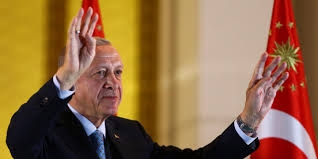


IZMIR: Turkey’s opposition is expressing confidence that voters will reject what it describes as government coercion under President Recep Tayyip Erdogan, despite a series of legal setbacks, arrests and political defections that have weakened its position ahead of the next national elections.
The opposition’s confidence comes more than two years after it made significant gains in the March 2024 local elections, raising hopes that it could challenge Erdogan’s long-standing political dominance through the ballot box.
However, the political landscape has changed considerably since then. The opposition’s leading presidential challenger, Istanbul Mayor Ekrem Imamoglu, is in prison, the main opposition Republican People’s Party (CHP) has been divided following a court ruling, and several elected mayors have switched allegiance to Erdogan’s ruling Justice and Development Party (AK Party).
The opposition maintains that these developments will not necessarily weaken its electoral support. Instead, it argues that voters will respond to what it considers politically motivated legal action against government critics when they next vote.
The government rejects allegations that the legal proceedings are politically motivated and maintains that Turkey’s judiciary operates independently.
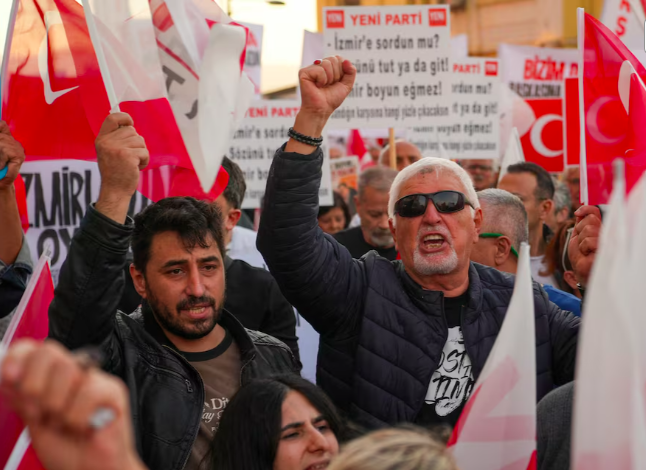
With presidential and parliamentary elections scheduled for 2028, the opposition faces the challenge of maintaining public anger and converting it into sustained political support.
2024 election victory raised opposition hopes
The March 2024 local elections marked an important moment for Turkey’s opposition.
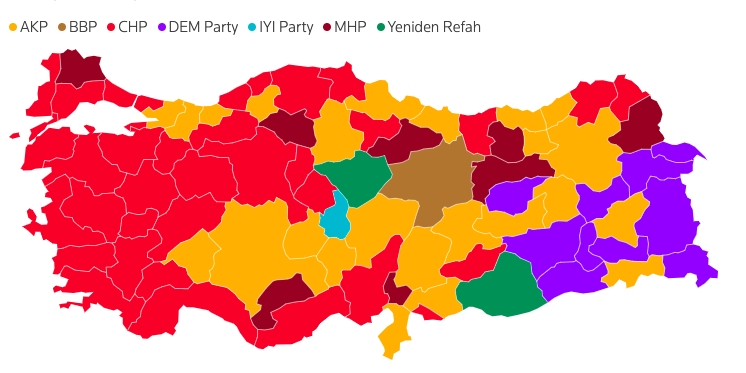
Under the leadership of Ozgur Ozel, the CHP finished ahead of Erdogan’s AK Party for the first time in their more than two-decade political rivalry.
The party won 35 provincial and metropolitan mayoralties, compared with 24 secured by the AK Party.
The results strengthened opposition hopes that control of major cities could provide a platform for challenging Erdogan at the national level.
Istanbul, Ankara and Izmir were among the important urban centres where opposition candidates secured electoral victories.
Ekrem Imamoglu retained his position as Istanbul mayor for a second term, while the CHP also maintained control of several other major cities.
The outcome suggested that opposition parties could attract support beyond their traditional voter base and build a broader political challenge to the ruling establishment.
However, subsequent arrests, court proceedings and defections have reduced the opposition’s municipal influence and complicated its efforts to maintain the momentum generated by the 2024 elections.
Seren Selvin Korkmaz, co-founder and co-director of the Istanbul-based IstanPol Institute, said public anger over the government’s actions had not disappeared.
“I do not believe this anger has disappeared,” she said.
However, she cautioned that anger alone might not sustain political opposition over an extended period.
“However, unless this anger is channelled into political energy or organisational energy, it will fade away. It may evolve into disappointment, hopelessness or apathy,” she said.
Izmir mayor’s defection highlights opposition challenges
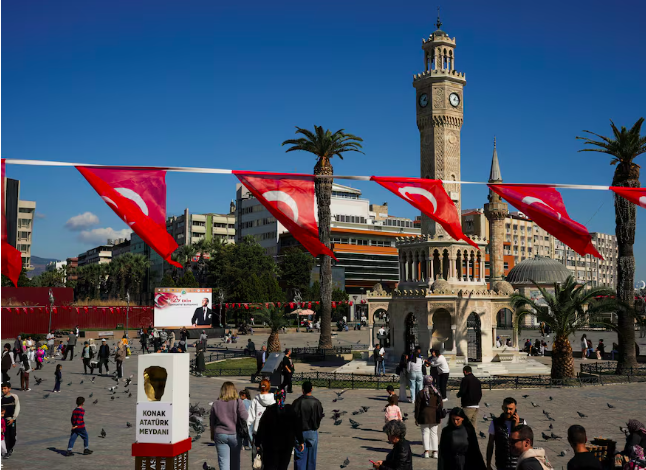
Izmir, Turkey’s third-largest city with approximately 4.5 million residents, has become a prominent example of the political difficulties confronting the opposition.
The city, located on Turkey’s western Aegean coast, has traditionally been a stronghold of secular and social democratic political movements. The AK Party had never won control of Izmir through a mayoral election.
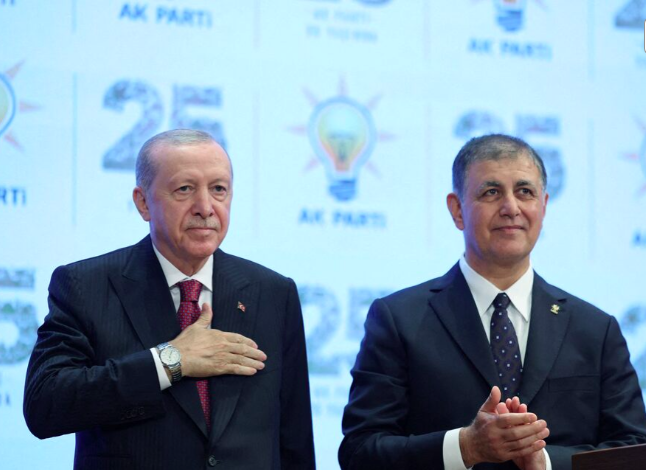
However, that political position changed in October 2026 when Mayor Cemil Tugay, who was elected on an opposition ticket in 2024, defected to Erdogan’s ruling party.
Tugay’s decision was a significant symbolic development for the AK Party, which gained control of the city following his change of political allegiance.
The mayor defended his move, saying it was in the best interests of Izmir. Erdogan also rejected opposition allegations that Tugay had switched parties under government pressure, describing them as slander.
The opposition, however, has presented the defection as an example of what it describes as government coercion against elected representatives.
Cagatay Guc, head of the opposition New Party in Izmir, told that voters would express their dissatisfaction with the development during the next national elections.
“The government believes it can steer this process through coercion, but it will realise that it has made a grave miscalculation in the election,” Guc said.
The New Party, led nationally by Ozgur Ozel, had organised protests before Tugay’s defection and believes that many residents oppose the mayor’s decision.
Izmir residents divided over the mayor’s move
Interviews conducted by a News channel with residents of Izmir revealed differing reactions to Tugay’s decision.
Several residents criticised the mayor for changing political allegiance after being elected on an opposition ticket.
A 50-year-old resident identified only as Koray said the decision belonged to Tugay and did not represent the views of the city’s population.
“It was Tugay who joined the AK Party, not the people of Izmir,” he said, adding that the ruling party could not win over the people of the city.
A 67-year-old woman identified as Halide also expressed opposition to the move and said she intended to support Ozel in the next elections.
However, not all residents viewed the defection negatively.
Some believed that having a mayor aligned with the national government could help Izmir secure greater administrative support and improved municipal services.
A 46-year-old resident identified as Isa said he hoped the city would receive the necessary government assistance for development and reconstruction.
Another resident, 53-year-old Alpay, suggested that Tugay might have felt he had limited options because of the legal pressure facing opposition politicians.
“He would either end up in Silivri, or carry on by switching parties,” Alpay said, referring to the prison west of Istanbul where several opposition figures are being held.
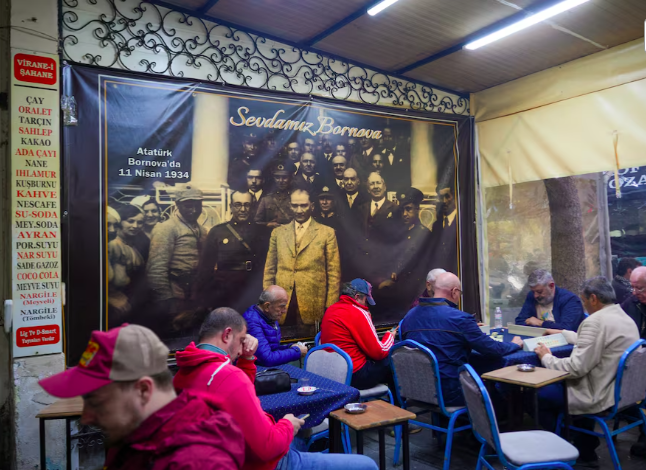
The contrasting reactions indicate that the mayor’s decision has become part of a wider debate over political allegiance, local administration and the relationship between municipal authorities and the national government.
Imamoglu’s imprisonment adds to opposition difficulties
The imprisonment of Istanbul Mayor Ekrem Imamoglu has further complicated the opposition’s efforts to maintain its political momentum.
Imamoglu is widely regarded as Erdogan’s principal political challenger and was re-elected as Istanbul mayor for a second term in the March 2024 local elections.
His victory was part of the wider success enjoyed by the CHP, which secured 37.8% of the vote and retained control of Istanbul, Ankara, Izmir and several other major cities.
The opposition had viewed these victories as an opportunity to establish a stronger political presence across Turkey and build a national challenge to Erdogan.
However, Imamoglu is now being held at Silivri prison while awaiting trial on corruption charges, which he denies.
His imprisonment has been accompanied by arrests involving dozens of mayors and hundreds of municipal officials.
Opposition leaders have described the legal proceedings as part of a politically motivated campaign against government critics. The government has rejected these accusations and maintained that judicial proceedings are independent.
The developments have also raised questions about the opposition’s ability to maintain its organisational structure and prepare for the next presidential contest while several prominent figures remain behind bars.
Court ruling deepens crisis within the main opposition party
The opposition’s organisational difficulties have increased following a court ruling that overturned the results of the CHP’s 2023 party congress.
The ruling removed Ozel from the party leadership and reinstated former chairman Kemal Kilicdaroglu, creating a leadership dispute within Turkey’s main opposition organisation.
The court cited irregularities in the congress that had elected Ozel as chairman. The decision intensified divisions between supporters of the two leaders and created uncertainty over the party’s future direction.
Ozel, who is a close political ally of Imamoglu, responded by launching the New Party, seeking to preserve the opposition’s political campaign and maintain public attention on the legal cases involving opposition representatives.
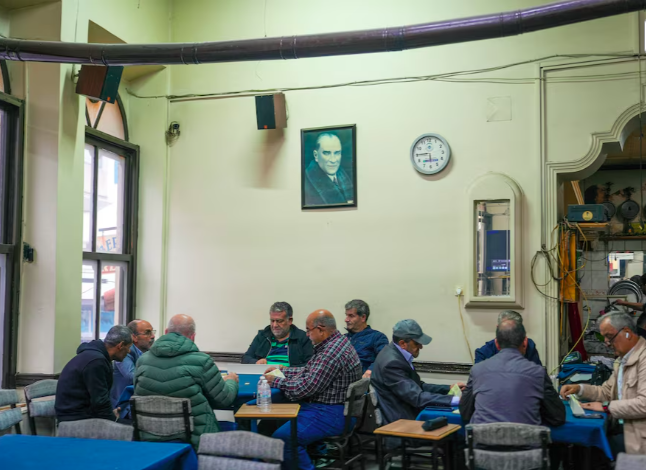
The split has complicated efforts to bring opposition supporters together under a common political organisation.
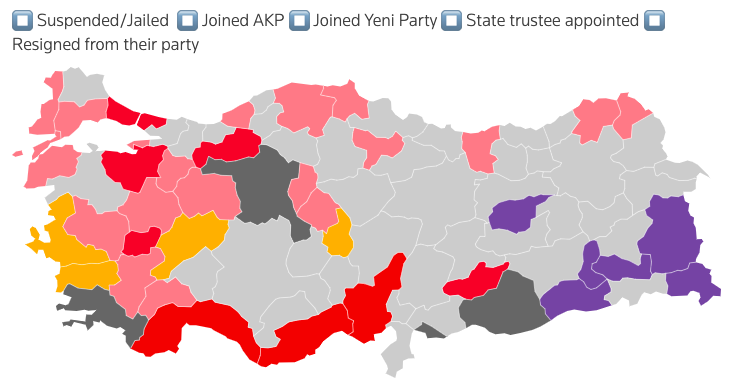
The decline in the opposition’s municipal influence has also been attributed to arrests, removals from office, the appointment of government trustees and defections by elected representatives.
These developments have reduced the number of municipalities controlled by opposition parties since the 2024 local elections.
Opposition faces challenge of retaining voter support
Beyond the legal and organisational challenges, opposition leaders are concerned about whether public dissatisfaction can be sustained until the next national elections.
Tanju Tosun, a political science professor at Ege University in Izmir, warned that prolonged political uncertainty could affect voter participation.
“If voters lose faith that change is possible, why would they bother to vote?” he said.
Tosun suggested that voter turnout in the next general election could decline slightly, particularly among opposition supporters.
His assessment highlights a challenge for opposition parties: maintaining public engagement over an extended period without allowing dissatisfaction to turn into political disengagement.
Seren Selvin Korkmaz of the IstanPol Institute has similarly emphasised the importance of converting public anger into organised political activity.
For the opposition, this could involve strengthening party structures, maintaining contact with voters, coordinating political campaigns and presenting a common position on the legal cases involving elected representatives.
The government, meanwhile, continues to deny allegations of political interference in the judiciary.
Turkey’s next elections could take place before May 2028
Turkey’s next presidential and parliamentary elections are scheduled for May 2028. However, the possibility of an earlier election has entered the political discussion.
A presidential adviser said in October that the elections would probably be held slightly earlier than originally expected.
An early election could have constitutional implications for Erdogan’s political future.
Under Turkey’s constitutional framework, a president is generally limited to two terms. However, if parliament decides to renew elections during a president’s second term, the incumbent can seek another term under the relevant constitutional provision.
An earlier election could therefore provide Erdogan with an opportunity to contest the presidency again, subject to the constitutional process.
The possibility of an early vote adds another dimension to the opposition’s preparations. Political parties must maintain their organisational strength while also responding to developments involving their leaders and elected representatives.
For the opposition, the immediate task is to retain public support and establish a credible electoral campaign despite the divisions and legal challenges it faces.
A test of Turkey’s opposition ahead of the next vote
The political developments since the March 2024 local elections have significantly changed the position of Turkey’s opposition.
The CHP’s electoral gains initially provided a platform for challenging Erdogan’s long-standing political dominance. However, the imprisonment of Imamoglu, the court-ordered leadership change, the formation of the New Party and the defection of mayors have created fresh obstacles.
Izmir’s political situation illustrates the competing arguments surrounding these developments. While opposition leaders describe Tugay’s move as evidence of government pressure, the mayor says his decision was in the city’s interests. Some residents have criticised him, while others believe closer cooperation with the national government could improve municipal services.
The next national elections will provide an opportunity for voters to assess these competing positions.
For now, the opposition continues to maintain that electoral participation remains the route through which voters can express their dissatisfaction. Whether it can sustain public engagement and translate that sentiment into organised political support will remain a central question in Turkish politics as the country approaches its next national vote.