









Abu Dhabi: The United Arab Emirates has suspended all trade, commercial exchanges and financial transactions with Iran until further notice, hours after Emirati authorities detected two ballistic missiles launched from Iran. The move marks a sharp escalation in tensions between the two neighbouring countries.
The UAE Foreign Ministry said the decision was taken in response to regional developments that it said were undermining regional and international peace and security. The announcement followed a brief emergency alert sent to people in the UAE over a potential missile threat.
UAE halts all economic dealings with Iran
Afra Al Hameli, director of the Strategic Communications Department at the UAE Ministry of Foreign Affairs, announced that trade activities, commercial exchanges and financial transactions with Iran had been halted until further notice.
The ministry did not immediately provide details about the scope of the suspension or whether any specific exemptions would apply.
Al Hameli also reiterated the UAE’s commitment to dialogue, cooperation and regional integration, indicating that Abu Dhabi’s decision was being presented as a response to the current escalation rather than an abandonment of diplomacy.
Two ballistic missiles detected
The economic action came after the UAE Ministry of Defence said its air-defence systems had detected two ballistic missiles launched from Iran towards the UAE.
According to the UAE’s assessment, the missiles were targeting maritime traffic. One missile fell into the sea outside UAE territorial waters, while the other fell within UAE territorial waters, according to reports.
The incident triggered a brief emergency phone alert warning residents of a potential missile threat. The alert was subsequently lifted.
Iran denies involvement
Iran has rejected the UAE’s accusations.
Iranian officials described the allegations as baseless, denying responsibility for the missile incident. The competing claims add another layer of uncertainty to an already tense regional situation.
The UAE’s decision to suspend economic dealings nevertheless represents a significant escalation, particularly because commercial and financial links between the two countries had shown signs of recovering.
Trade ties had recently resumed
The suspension comes at a particularly sensitive time because some economic links between the UAE and Iran had recently begun returning.
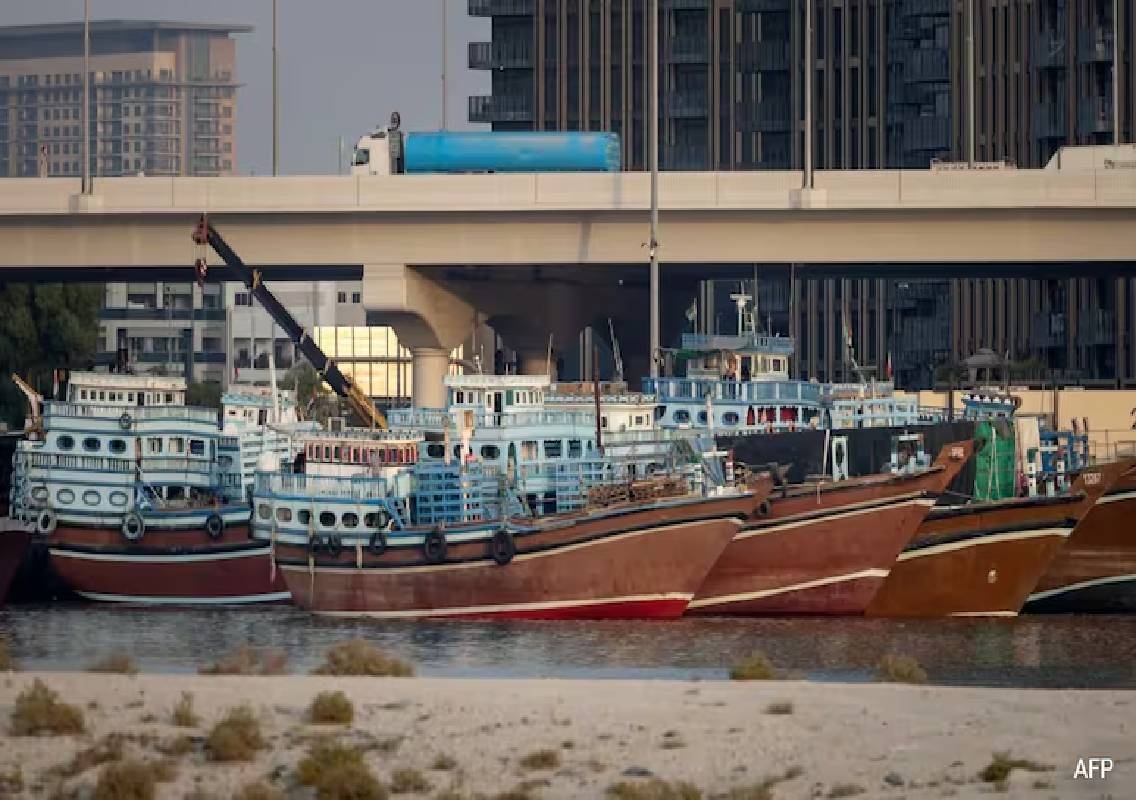
Direct cargo shipping between the two countries had resumed through Dubai’s Jebel Ali Port in late June, after being suspended earlier in the year. Some Iranian flights to the UAE had also resumed, while certain Iranian residents with UAE residency had been allowed to return.
The latest decision puts that gradual economic normalisation at risk.
Strait of Hormuz adds to tensions
The missile incident also comes amid growing tensions around the Strait of Hormuz, one of the world’s most important energy shipping routes.
The UAE has recently accused Iran of attacking vessels linked to the Abu Dhabi National Oil Company (ADNOC) while they were travelling through the strategic waterway. Abu Dhabi has called for an end to attacks and for freedom of navigation to be restored.
The latest developments could therefore have consequences beyond UAE-Iran relations, particularly for shipping, energy markets and businesses operating across the Gulf.
UAE remains committed to diplomacy
Despite the suspension, the UAE Foreign Ministry has stressed its continued commitment to dialogue and regional cooperation.
The ministry also said it remained committed to protecting the integrity of the international financial system and complying with international law and global standards.
This suggests Abu Dhabi is attempting to combine a strong economic response with its stated preference for diplomatic engagement.
Economic impact could be significant
The suspension could affect companies involved in imports, exports, shipping, banking and other commercial activities between the two countries.
The UAE, particularly Dubai, has historically served as an important commercial hub for businesses connected to Iran. Any prolonged disruption could therefore affect traders and companies that depend on cross-border transactions.
The full economic impact will depend on how long the suspension remains in place and whether the government introduces exemptions or additional restrictions.
A major setback to de-escalation efforts
The latest development threatens recent efforts to restore more normal relations between Abu Dhabi and Tehran.
The two countries had maintained economic and diplomatic channels despite wider regional tensions. The return of shipping and some air links had indicated that commercial ties were beginning to recover.
The missile incident and subsequent trade suspension could reverse some of that progress.
Regional tensions remain high
The UAE’s announcement comes as the wider Middle East continues to face serious security tensions involving Iran, Israel and the United States.
The Strait of Hormuz has become a particularly sensitive flashpoint, with restrictions on maritime traffic affecting shipping and energy markets. A prolonged escalation could increase pressure on regional governments and international businesses.
For the UAE, which has repeatedly sought to avoid being drawn deeper into the conflict, the latest missile incident presents a significant security and diplomatic challenge.
What happens next?
The duration of the UAE’s suspension remains unclear.
The phrase “until further notice” means that the measures could remain in place until Abu Dhabi determines that the security situation has improved, although the government has not announced a specific timeline.
Further developments could depend on whether there are additional missile incidents, changes in the situation around the Strait of Hormuz and diplomatic efforts involving Iran and other regional powers.
Conclusion
The UAE has taken a major economic step against Iran by halting all trade, commercial exchanges and financial transactions with Tehran until further notice. The announcement followed the UAE’s detection of two ballistic missiles launched from Iran, one of which reportedly fell within UAE territorial waters.
Iran has denied responsibility for the incident, while the UAE has maintained its commitment to dialogue and regional cooperation. However, the suspension threatens to disrupt recently recovering trade and transport links between the two countries.
With tensions also rising around the Strait of Hormuz and regional shipping, the latest UAE-Iran dispute could have consequences well beyond bilateral economic relations.