







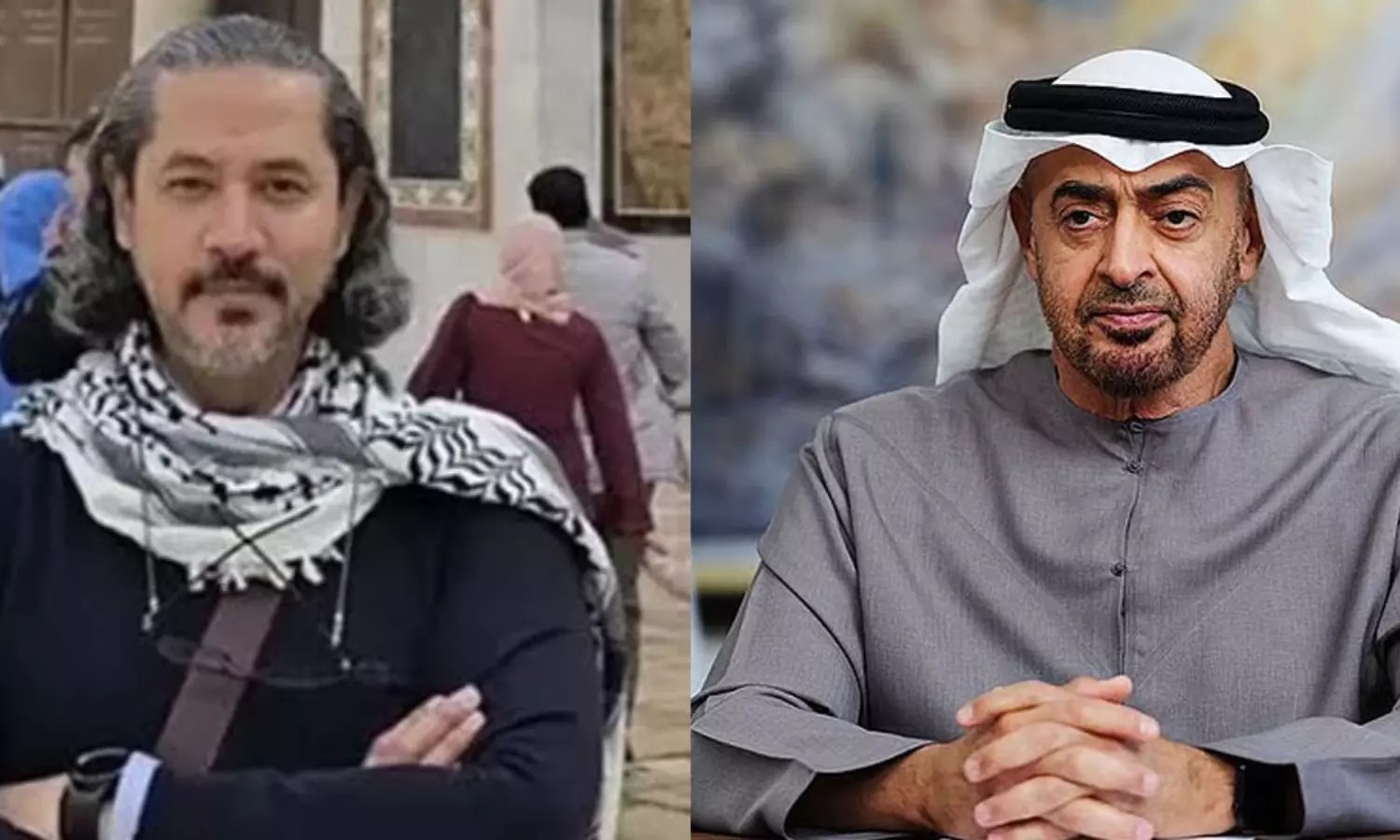


Abu Dhabi: United Arab Emirates President Sheikh Mohamed bin Zayed Al Nahyan has issued a presidential pardon for Egyptian poet and activist Abdul Rahman Yusuf Al-Qaradawi, just days after an Abu Dhabi court sentenced him to 10 years in prison and fined him AED 200,000.
The pardon was issued on Friday, September 4, according to the UAE’s official Emirates News Agency (WAM). The agency said the necessary procedures had been completed to implement the presidential pardon.
Al-Qaradawi had been convicted by the Abu Dhabi Federal Court of Appeal on August 27, 2026. The court imposed a 10-year prison sentence and a fine of AED 200,000. UAE authorities have described the case as involving offences connected with activities aimed at stirring and undermining public security.
The presidential pardon came only eight days after the conviction, bringing a sudden turn to a case that had attracted attention because of Al-Qaradawi’s political background, his public activism and his detention following extradition from Lebanon.
Presidential pardon announced
The UAE’s official announcement was brief.
WAM reported that President Sheikh Mohamed bin Zayed issued the pardon on September 4 for Abdul Rahman Yusuf Al-Qaradawi, who had been convicted by the Abu Dhabi Federal Court of Appeal on August 27.
The court had sentenced him to 10 years in prison and imposed a fine of AED 200,000.
The official statement added that the necessary procedures had been taken to implement the pardon.
The announcement did not provide additional details about the circumstances surrounding the pardon.
Conviction came days earlier
Al-Qaradawi’s pardon followed a recent court ruling.
The Abu Dhabi Federal Court of Appeal convicted him on August 27 and handed down the 10-year sentence.
Reports from UAE media said the case was heard by the court’s Cybercrime Circuit. The charges were described by UAE authorities as involving activities intended to stir or undermine public security.
The court also imposed a fine of AED 200,000.
The pardon means the sentence will not proceed in the manner originally ordered, although the official announcement did not elaborate publicly on the treatment of the financial penalty.
Who is Abdul Rahman Yusuf Al-Qaradawi?
Abdul Rahman Yusuf Al-Qaradawi is an Egyptian poet and political activist.
He is the son of the late Yusuf Al-Qaradawi, a prominent Islamic scholar who was based in Qatar and was widely associated with the Muslim Brotherhood.
Abdul Rahman has been known for his poetry as well as political commentary and activism.
His political views and public statements have previously attracted attention from authorities in several countries.
The younger Al-Qaradawi also holds Turkish citizenship, according to reports about his case.
Detention and extradition from Lebanon
The case dates back to late 2024, when Al-Qaradawi was detained in Lebanon after entering the country from Syria.
Lebanese authorities subsequently approved his extradition to the UAE.
He was extradited to the UAE in January 2025 following a formal request from Emirati authorities. Reports said he had been detained in Lebanon after crossing from Syria.
His extradition had attracted international attention because of concerns expressed by rights organisations and supporters about his treatment and possible consequences.
Political background
Al-Qaradawi has been a critic of the governments of Egypt, the UAE and Saudi Arabia.
His political activism has included involvement in Egypt’s political movement following the 2011 uprising.
His family background has also made his case particularly sensitive.
His father, Yusuf Al-Qaradawi, was a highly influential Islamic scholar and was associated with the Muslim Brotherhood, which is designated as a terrorist organisation by Egypt and the UAE.
The Muslim Brotherhood’s political status and activities remain deeply contentious across the region.
UAE authorities’ position
The UAE government has focused its public statements on the legal proceedings and the alleged offences.
The official WAM announcement confirmed the conviction and sentence before stating that the President had issued a pardon.
It did not provide a detailed explanation of why the pardon was granted.
The wording of the official announcement also did not indicate what further arrangements, if any, would follow the pardon.
Rights concerns surrounding the case
Al-Qaradawi’s detention and extradition had previously generated concern among human rights organisations.
The Gulf Centre for Human Rights welcomed the presidential pardon and described it as resulting in his release. The organisation also raised concerns about his future safety and called for guarantees regarding his treatment.
Such concerns have added an international dimension to the case.
However, the UAE’s official statement does not address these concerns or provide details about Al-Qaradawi’s future status.
A sudden end to the prison sentence
The timing of the pardon is notable.
Al-Qaradawi had been sentenced to a decade in prison only days earlier.
Instead of beginning a 10-year term, he has received presidential clemency.
The sequence—from conviction on August 27 to the pardon on September 4—has therefore brought the legal proceedings into the spotlight once again.
The UAE has confirmed that the procedures required to implement the pardon have been completed.
What happens next?
The official announcement does not provide detailed information about Al-Qaradawi’s next steps.
Questions surrounding his release, residence status and possible future movements remain subject to the applicable procedures and decisions of the UAE authorities.
The pardon itself represents the immediate development, while further information could clarify his status following the presidential decision.
Regional significance
The case comes against the backdrop of continuing political tensions surrounding opposition activists, the Muslim Brotherhood and cross-border extradition arrangements in the Middle East.
Al-Qaradawi’s detention involved three countries—Lebanon, the UAE and, because of his nationality and previous political activities, Egypt.
His case has therefore attracted attention beyond the UAE’s domestic legal system.
The presidential pardon could bring the immediate legal episode to an end, but questions surrounding his earlier detention, extradition and future remain significant for observers following freedom of expression and political dissent in the region.
Presidential clemency
Presidential pardons can dramatically alter the course of criminal proceedings after a conviction.
In this case, the pardon came shortly after the Abu Dhabi court handed down a substantial prison sentence and financial penalty.
The UAE’s official news agency confirmed the decision without giving a detailed explanation of the President’s reasons.
For now, the clearest development is that Sheikh Mohamed bin Zayed has pardoned Al-Qaradawi and that the necessary procedures to implement the decision have been initiated or completed.
Case draws renewed attention
Abdul Rahman Yusuf Al-Qaradawi’s case has moved rapidly from a lengthy prison sentence to presidential clemency.
The Egyptian poet and activist had been convicted by the Abu Dhabi Federal Court of Appeal on August 27 and sentenced to 10 years in prison with a AED 200,000 fine.
Just over a week later, the UAE President issued a pardon.
The decision has ended the immediate prospect of the 10-year sentence, while further details about Al-Qaradawi’s status and future remain awaited.
For now, the UAE government has confirmed one clear outcome: Abdul Rahman Yusuf Al-Qaradawi has received a presidential pardon following his conviction and sentencing.