







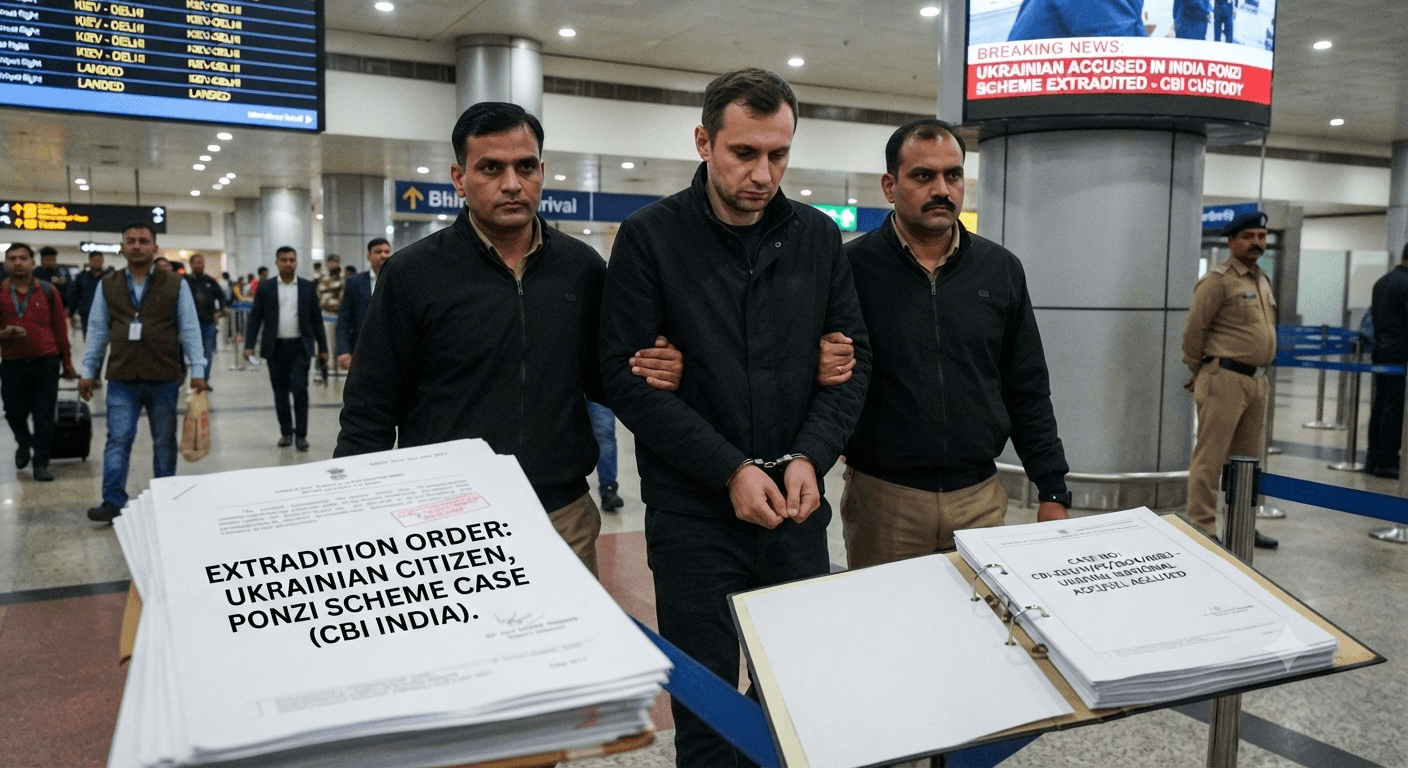


Mumbai: A Ukrainian national wanted in India in a money laundering case has been extradited from Romania and brought to Mumbai, the Central Bureau of Investigation (CBI) said on Tuesday, November 17. Oleksandr Zapichenko is accused of helping operate a suspected Ponzi scheme that allegedly promised investors weekly returns of 6 to 11 per cent through a multi-level marketing network.
The Enforcement Directorate (ED) is investigating Zapichenko and other accused under the Prevention of Money Laundering Act (PMLA). According to the CBI, the company at the centre of the case collected substantial amounts of cash from investors without obtaining the required approval from the Reserve Bank of India (RBI).
Investigators allege that the money collected through the scheme was transferred through hawala channels and used to purchase USDT, a cryptocurrency linked to the value of the US dollar. Zapichenko allegedly played a role in converting cash received from investors into cryptocurrency and arranging large-scale cash transactions.
His extradition followed an international operation involving the CBI, the ED and Romanian authorities, with assistance from India’s Ministries of External Affairs and Home Affairs.
How the alleged investment scheme operated
The company under investigation allegedly operated a Ponzi scheme using a multi-level marketing structure. Investors were reportedly attracted by promises of unusually high weekly returns ranging from 6 to 11 per cent.
Such returns, if sustained, would represent exceptionally high earnings over a short period. The CBI said the company collected large sums from investors in cash without the necessary RBI approval.
A multi-level marketing structure generally involves participants being encouraged to join a network and bring in additional members. In the alleged scheme, investigators believe this structure was used to attract investors and collect money.
The CBI described the operation as a Ponzi scheme, in which money collected from participants may be used to meet promised returns to earlier investors rather than being generated through legitimate business activity.
The agency said the accused allegedly handled significant cash transactions connected to the scheme. Investigators are examining the movement of funds and the roles played by the individuals involved.
The alleged use of cash and cryptocurrency has also made the financial trail an important part of the investigation.
Alleged use of hawala channels and USDT
According to the CBI, money collected from investors was allegedly routed through hawala channels before being converted into USDT.
Hawala is an informal system of transferring money through a network of intermediaries, often without the funds physically moving through conventional banking channels. Such transactions can make it more difficult for investigators to trace the movement of money.
USDT, commonly known as Tether, is a cryptocurrency designed to maintain a value linked to the US dollar. It is used for transferring and trading digital assets across cryptocurrency platforms.
The CBI alleged that Zapichenko helped convert cash collected from investors into cryptocurrency and arranged large-scale cash transactions as part of the operation.
Investigators are seeking to establish how the funds moved through the alleged network, who handled the transactions and where the money ultimately went. The ED’s investigation under the PMLA is focused on suspected money laundering linked to the scheme.
The allegations against Zapichenko and others remain subject to the ongoing investigation and legal proceedings.
Interpol Red Notice led to arrest in Romania
The process to bring Zapichenko back to India began after the ED requested international assistance in locating him.
At the agency’s request, the CBI secured an Interpol Red Notice against the Ukrainian national. A Red Notice is an international request circulated to law enforcement agencies to locate and provisionally arrest a person wanted by a country, pending extradition or similar legal action. It is not, by itself, an international arrest warrant.
Following the notice, Romanian authorities located and arrested Zapichenko.
India subsequently submitted a formal extradition request to Romania, seeking his return to face the investigation in the money laundering case.
The CBI coordinated with the Ministries of External Affairs and Home Affairs, along with the ED, to complete the extradition process. Romanian authorities approved India’s request and handed Zapichenko over to an ED escort team.
The team then brought him to Mumbai on November 17, where he was placed in the custody of the Indian authorities for further proceedings.
CBI highlights international cooperation
The CBI said the extradition was made possible through coordination between Indian agencies and their counterparts in Romania, using Interpol channels.
The agency also highlighted its record of bringing wanted individuals back to India from overseas. According to the CBI, more than 280 wanted individuals have been brought back to the country since 2019 through coordination facilitated by Interpol.
The figure reflects the role of international law enforcement cooperation in cases where suspects are located outside India. Such operations can involve sharing information, securing provisional arrests, submitting extradition requests and completing legal procedures in the country where the accused is found.
In Zapichenko’s case, the CBI facilitated the international coordination, while the ED is investigating the alleged financial offences under the PMLA.
His return to Mumbai marks a new stage in the investigation, allowing Indian authorities to proceed with further legal action and examine his alleged role in the movement of investor funds.
Investigation into alleged money laundering continues
The case involves allegations of unauthorised investment collection, the use of a multi-level marketing network and the movement of funds through hawala channels and cryptocurrency.
Investigators will seek to establish the extent of the money collected, the identities of those involved and the alleged use of the funds. The role of each accused, including Zapichenko, will have to be examined through evidence gathered during the investigation.
The ED’s proceedings under the PMLA are intended to investigate the suspected laundering of proceeds connected to the alleged scheme. The CBI’s account of the extradition and the allegations against Zapichenko form part of the ongoing case.
The extradition from Romania ensures that the Ukrainian national is now back in India to face the investigation. Further details about the alleged financial transactions and the extent of investor losses were not provided in the CBI statement cited in the report.