







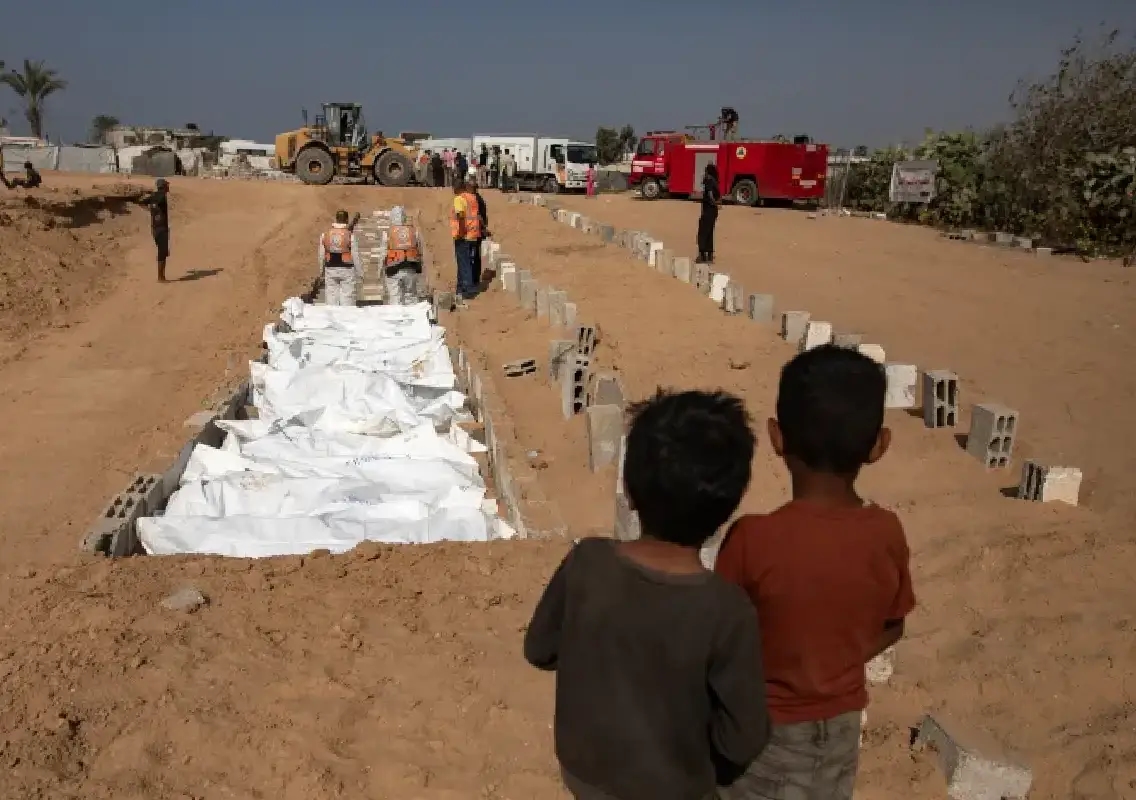


Inside overcrowded hospitals in Gaza, families gather daily around unidentified bodies, hoping to find missing loved ones. For many, that hope fades into anguish as decomposition and the lack of forensic technology make identification impossible.
According to Gaza’s forensic evidence department, at least 1,129 bodies have been recovered but remain unidentified. Officials say the figure is likely far higher, given the scale of deaths since the war began in October 2023. Local authorities estimate that over 70,000 people have lost their lives, while another 10,000 are believed to be buried under rubble.
Lack of forensic tools deepens pain
Mahmoud Ashour from Gaza’s forensics department said multiple families often claim the same body, each believing it to be their missing relative. “Without advanced DNA identification capabilities, we are unable to confirm identities,” he said.
Authorities in Gaza allege that Israel has restricted the entry of excavation machinery and DNA testing equipment, severely hampering recovery and identification efforts. Of the 360 bodies handed over through the International Committee of the Red Cross during a ceasefire arrangement, only 101 have been identified.
Debris, delays and mass burials
More than 60 million tonnes of debris are estimated to cover Gaza, with aid agencies reporting that only one fully functional digger is currently available. Many bodies have been buried without identification, sometimes in makeshift graves along roadsides or in open spaces.
The United Nations Office for Human Rights in the Occupied Palestinian Territory has expressed grave concern over reports of unidentified bodies and restricted access to forensic tools, warning that delays can lead to loss of evidence and prolonged suffering for families.
Families trapped in uncertainty
A spokesperson for the Red Cross described the situation as one of “ambiguous loss”, where families are left suspended between hope and grief. Recovery and identification, as seen in past conflicts, can take years.
For many in Gaza, the deepest sorrow lies not only in loss, but in the inability to mourn, bury, and remember their loved ones with dignity.