







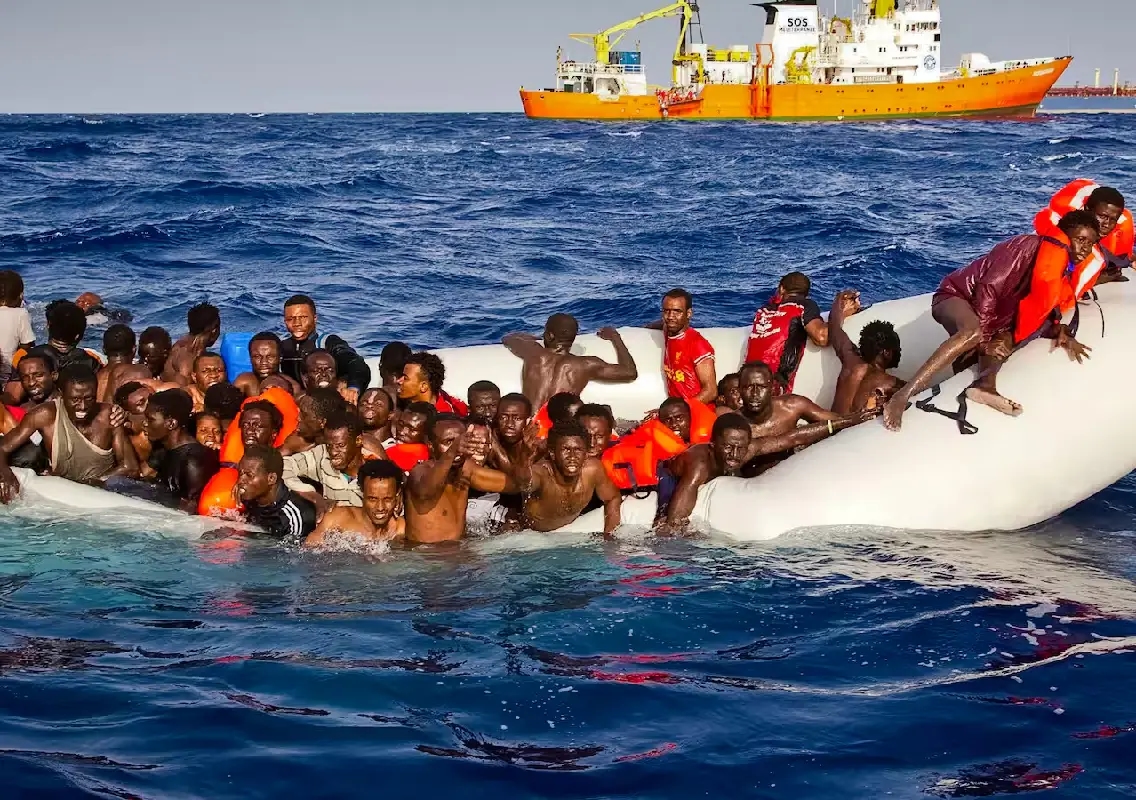


Up to 380 people are feared to have drowned in the Mediterranean Sea last week after Cyclone Harry battered southern Italy and Malta, according to the Italian Coast Guard, highlighting once again the deadly risks faced by migrants attempting the perilous sea crossing to Europe.
The warning came as Maltese authorities confirmed a shipwreck in which at least 50 people lost their lives. Only one survivor was rescued and hospitalised in Malta. According to rights group Alarm Phone, the man survived after clinging to the wreckage for nearly 24 hours before being picked up by a merchant vessel. He reportedly said the boat, which departed from Tunisia on January 20, had no other survivors.
Children feared among the dead
In a separate tragedy, one-year-old twin girls from Guinea are presumed dead after an overcrowded boat they were travelling on was struck by violent seas off the coast of the Sicilian island of Lampedusa, according to UNICEF’s Italy unit for migrant and refugee response.
Italian authorities said Cyclone Harry generated massive waves across the central Mediterranean, overwhelming fragile vessels used by people smugglers.
Coastguard searches for missing boats
Italy’s coastguard said it is searching for eight boats that were launched from the Tunisian port city of Sfax over the past 10 days, despite warnings about extremely dangerous weather conditions. Many of those on board are now feared dead.
Officials estimate that as many as 380 people who attempted the crossing during the storm may have drowned, making it one of the deadliest weeks in recent months.
Dangerous route despite fewer arrivals
According to Italy’s interior ministry, 66,296 people arrived by boat on Italian shores in 2025 — a slight decrease compared with the previous year and about half the number recorded in 2023. The decline followed stricter migration measures and agreements with Tunisia and Libya aimed at curbing departures.
However, humanitarian organisations say fewer NGO rescue ships are operating in the Mediterranean due to tighter regulations imposed by the Italian government, including fines and requirements to disembark rescued migrants at distant ports.
Mediterranean remains deadly passage
Despite the risks and restrictions, migrants continue to attempt the crossing from North Africa. Italy remains one of the main entry points, with the central Mediterranean considered one of the world’s most dangerous migration routes.
The International Organization for Migration has recorded at least 25,600 deaths and disappearances along the route since 2014, most linked to boats departing from Tunisia or Libya.