







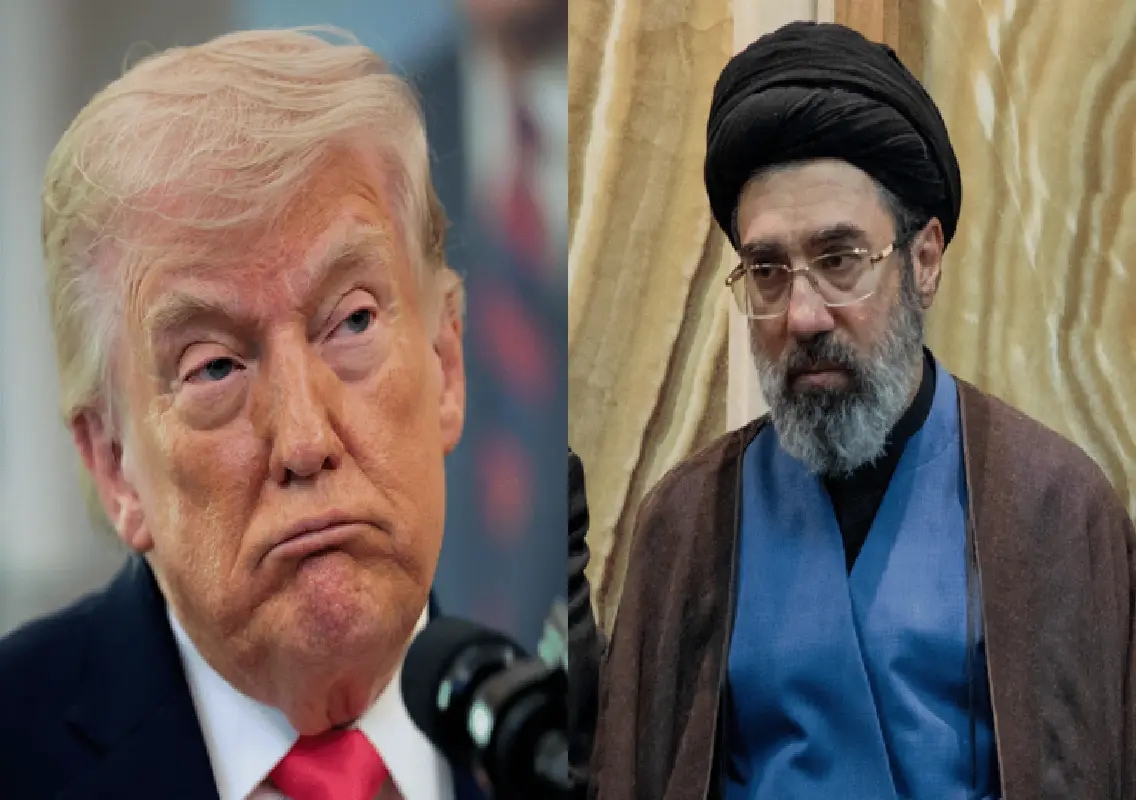


Washington: The United States has paused its military strikes on Iran after President Donald Trump announced a two-week ceasefire agreement with Tehran, offering a diplomatic window to negotiate a longer-term peace deal.
The ceasefire proposal, reportedly facilitated by Pakistan, includes provisions for reopening the strategically crucial Strait of Hormuz, a passage through which nearly one-fifth of the world’s energy supplies transit during peacetime.
Iran signals conditional acceptance
Tehran confirmed its willingness to participate in the temporary ceasefire, with Foreign Minister Abbas Araghchi stating that Iran would suspend its “defensive operations” if the US and Israel halt their attacks.
He added that Iranian forces would coordinate safe passage of vessels through the Strait of Hormuz during the ceasefire period, while maintaining operational control over the waterway.
The agreement is seen as a significant de-escalation after weeks of heightened conflict that began following joint US-Israeli strikes on February 28.
Iran outlines 10-point ceasefire plan
Iran’s Supreme National Security Council of Iran claimed that the ceasefire reflects acceptance of its 10-point proposal, which includes several major demands.
Key conditions outlined by Iran include:
- Continuation of its control over the Strait of Hormuz
- Acceptance of its nuclear enrichment programme
- Lifting of all primary and secondary sanctions
- Withdrawal of US military forces from the Middle East
- Release of frozen Iranian assets
- Termination of UN Security Council and IAEA resolutions
- Compensation payments to Iran
- A binding UN resolution to formalise the agreement
Tehran described the development as a “significant diplomatic victory” and insisted that any final agreement must be enforceable under international law.
Trump calls proposal ‘workable’
In a statement, Trump said the United States has received a “workable” proposal from Iran and agreed to pause military action as negotiations progress.
He noted that discussions with Pakistan’s leadership, including Prime Minister Shehbaz Sharif, played a role in securing the temporary ceasefire.
Trump said the US has already achieved its military objectives and is “very far along” in finalising a long-term peace agreement with Iran.
“Almost all points of past contention have been agreed to,” he said, adding that the two-week pause would allow both sides to conclude a definitive agreement aimed at ensuring long-term peace in the Middle East.
Strategic importance of Strait of Hormuz
The reopening of the Strait of Hormuz is a critical element of the ceasefire. The waterway, which had been effectively blocked during the five-week conflict, is vital for global oil supply chains.
Any disruption in the strait has far-reaching economic implications, affecting energy prices and international trade flows. The agreement to reopen it signals a potential stabilisation of global markets if the ceasefire holds.
Uncertainty remains over long-term outcome
While the ceasefire marks a significant step towards de-escalation, several challenges remain. Iran’s demands, particularly regarding sanctions relief and nuclear enrichment, are complex and could prove difficult to finalise.
Additionally, regional dynamics involving US allies and other stakeholders may influence the outcome of negotiations.
Conclusion
The two-week ceasefire between the United States and Iran represents a crucial pause in a rapidly escalating conflict, offering a narrow but significant opportunity for diplomacy. While both sides have expressed optimism, the success of the talks will depend on their ability to bridge longstanding differences and reach a sustainable agreement that ensures stability in the region.