







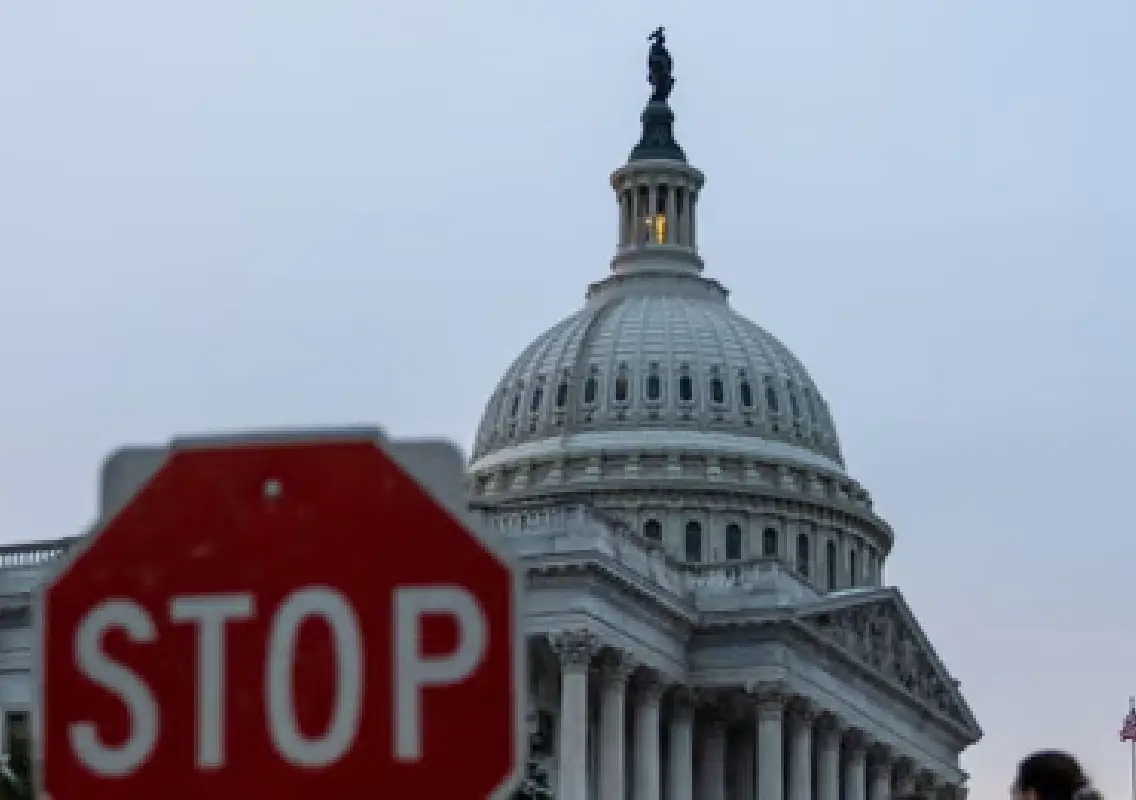


After more than 40 days of gridlock, the prolonged US government shutdown could be nearing an end, with the Senate expected to vote on a compromise bill on Sunday. Senate Republican Leader John Thune indicated that a deal with Democrats is “coming together,” though he cautioned that the outcome remains uncertain.
Talks gain momentum after weeks of deadlock
The weekend brought a rare moment of optimism in Washington. Senate Majority Leader Chuck Schumer and fellow Democrats revived negotiations on Friday by proposing a short-term deal aimed at safeguarding the Affordable Care Act (ACA) — also known as Obamacare — for at least a year. The proposal, however, initially met resistance from Republicans and former President Donald Trump, who opposed any commitment to ACA subsidies.
In a shift over the weekend, Thune signalled that Republicans were now considering a legislative package that would temporarily reopen the government through January while providing full-year funding for several key departments. “A deal is coming together,” Thune told reporters on Sunday. “We’ll see where the votes are.”
The key sticking point: health care subsidies
At the heart of the negotiations lies a debate over ACA subsidies — financial assistance that helps make health insurance more affordable for millions of Americans. Democrats are pushing for an extension of these subsidies as part of any short-term government funding bill.
Republicans, after rejecting the proposal last week, now appear open to allowing a future vote on the matter. This development could pave the way for a bipartisan continuing resolution (CR) — a stopgap measure that funds federal agencies temporarily, avoiding a prolonged shutdown.
Understanding the shutdown process
A government shutdown occurs when Congress fails to approve funding legislation by the deadline, causing a suspension of non-essential federal operations. To end it, both chambers of Congress must pass a funding bill or CR, which the President must then sign.
In the House of Representatives
- Simple majority required: 218 votes out of 435 members (or a majority of those voting).
- Recent precedent: The September 2025 CR passed narrowly, 217–215.
- No filibuster rule: Debate cannot delay passage once the majority is secured.
In the Senate
- Cloture rule: 60 votes are needed to invoke cloture — a procedure that ends debate and prevents a filibuster.
- Final passage: Once cloture is achieved, a simple majority of 51 votes is sufficient to pass the bill.
- Current dynamics: The Senate’s 53–47 Republican majority means at least seven Democratic or independent votes are necessary to advance any funding legislation.
In the 2025 shutdown case earlier this year, the Senate passed a similar stopgap spending bill with a 67–33 vote after achieving the 60-vote cloture threshold.
Political stakes remain high
The ongoing shutdown — the longest in over a decade — has affected thousands of federal workers, disrupted essential services, and created mounting political pressure on both parties. Public opinion polls suggest growing frustration among citizens, particularly over stalled paychecks and halted public programmes.
Democrats are emphasising the need to protect health care coverage, while Republicans are balancing fiscal concerns and internal divisions over the scope of government spending. The White House has so far refrained from commenting on the details of the potential Senate deal but has hinted that President Trump would review the proposal “if it responsibly funds government operations.”
What happens next?
If the Senate manages to secure the required votes, the bill will move to the House of Representatives, where Democrats hold a narrow majority. Analysts say the measure could clear the House quickly, allowing the President to sign it early next week — effectively ending the shutdown, at least temporarily.
Until then, federal employees and contractors remain in limbo, awaiting clarity on when they can return to work and receive back pay. Economists warn that prolonged uncertainty could impact GDP growth in the final quarter of 2025 if a resolution is not reached soon.
Outlook
While optimism has returned to Capitol Hill, the path to reopening the government still hinges on bipartisan cooperation and trust — both in short supply in a divided Washington. Should the Senate succeed on Sunday, it would mark the first major step toward ending the stalemate and restoring normal government operations after weeks of disruption.