







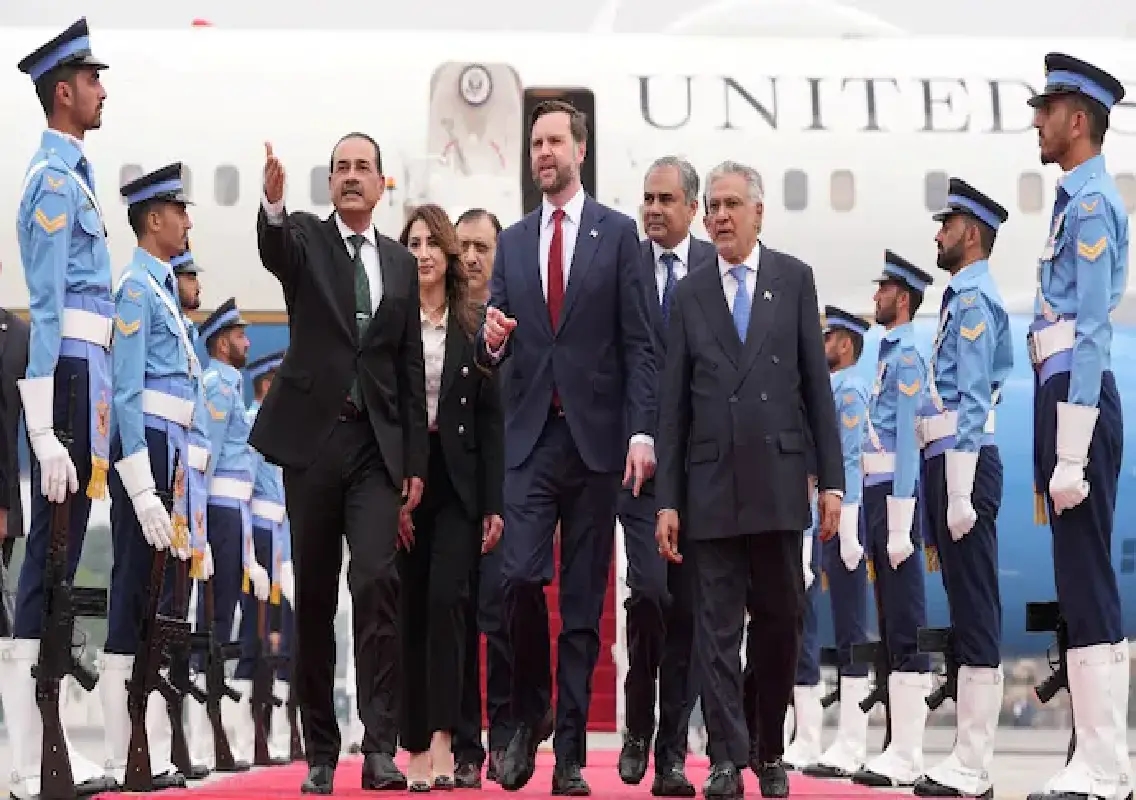


A high-level delegation from the United States has arrived in Islamabad, setting the stage for critical negotiations with Iran aimed at ending a six-week conflict that has shaken the Middle East and impacted the global economy.
The US aircraft carrying senior officials landed on Saturday afternoon, hours after the Iranian delegation reached the Pakistani capital earlier in the day.
Top leaders head delegations
The US team is led by Vice President JD Vance, accompanied by special envoy Steve Witkoff and adviser Jared Kushner.
On the Iranian side, the delegation is headed by Parliament Speaker Mohammad Bagher Ghalibaf and Foreign Minister Abbas Araghchi.
Both sides held separate preliminary meetings with Shehbaz Sharif before the expected start of indirect negotiations.
Pakistan plays mediator role
Pakistan has reiterated its commitment to facilitating dialogue between the two sides, expressing hope for constructive engagement and a “lasting and durable solution” to the conflict.
Officials indicated that the talks may initially proceed indirectly, with Pakistan acting as an intermediary between the US and Iranian delegations.
Iran lays down firm preconditions
Even before formal discussions began, Iran signalled that negotiations would hinge on key preconditions. Mohammad Bagher Ghalibaf stated that progress would require commitments related to the situation in Lebanon and the release of Iranian assets frozen abroad.
Tehran has also emphasised issues surrounding the Strait of Hormuz, sanctions relief and compensation for wartime damage.
At the same time, Iranian officials indicated openness to an agreement, provided it meets what they described as legitimate national interests.
US signals mixed messaging
Ahead of the talks, US President Donald Trump struck a strong tone, criticising Iran’s position and asserting that Tehran holds limited leverage in negotiations.
In contrast, Vice President JD Vance adopted a more measured approach, expressing cautious optimism about the outcome while warning against any attempts to delay or complicate the process.
Massive delegations and tight security
The scale of the negotiations is reflected in the size of the delegations, with Iran sending around 70 members, including experts across multiple sectors, and the US deploying a large advance team.
Security in Islamabad has been significantly tightened, with thousands of paramilitary personnel and army troops deployed across the city to ensure smooth proceedings.
Authorities described the arrangements as a “multi-layer security” setup aimed at preventing any disruptions.
Ceasefire holds amid regional tensions
The talks follow a two-week ceasefire that temporarily halted US and Israeli strikes on Iran. However, several flashpoints remain unresolved.
Iran has not fully lifted restrictions in the Strait of Hormuz, affecting global energy flows. Meanwhile, tensions continue in Lebanon, with ongoing clashes between Israeli forces and Hezbollah.
Recent strikes and retaliatory actions have underscored the fragility of the ceasefire and the urgency of diplomatic intervention.
High stakes for global stability
The conflict has had far-reaching consequences, including loss of lives, disruption of energy supplies and increased pressure on the global economy.
Iran is seeking major concessions, including sanctions relief and recognition of its authority over key maritime routes, while also pushing for compensation for war-related damages.
Conclusion
As negotiations begin in Islamabad, both sides remain far apart on critical issues. While diplomatic momentum exists, the outcome remains uncertain. The success or failure of these talks could play a decisive role in determining whether the region moves towards stability or faces renewed escalation.