









Islamabad: Talks between the United States and Iran have ended without a final agreement, casting doubt over the future of the fragile ceasefire following nearly 40 days of conflict in the Middle East.
The high-stakes negotiations, held in Islamabad, lasted for 21 hours but failed to produce a consensus on key issues, including the reopening of the strategically crucial Strait of Hormuz.
US says Iran rejected proposed deal
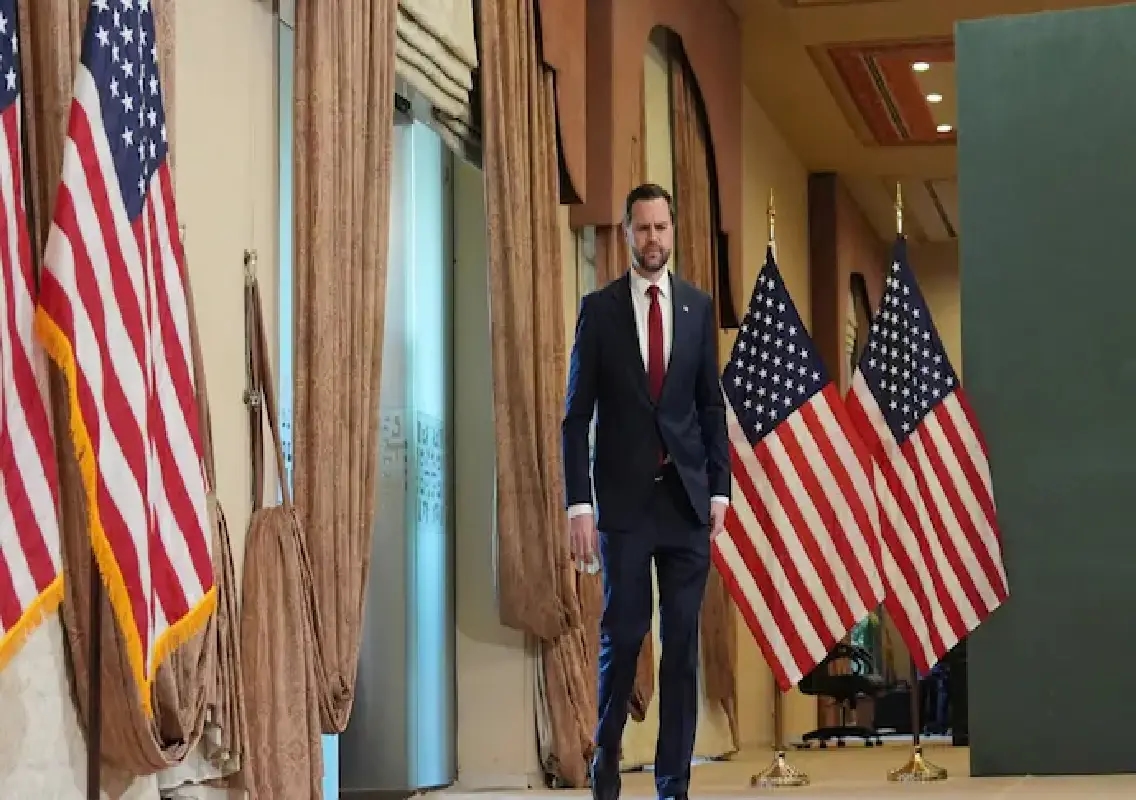
JD Vance, who led the American delegation, confirmed that the talks did not yield a breakthrough. Addressing the media after the meeting, he stated that Washington had presented what it considered a comprehensive and reasonable deal.
“We’ve made very clear what our red lines are… and they may have chosen not to accept our terms,” Vance said, adding that while discussions were substantive, no agreement could be reached.
He further remarked that the outcome was “bad news for Iran much more than it’s bad news for the United States,” reflecting Washington’s firm stance.
Nuclear commitments remain a sticking point
One of the major roadblocks in the negotiations was Iran’s alleged reluctance to provide a clear commitment on its nuclear programme.
According to Vance, the US sought an “affirmative commitment” that Iran would not pursue nuclear weapons or develop the capability to rapidly produce them in the future.
“The simple question is whether we see a fundamental commitment… not just now, but long term. We haven’t seen that yet,” he said.
The issue of nuclear development has long been a central point of contention between the two nations and continues to hinder diplomatic progress.
Iran criticises US demands
Iranian media reports, citing sources close to the delegation, suggested that the talks failed due to what Tehran viewed as excessive and unrealistic demands from Washington.
According to these reports, the US pushed for concessions on multiple fronts, including control over the Strait of Hormuz and restrictions related to peaceful nuclear energy programmes.
Sources also claimed that the US was attempting to secure through negotiations what it could not achieve during the conflict, and accused Washington of being unwilling to compromise.
No immediate plans for further talks
Iranian officials have indicated that there are currently no plans to hold another round of negotiations in the near future, signalling a potential pause in diplomatic engagement.
This development raises concerns about the sustainability of the temporary two-week ceasefire agreed upon after weeks of intense conflict.
Ceasefire under threat
The breakdown of talks has intensified uncertainty surrounding the truce. Earlier, Donald Trump had warned of severe military consequences if a final deal was not reached, including the possibility of a “never-before-seen” attack on Tehran.
Even during the negotiations, Trump maintained that the United States held a dominant position in the conflict, asserting that Washington had already achieved its objectives regardless of the outcome of the talks.
Strategic importance of the Strait of Hormuz
The Strait of Hormuz remains a critical issue in the dispute, as it serves as one of the world’s most vital oil shipping routes. Any disagreement over its control or access has far-reaching implications for global energy markets and regional stability.
Conclusion
The collapse of the Islamabad talks underscores the deep divisions between the United States and Iran on key strategic and security issues. With no agreement in sight and tensions still high, the future of the ceasefire remains uncertain.
As both nations reassess their positions, the possibility of renewed conflict cannot be ruled out, making diplomatic efforts in the coming weeks crucial for maintaining regional stability.