







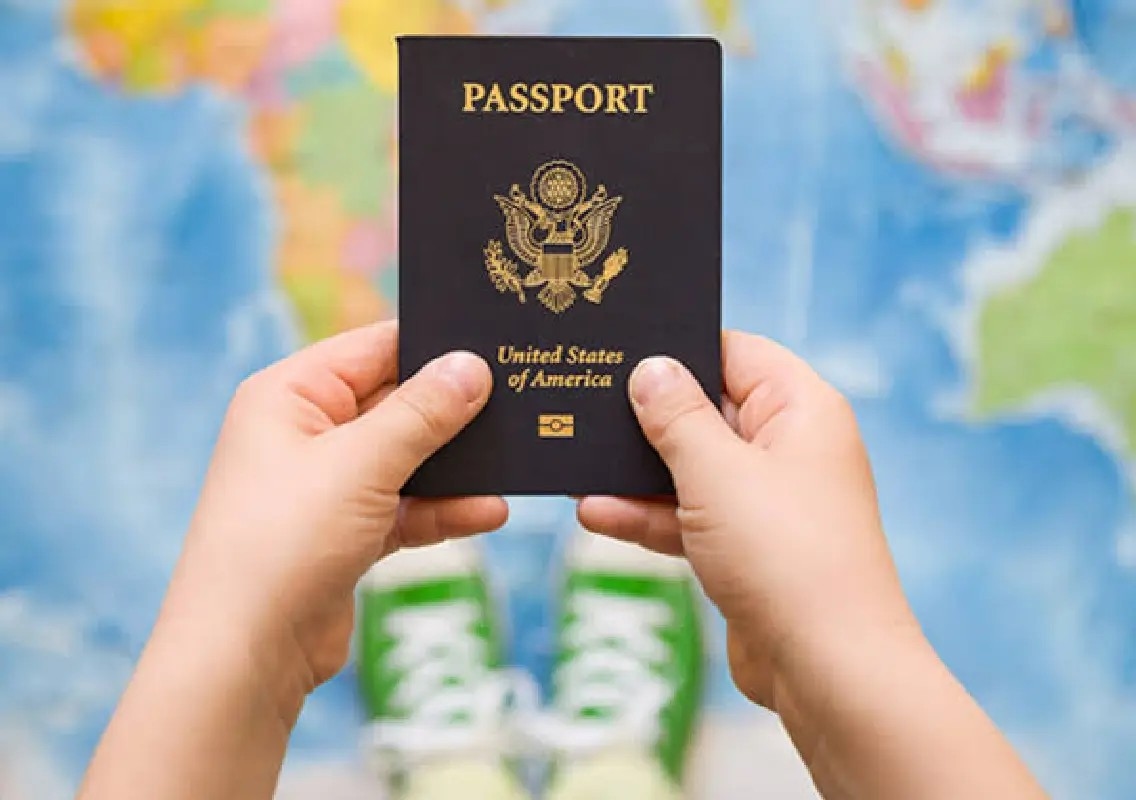


Washington: Parents applying for US passports for their children could soon be required to provide proof of their own citizenship or immigration status under a proposed State Department policy linked to President Donald Trump’s latest effort to restrict birthright citizenship.
The draft guidance, reviewed by Reuters, offers the first detailed indication of how the administration could implement Trump’s August 6 executive order targeting what it describes as “birth tourism”.
Parents could face new document checks
Under the proposed guidance, parents or legal guardians would have to provide documents showing their citizenship or immigration status when applying for a child’s passport.
US citizens could be asked to provide documents such as a valid passport or birth certificate, while non-citizens could be required to submit evidence such as an I-94 form or permanent residency card.
The information would be used to determine whether the child qualifies for US citizenship under the executive order.
At present, parents generally need to establish their relationship to the child and provide identification. They are not required to submit supporting proof of their own citizenship or immigration status for this purpose.
Trump’s birthright citizenship policy faces court challenge
Trump’s efforts to restrict birthright citizenship have already faced legal challenges. His earlier executive order sought to limit automatic citizenship at birth to children with at least one parent who was a US citizen or lawful permanent resident.
The US Supreme Court ruled that the earlier order violated the Citizenship Clause of the 14th Amendment in a 6-3 decision.
Trump’s August 6 order is narrower and specifically targets circumstances including birth tourism. However, the latest directive could also face challenges in federal courts.
New policy could change passport applications
The proposed guidance says citizenship could be withheld in certain circumstances involving parents who work for foreign governments, engage in fraud or certain commercial transactions related to citizenship, or are classified as “alien enemies”.
A federal judge in Maryland has already expressed concerns about Trump’s latest order in a case brought on behalf of children who could be affected.
The Justice Department has argued that the legal challenge is premature because federal agencies had not yet issued public guidance on implementing the directive.
The proposed State Department rules could therefore become an important step in determining how the administration’s birthright citizenship policy is applied to children seeking US passports.