







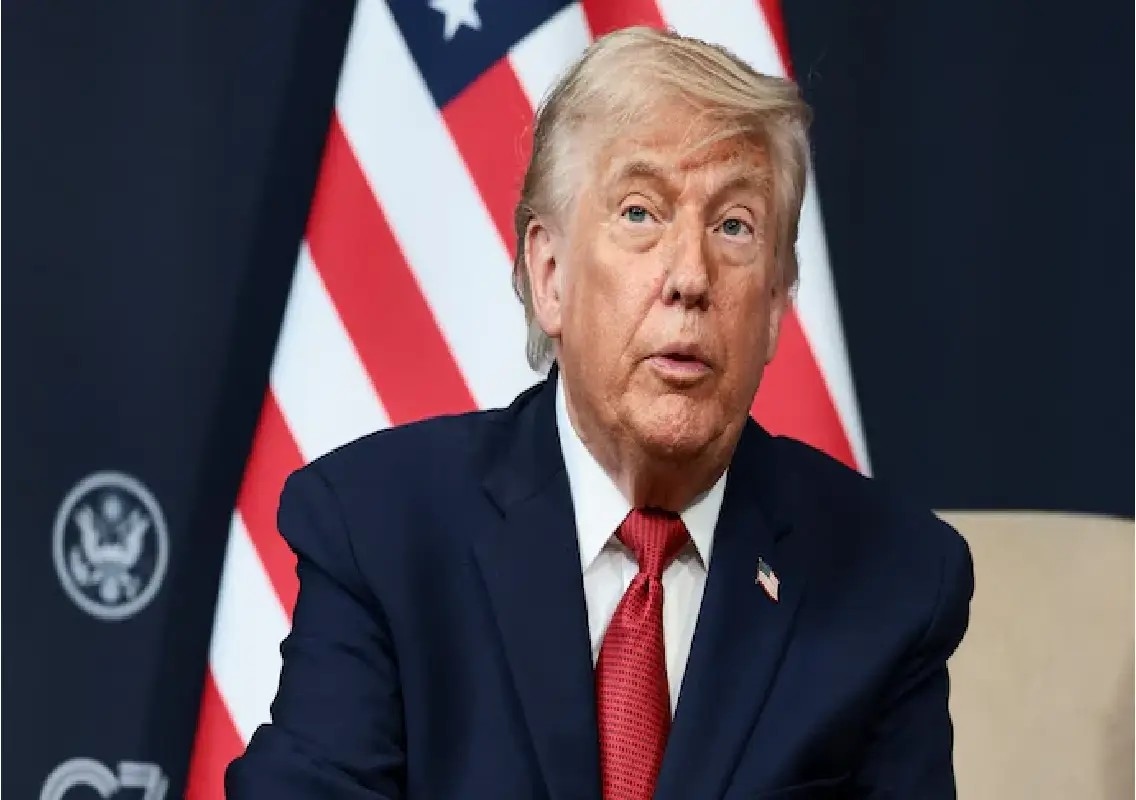


Washington: The Republican-controlled United States Senate has passed legislation directing President Donald Trump to halt military action against Iran, marking a rare bipartisan challenge to the administration’s use of war powers and signalling growing unease in Congress over the ongoing conflict.
The Senate approved the war powers resolution in a 50-48 vote on Tuesday. The measure had already been cleared by the House of Representatives earlier this month, making it the first time since the passage of the War Powers Resolution in 1973 that Congress has successfully directed a president to withdraw US armed forces from active hostilities.
Although the resolution is widely expected to remain largely symbolic, its passage reflects increasing concern among lawmakers over the conflict involving the United States and Iran and highlights widening divisions within the Republican Party.
Rare bipartisan rebuke for Trump
The Senate vote represents a significant political setback for President Trump, who until recently enjoyed strong support from Republican lawmakers.
However, a small but growing group of Republican legislators has begun breaking ranks with the president on several issues, particularly as the country moves closer to the November mid-term elections that will determine control of Congress.
Analysts say the latest vote demonstrates growing friction between the White House and Congress over military authority and executive powers.
The development also comes amid expectations that the administration could seek congressional approval for tens of billions of dollars in additional funding for military operations related to the conflict.
Internal divisions within Republicans
Despite holding narrow majorities in both chambers of Congress, Republicans have shown signs of internal disagreements in recent months.
Some lawmakers have opposed several Trump-backed spending measures, including a proposed $1.8 billion fund intended to compensate political allies whom the president claims were unfairly targeted by federal authorities.
A separate $70 billion immigration enforcement package has also reportedly faced resistance and remains stalled.
Political observers believe these disagreements indicate growing tensions within the party and may complicate the administration’s legislative agenda in the months ahead.
What does the resolution mean?
The practical impact of the resolution remains uncertain.
Under the War Powers Resolution of 1973, Congress created a mechanism to reclaim oversight over military engagements and limit the president’s ability to conduct prolonged military operations without legislative approval.
Because the measure is a concurrent resolution, it does not require presidential approval under the framework established by the Act.
However, legal experts note that the constitutional status of such resolutions remains unsettled. A 1983 ruling by the US Supreme Court suggested that measures carrying legal consequences generally require either presidential approval or the opportunity for a presidential veto.
The White House has argued that the War Powers Act itself is unconstitutional and therefore not legally binding.
A White House official reportedly dismissed the Senate vote as legally insignificant, stating that the resolution has no force of law and was passed only because two Republican senators were absent during the vote.
The administration has also maintained that US involvement in hostilities effectively ended following an April 7 ceasefire, making the resolution largely moot.
Possible legal battle ahead
Legal experts believe any dispute over the resolution’s enforceability could eventually be decided by the courts.
Scott Anderson, a senior fellow at the Brookings Institution and senior editor at Lawfare, said the executive branch would likely ignore the resolution on constitutional grounds and questioned who would have the legal standing to challenge such a decision.
Democratic lawmakers, however, have insisted that Congress must assert its constitutional authority over decisions involving war.
Representative Gregory Meeks, who sponsored the resolution in the House, said he considers the measure binding and would pursue legal avenues if necessary.
Senator Tim Kaine also argued that decisions regarding war ultimately belong to Congress and not solely to the president, stating that lawmakers must “own this responsibility”.
Growing debate over war powers
The Senate vote has reignited a longstanding debate in Washington over the balance of power between Congress and the presidency in matters of war and national security.
While the resolution may not immediately alter US policy toward Iran, it has underscored growing legislative concerns over executive authority and highlighted increasing bipartisan scrutiny of military engagements abroad.
The development also reflects broader political divisions in the United States as lawmakers grapple with questions of war powers, fiscal priorities and constitutional oversight in an increasingly polarised environment.