







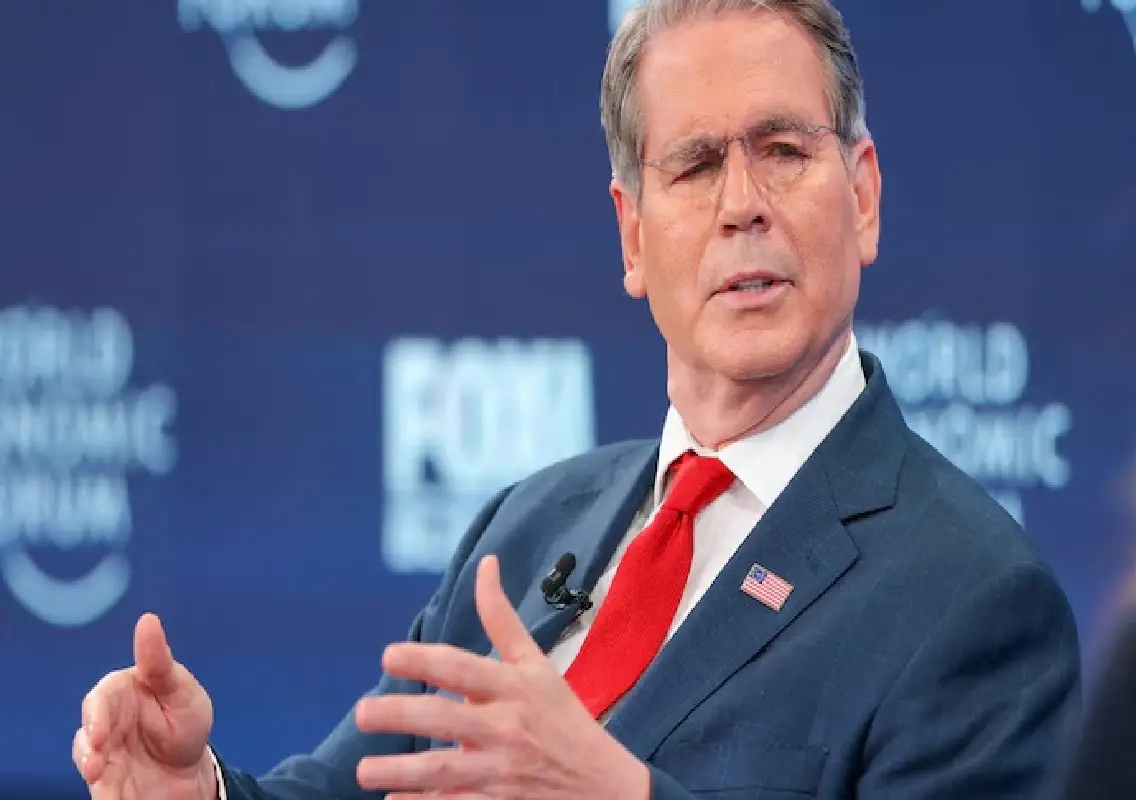


Washington: US Treasury Secretary Scott Bessent on Wednesday sharply criticised the European Union’s newly concluded trade agreement with India, alleging that Europe had prioritised commercial interests over its professed commitment to supporting Ukraine amid the ongoing war with Russia.
Speaking in an interview with CNBC, Bessent expressed disappointment at the timing and intent of the deal, which was finalised on Tuesday after years of negotiations between India and the European Union. European Commission President Ursula von der Leyen had hailed the pact as the “mother of all deals”, calling it a landmark agreement that would significantly deepen economic ties between New Delhi and Brussels.
US accuses EU of mixed signals on Ukraine
Bessent said Europe’s decision to move ahead with the agreement sent conflicting signals, especially given repeated statements by European leaders about standing firmly with the Ukrainian people. While acknowledging that countries must act in their own interests, the US treasury secretary made it clear that Washington viewed the move unfavourably.
“They should do what’s best for themselves,” Bessent said. “But I will tell you, I find the Europeans very disappointing.”
According to Bessent, the deal undermines Europe’s moral stance on Ukraine by effectively enabling continued economic engagement with products linked to Russian energy. He alleged that European nations have been purchasing refined petroleum products from India that were produced using Russian crude oil, even as they speak strongly about opposing Moscow’s actions in Ukraine.
Tariffs, oil and India at the centre of the dispute
Bessent claimed that the EU’s reluctance to align with the United States on trade penalties against India stemmed directly from its desire to finalise the trade agreement. He said European countries were unwilling to match the additional 25 per cent tariffs imposed by Washington on Indian goods last year.
“The Europeans were unwilling to join us,” Bessent said. “And it turns out, because they wanted to do this trade deal.”
The US has imposed tariffs of up to 50 per cent on certain Indian goods, including a 25 per cent levy specifically tied to India’s purchase of Russian oil. These measures were doubled in August, significantly escalating trade tensions between Washington and New Delhi. The Biden administration has defended these tariffs as a tool to discourage countries from indirectly supporting Russia’s energy sector.
Bessent argued that Europe’s actions contradicted its rhetoric. “So every time you hear a European talk about the importance of the Ukrainian people, remember that they put trade ahead of the Ukrainian people,” he said.
What the EU-India deal entails
The EU-India trade agreement aims to substantially boost two-way trade and reduce Europe’s reliance on the United States at a time of rising global trade friction. Brussels has said the pact would eliminate or reduce tariffs on nearly 97 per cent of traded goods by value.
European officials estimate that the agreement could potentially double EU exports to India by 2032, while saving European companies around €4 billion annually in duties. The deal is also seen as strategically important for Europe as it seeks to diversify supply chains and strengthen partnerships in the Indo-Pacific region.
For India, the agreement opens greater access to the European market for goods and services, while reinforcing its position as a key global manufacturing and refining hub.
Strained transatlantic trade ties
Bessent’s remarks come at a time of strained trade relations between the United States and the European Union during President Donald Trump’s second term. US officials have expressed frustration that the EU has not implemented tariff reductions promised under a framework agreement reached with Washington in July.
These tensions have been further aggravated by recent US tariff actions against other trading partners. South Korea, for instance, saw duties raised earlier this week after Washington accused Seoul of slow progress in implementing a bilateral trade framework.
Defending the administration’s hardline stance, Bessent said tariffs remained an effective negotiating tool. He described them as “helpful to get things moved along”, suggesting that economic pressure was necessary to secure compliance with US trade priorities.
Energy trade under scrutiny
In a separate interview with ABC News earlier this week, Bessent again took aim at Europe’s energy trade practices, arguing that they weaken the continent’s own security posture. He reiterated that while the US had imposed tariffs on India for buying Russian oil, Europe had chosen to deepen trade ties with New Delhi instead.
“We have put 25 per cent tariffs on India for buying Russian oil. Guess what happened last week? The Europeans signed a trade deal with India,” Bessent said.
The comments underline Washington’s broader concern that indirect trade routes are allowing Russian energy to continue flowing into global markets, blunting the impact of sanctions imposed after the invasion of Ukraine.
Possible path to tariff relief
Despite the criticism, Bessent has recently hinted that there may be room for easing trade tensions with India. Speaking to Politico on the sidelines of the World Economic Forum, he said Indian refinery purchases of Russian crude had fallen sharply in recent months.
“The tariffs are still on, 25 per cent tariffs for Russian oil are still on,” Bessent said. “I would imagine there is a path to take them off.”
Conclusion
The sharp words from the US treasury secretary highlight growing divisions between Washington and Brussels over trade, energy and geopolitical priorities. As Europe pushes ahead with its landmark agreement with India, the United States appears determined to maintain pressure through tariffs and public criticism. How these competing strategies play out could have lasting implications for transatlantic relations, global trade dynamics and the broader effort to isolate Russia economically.