







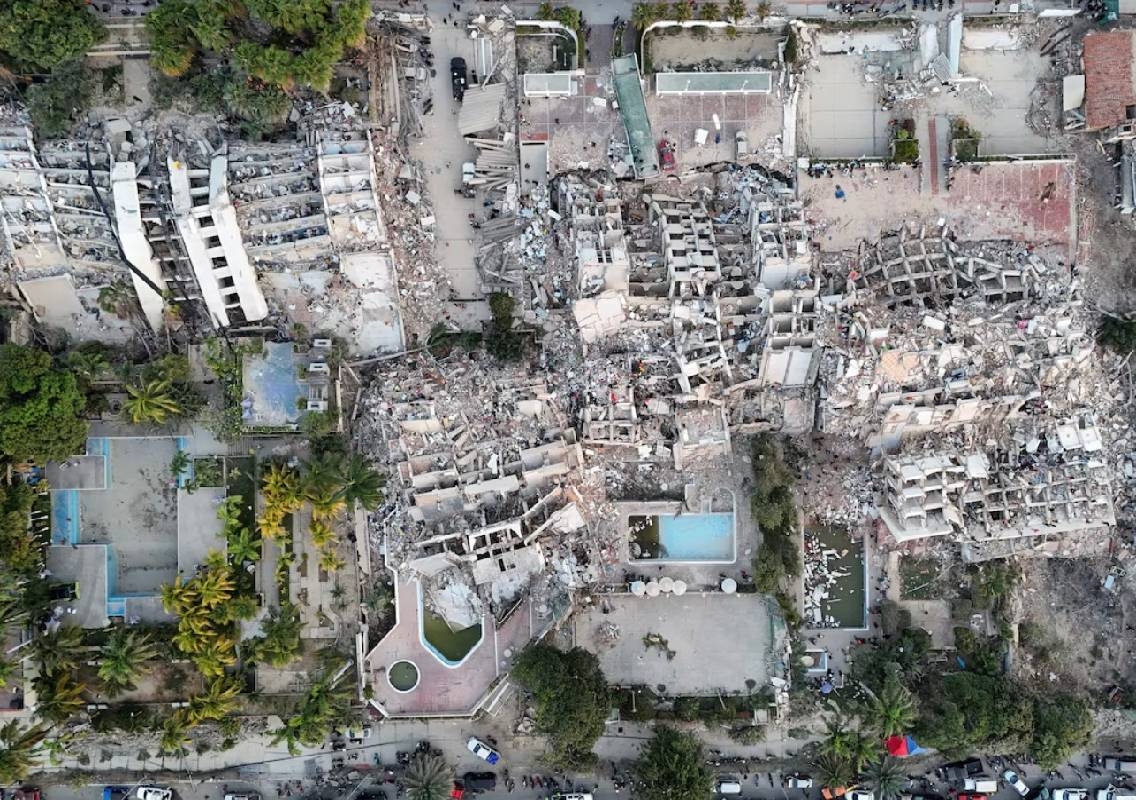


Caracas: Rescue teams continued searching through collapsed buildings in Venezuela on Sunday as the death toll from the twin earthquakes that struck the country last week climbed to nearly 1,500. Despite fading hopes of finding survivors after more than 72 hours, rescuers managed to pull several people alive from the rubble, offering moments of hope amid one of the country’s deadliest natural disasters.
The powerful earthquakes, measuring magnitude 7.2 and 7.5, struck Venezuela on Wednesday, with La Guaira state bearing the brunt of the devastation. Hundreds of aftershocks have since rattled affected areas, complicating rescue operations and increasing the risk for emergency personnel and survivors trapped beneath debris.
Authorities said thousands of foreign rescue workers have joined local emergency teams in the search for survivors as humanitarian assistance continues to arrive from several countries.
Death toll rises as search continues
According to government officials, the death toll has risen to nearly 1,500, while more than 3,100 people have been injured. At least 12,700 people have been displaced from their homes, and 774 buildings have collapsed across the affected regions.
Interim President Delcy Rodriguez said rescue and recovery efforts would continue as long as there was hope of finding survivors.
“Today we have recovered people alive and, therefore, operations are not being suspended. We always maintain hope,” she said while announcing the formation of a presidential commission to assess the structural safety of damaged buildings.
Authorities also extended the suspension of school classes in the affected region for another week. Electricity supply in La Guaira has reportedly been restored to around 75 per cent.
Thousands still unaccounted for
While the government has officially reported hundreds of people as missing or trapped, an opposition-backed website listed just under 50,000 people as unaccounted for on Sunday, down from approximately 55,000 reported a day earlier.
Officials said search operations remain focused on collapsed residential buildings, commercial establishments and public infrastructure where people may still be trapped beneath the rubble.
The government has also restricted access to roads leading into La Guaira, saying uncontrolled traffic was slowing the movement of rescue vehicles and humanitarian aid.
Race against time to find survivors
Rescue experts warned that the chances of finding survivors decrease significantly after the first 72 hours following a major earthquake.
Sebastian Eugster, leader of the Swiss rescue team, said survival rates decline sharply beyond the three-day window, although rescue teams continue working whenever signs of life are detected.
More than 2,600 international rescue personnel have joined Venezuelan authorities, bringing specialised equipment, search dogs and technical expertise to assist in locating survivors.
Despite the challenges, rescuers have continued to recover people alive from collapsed buildings over the weekend.
Children among those rescued
One of the most emotional rescues involved a father and his son, who were pulled alive from the rubble after spending four days trapped beneath a collapsed building.
US rescue teams also rescued an infant on Saturday, while a Colombian search team successfully located and rescued an 11-year-old boy named Moises using specialised scanning equipment. He was found around three metres beneath the debris and was taken to hospital with a fractured arm. Officials said his mother and sister died in the earthquake.
Mexican rescue teams also saved another 11-year-old boy from a collapsed building in Caraballeda, highlighting the continued efforts of international rescue teams despite the difficult conditions.
International support increases
Global support for Venezuela has continued to grow as rescue operations intensify.
Pope Leo expressed solidarity with the victims during his Angelus prayer in Rome, offering prayers for those affected and thanking rescue personnel for their tireless efforts.
Meanwhile, a senior US official said Washington is preparing an additional aid package worth several hundred million dollars, supplementing the previously announced US$150 million in emergency assistance.
Humanitarian organisations continue to deliver food, medical supplies and temporary shelter to displaced families across the affected areas.
Infrastructure and economy affected
Beyond the tragic loss of life, the earthquakes have caused significant damage to Venezuela’s infrastructure.
The country’s largest oil refinery, the 645,000-barrel-per-day Amuay refinery, suspended operations on Sunday following a major power outage in Falcon state.
Authorities are also assessing damage to roads, bridges, hospitals, schools and public utilities as recovery planning begins alongside ongoing rescue operations.
Conclusion
As Venezuela enters another critical phase of rescue operations, emergency teams remain focused on locating survivors despite diminishing odds. With the death toll nearing 1,500, thousands displaced and extensive infrastructure damage, the country faces a long road to recovery while international rescue teams and humanitarian agencies continue supporting relief efforts.