







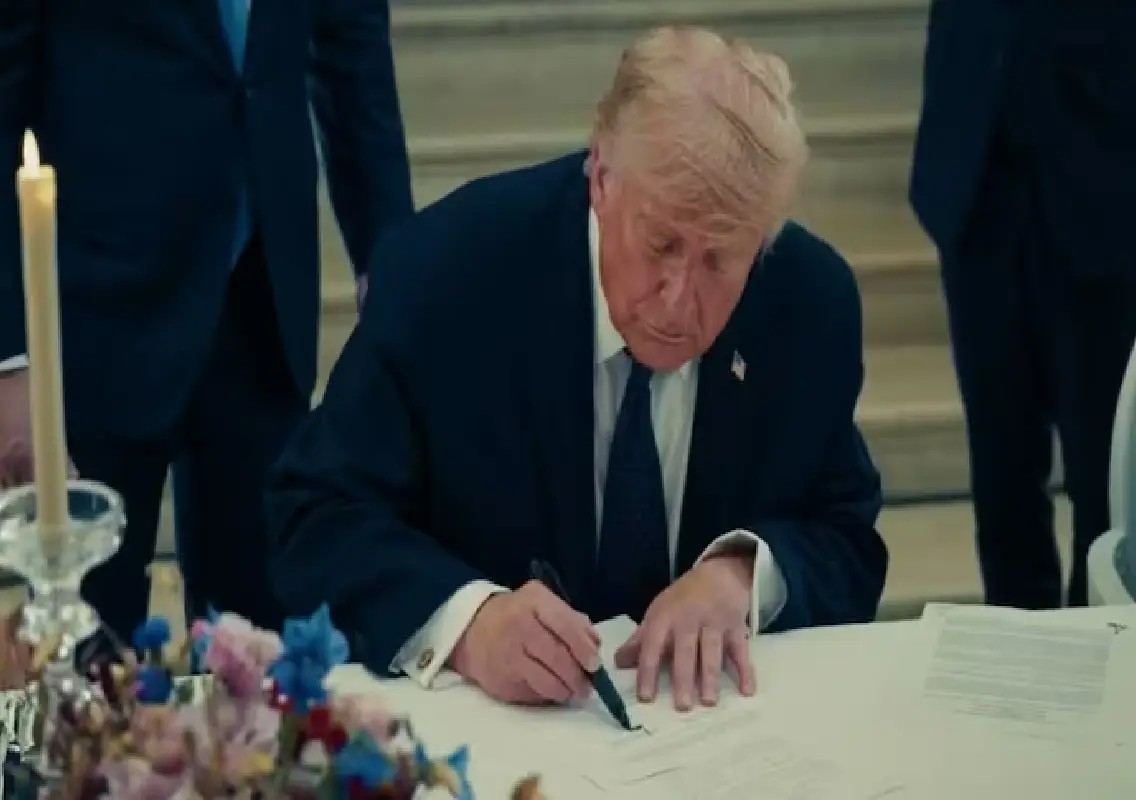


The signing of a Memorandum of Understanding (MoU) between United States President Donald Trump and Iranian President Masoud Pezeshkian at the historic Palace of Versailles has sparked international debate, with observers drawing parallels to the 1919 Treaty of Versailles and questioning whether the agreement represents lasting peace or merely a temporary pause in regional tensions.
The symbolism of the venue has attracted particular attention because the Palace of Versailles is remembered as the site where world leaders signed the treaty that formally ended the First World War. However, many historians argue that the treaty failed to create lasting stability and instead contributed to the conditions that eventually led to the outbreak of the Second World War two decades later.
Against this backdrop, analysts are examining whether the new US-Iran understanding can address the deep-rooted disputes that have shaped Middle East geopolitics for decades.
Versailles and its historical significance
The Treaty of Versailles, signed in 1919, formally ended the First World War and sought to establish a new international order in Europe.
While it succeeded in bringing an end to active hostilities, historians have long debated its effectiveness in securing durable peace. Critics argue that the treaty imposed severe conditions on Germany while failing to resolve underlying political and economic tensions.
As a result, the treaty is frequently cited as an example of how peace agreements can sometimes leave unresolved issues that later contribute to renewed conflict.
The decision to sign the US-Iran understanding at Versailles has therefore generated considerable discussion among political commentators and historians.
A diplomatic breakthrough or temporary pause?
Supporters of the agreement have described it as a significant diplomatic achievement that could reduce tensions between Washington and Tehran and create opportunities for further negotiations.
The understanding is expected to contribute to de-escalation efforts, improve diplomatic engagement and potentially ease concerns regarding regional stability.
However, critics argue that the agreement does not fully address some of the core issues that have driven tensions between Iran, Israel and several Western nations.
Questions surrounding Iran’s nuclear programme remain at the centre of the debate, with analysts noting that long-term regional stability will depend on how these concerns are addressed in future negotiations.
Israeli concerns remain
The agreement has also drawn attention because of the continued security concerns expressed by Israel.
Israeli Prime Minister Benjamin Netanyahu has for decades maintained that a nuclear-capable Iran would pose a significant threat to Israel’s security.
Observers note that while diplomatic engagement between the United States and Iran may reduce immediate tensions, Israeli policymakers continue to view Iran’s strategic ambitions with caution.
As a result, some analysts believe the broader regional dispute remains unresolved despite the signing of the MoU.
The differing perspectives highlight the complexity of achieving lasting peace in a region marked by decades of political rivalry, military conflict and competing security interests.
Political implications for Trump
The agreement also carries important domestic political implications for President Trump.
With the United States preparing to celebrate the 250th anniversary of its independence on July 4 and political attention increasingly focused on upcoming elections, a diplomatic success offers the administration an opportunity to showcase its foreign policy achievements.
Supporters argue that avoiding a prolonged military confrontation in the Middle East aligns with the preferences of many Americans who favour diplomatic solutions over extended overseas conflicts.
At the same time, critics caution that the true success of any agreement should be measured by its long-term impact rather than the symbolism surrounding its signing.
Lessons from history
Political analysts frequently point out that peace agreements are often judged not by the ceremonies that accompany them but by their ability to resolve underlying disputes.
The Treaty of Versailles remains a powerful historical example because many of its architects believed they had secured lasting peace, only for Europe to return to war two decades later.
While the Middle East’s contemporary geopolitical landscape differs significantly from Europe in 1919, the comparison serves as a reminder of the challenges involved in translating diplomatic agreements into durable stability.
Experts emphasise that lasting peace requires addressing the fundamental causes of conflict rather than merely managing immediate crises.
Regional challenges remain
Despite the agreement, several issues continue to shape the Middle East’s strategic environment.
These include concerns over nuclear proliferation, regional power balances, proxy conflicts, security arrangements and broader geopolitical rivalries involving multiple states.
Analysts suggest that future negotiations and confidence-building measures will play a critical role in determining whether the current understanding evolves into a more comprehensive framework for peace.
The coming months are expected to reveal whether diplomatic engagement can effectively reduce tensions and build trust among the various stakeholders involved.
Conclusion
The signing of the US-Iran Memorandum of Understanding at the Palace of Versailles has generated significant international attention due to both its diplomatic implications and historical symbolism. While supporters view the agreement as a step towards de-escalation and stability, critics argue that several fundamental issues remain unresolved. As debates continue, the legacy of Versailles serves as a reminder that lasting peace depends not only on agreements signed at negotiating tables but also on the successful resolution of the conflicts that lie beneath them.