









Small objects, big questions
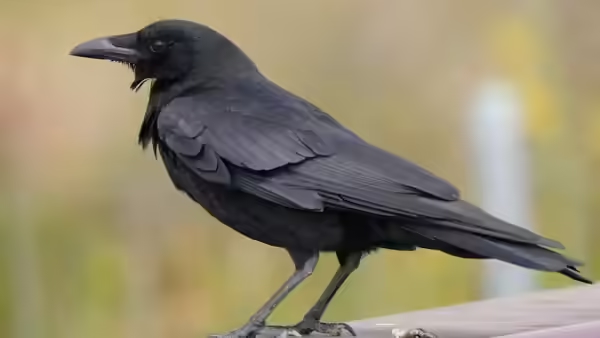
Across the world, people have shared curious experiences of crows leaving pebbles, bottle caps, buttons or shiny metal bits near places where they are regularly fed. For many, these moments feel emotional or even magical, as if the bird is expressing gratitude. Scientists say the explanation is no less fascinating — and firmly rooted in crow intelligence and learning.
What science says about crow intelligence
Crows belong to the corvid family, considered among the most intelligent birds on the planet. They can recognise human faces, remember past interactions, use tools, plan ahead and learn by observation.
A peer-reviewed study published in the Proceedings of the National Academy of Sciences showed that American crows can remember individual human faces for years. In the experiment, crows associated certain masked faces with danger and continued to scold those “individuals” long after the initial encounter. Researchers say the same memory skills may explain why some humans receive objects after repeated friendly interactions such as feeding.
Is it really gift-giving?
Scientists caution against projecting human emotions directly onto animals. However, many ethologists believe the behaviour reflects learned social exchange, not randomness.
Crows naturally collect shiny or unusual objects. When they carry these items to familiar feeding spots, they may accidentally drop them. If that action is followed by food or calm interaction, the bird may learn a pattern: object appears, reward follows. Over time, this trial-and-error learning can stabilise into behaviour that looks like deliberate gifting.
In some cases, nearby crows may imitate the behaviour, spreading it socially within a local group.
Why certain objects are common
The items crows leave are usually:
- Shiny or visually interesting
- Easy to carry, like pebbles or metal bits
- Objects they already collect during exploration
These materials are durable and reusable, making them ideal for repeated interactions.
Do crows recognise kindness?
Research confirms that crows can distinguish between friendly and threatening humans. People who consistently feed or protect them become familiar and trusted. While science cannot confirm that crows feel gratitude in the human sense, studies show they understand fairness and reciprocity in controlled settings.
This suggests that what humans perceive as a “gift” may be a learned response to kindness, supported by long-term memory and advanced cognition.
Coexisting responsibly
Experts advise responsible interaction:
- Feed crows consistently in the same place
- Offer safe foods like unsalted nuts or grains
- Avoid processed or harmful items
- Never try to touch or trap them
Even without receiving a trinket, such interactions highlight the extraordinary intelligence of urban wildlife and remind us how small, everyday actions can shape interspecies relationships.