







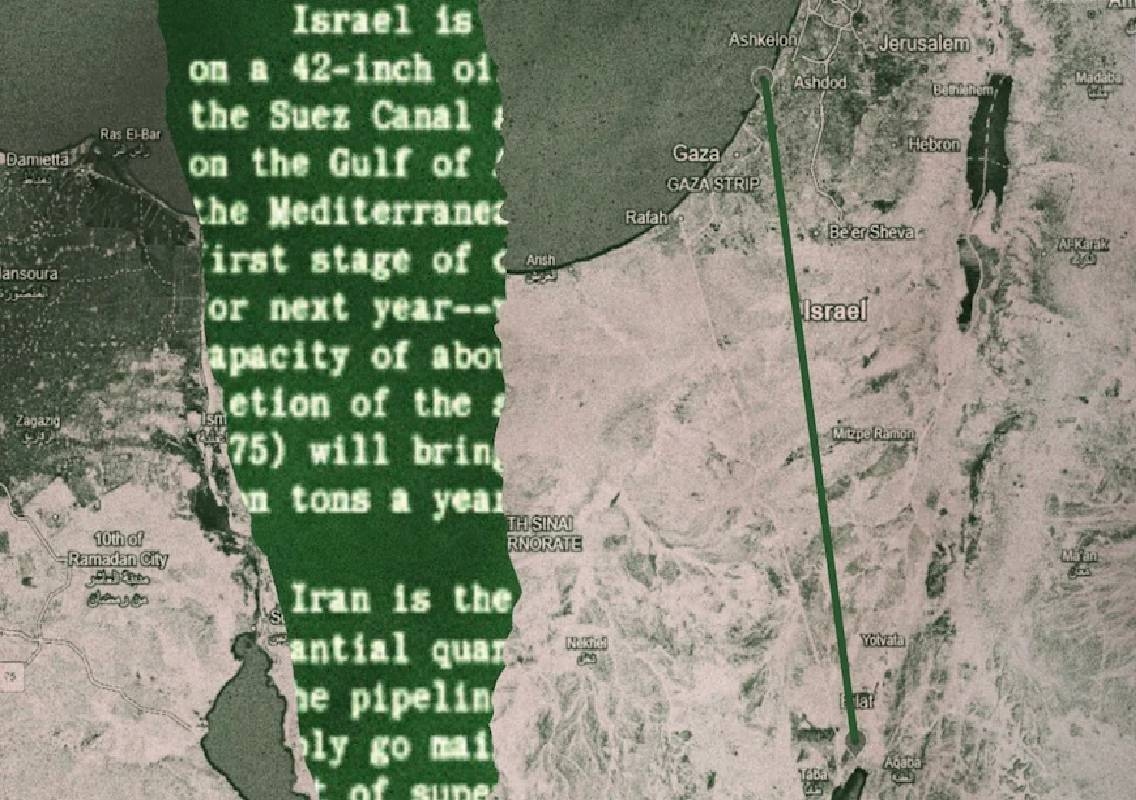


New Delhi: Rising tensions in West Asia have brought renewed attention to a little-known piece of energy infrastructure—the Eilat-Ashkelon Pipeline, a route originally built through cooperation between Iran and Israel before the 1979 Iranian Revolution. As attacks by Yemen’s Houthi rebels threaten Saudi Arabia’s Red Sea oil export routes and the Strait of Hormuz remains vulnerable, analysts believe the pipeline could emerge as an important alternative for regional oil transportation.
The discussion comes as Saudi Arabia faces increasing pressure to diversify export routes amid escalating security concerns affecting both the Red Sea and the Persian Gulf.
What is the secret Israel-Iran pipeline?
The Eilat-Ashkelon Pipeline, also known as the Trans-Israel Pipeline, stretches approximately 254 km, connecting Israel’s Red Sea port of Eilat with Ashkelon on the Mediterranean coast.
The pipeline was constructed in 1968 as a joint venture between Iran, under Shah Mohammad Reza Pahlavi, and Israel to transport Iranian crude oil to Europe. Following the 1979 Islamic Revolution, diplomatic ties between the two countries collapsed, and the project became one of Israel’s most closely guarded strategic assets.
Why Saudi Arabia may need it
Saudi Arabia has largely shifted oil exports from the Persian Gulf to its East-West Pipeline, which carries crude from eastern oil fields to the Red Sea port of Yanbu, allowing exports to bypass the Strait of Hormuz.
However, recent Houthi attacks and threats against Saudi oil facilities and Red Sea shipping have raised concerns over the safety of this alternative route. If disruptions intensify, regional energy experts believe Israel’s pipeline could become an additional export corridor connecting the Red Sea with the Mediterranean.
A backup route during regional conflict
The Eilat-Ashkelon Pipeline allows oil arriving at Eilat on the Red Sea to be transported across Israel and loaded onto tankers at Ashkelon in the Mediterranean.
Such a route would reduce dependence on the Bab el-Mandeb Strait and offer another option if shipping through the Red Sea becomes increasingly risky. While there has been no official announcement that Saudi Arabia will use the pipeline, analysts say its strategic importance has grown significantly during the ongoing regional conflict.
Multiple threats to oil exports
The conflict has created challenges on several major energy corridors.
Iran’s actions around the Strait of Hormuz have disrupted Gulf oil exports, while Houthi attacks on shipping and Saudi infrastructure have threatened the Red Sea route. These developments have forced Gulf producers to explore additional transport options to maintain stable crude supplies to international markets.
Saudi Arabia’s existing alternative
Saudi Arabia’s primary alternative remains its East-West Pipeline, which was built in the 1980s specifically to bypass the Strait of Hormuz.
The pipeline transports crude from the kingdom’s eastern oil fields to Yanbu on the Red Sea and has become the backbone of Saudi exports whenever Gulf shipping faces disruptions. Nevertheless, continued attacks near Red Sea ports have highlighted the need for additional contingency routes.
Why the pipeline remains significant
The Israel-Iran pipeline represents one of the few energy projects created before diplomatic relations between the two countries broke down.
Although originally intended for Iranian crude exports, the infrastructure has evolved into a strategic asset capable of supporting regional energy flows under extraordinary circumstances. Experts believe that in periods of geopolitical instability, such alternative corridors become increasingly valuable for global oil markets.
Conclusion
While Saudi Arabia has not officially indicated that it will use Israel’s Eilat-Ashkelon Pipeline, the infrastructure has attracted renewed attention as security threats grow across traditional oil export routes. With risks mounting in both the Strait of Hormuz and the Red Sea, alternative pipelines are becoming increasingly important for ensuring uninterrupted global energy supplies.