







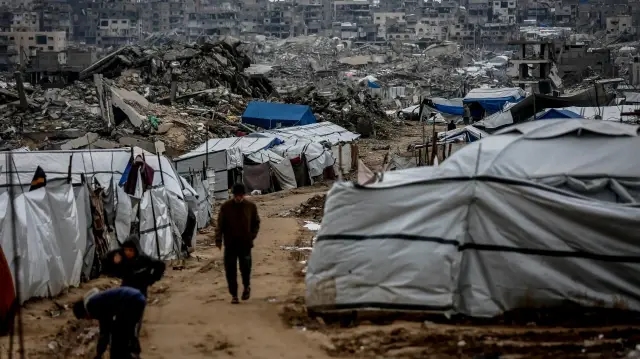


As winter tightens its grip on Gaza, relentless rain and strong winds have exposed the fragility of life for over a million displaced residents. What would elsewhere be dismissed as seasonal bad weather has become a daily struggle for survival in Gaza City and surrounding areas, where tents line streets and open spaces, offering little protection from the cold.
Locals describe nights filled not with conversation, but with the sound of flapping tarpaulins, collapsing plastic sheets and the cries of frightened children. With electricity largely unavailable and fuel scarce, even families living in partially damaged apartments have no heating. For those in tents, the cold is relentless.
Tents, mud and mounting risks
The harshest winter phase, locally known as al-Arba’iniya—the coldest 40 days beginning in late December—has begun under dire conditions. Thin plastic shelters sag under rainwater, mattresses float in flooded tents, and clothes remain permanently damp. Streets have turned to mud, making daily movement difficult and dangerous.
The danger is no longer theoretical. In recent weeks, rain has caused weakened, war-damaged buildings to collapse, killing children and injuring others. Earlier this month, an infant in Khan Younis reportedly died due to exposure to cold, underlining how vulnerable the youngest residents are during winter.
Students forced to study amid hardship
The crisis has also disrupted education. University lecturers report that many students attend online classes from tents or overcrowded shelters, often sharing limited devices and struggling with unstable internet connectivity. Assignments and deadlines have become moral negotiations, weighed against concerns about safety, warmth and basic survival.
Despite immense hardship, students continue to study, displaying resilience that educators describe as inspiring but deeply unfair. Many have lost homes and family members, yet persist in their education under conditions that test both physical endurance and mental health.
Aid efforts fall short
Humanitarian agencies acknowledge that assistance has been uneven and insufficient. While tarpaulins, bedding and tents have reached some families, restrictions and delays on winterisation materials have limited meaningful protection. Respiratory illnesses, infections and hypothermia cases are rising as shelters fail to withstand prolonged exposure to rain and cold.
Winter in Gaza is not unexpected. Residents see the crisis not as misfortune, but as abandonment. Solutions exist, but access remains constrained.