







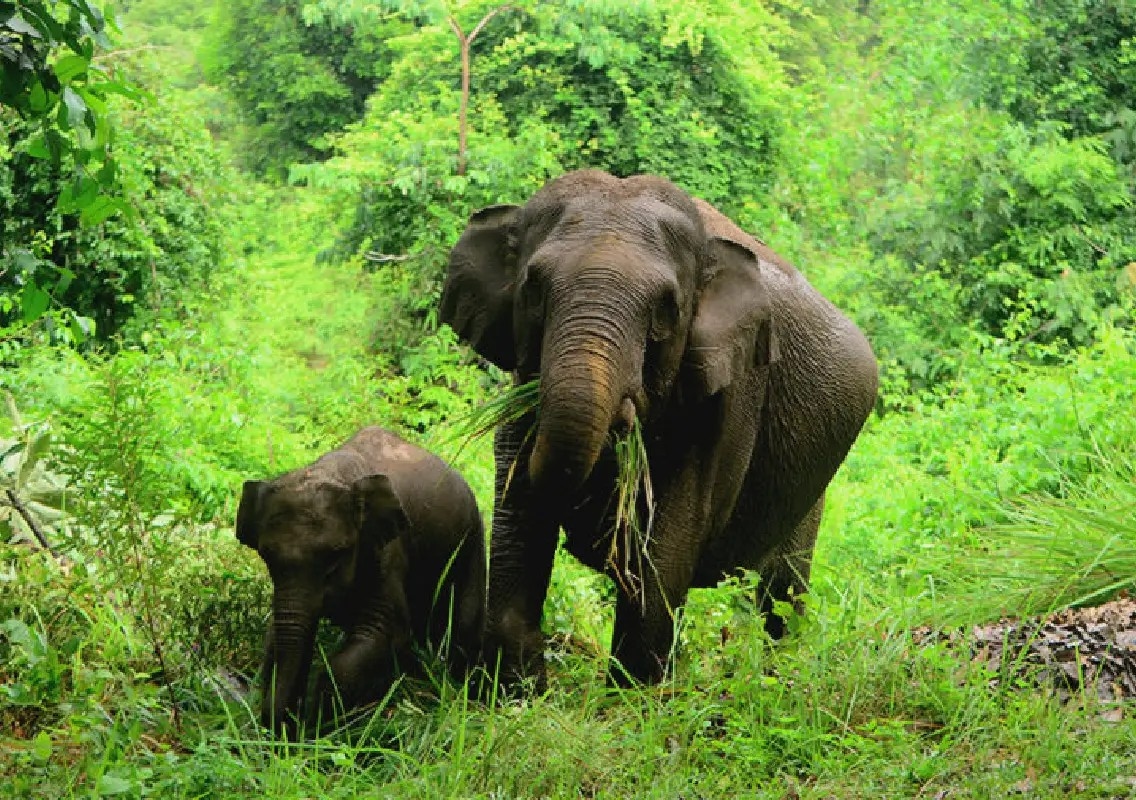


In Indonesia’s Sumatra, a group of women farmers is showing how local knowledge and simple nature-based solutions can help communities live more peacefully alongside endangered elephants.
In the buffer zone of Tesso Nilo National Park, the Batang Nilo Women’s Forest Farmer Group, known as Perbani, has introduced dense fences made from citrus trees to keep elephants away from crops.
The initiative offers an alternative to potentially dangerous measures such as poison bait and electric fencing, while giving women a stronger role in protecting forests and livelihoods.
Citrus trees create a natural barrier
Deforestation and the spread of oil palm plantations have severely reduced the park’s old-growth forest, leaving Sumatran elephants with less habitat and bringing them into increasing contact with nearby communities.
Farmers in Lubuk Kembang Bunga village have experienced crop losses when elephants entered agricultural areas. Perbani’s citrus fences are helping create a natural barrier around cultivated land.
Farmer Ernita, a Perbani member, said elephants frequently ate oil palm fruit before the citrus trees were planted, but the problem stopped after the trees grew around the fields.
The group also plants elephant-friendly fruit trees, including jackfruit, cempedak and petai, providing food sources that can support coexistence.
Women take a stronger role in conservation
Conservation workers say women often possess detailed knowledge of their surroundings but can remain overlooked in environmental programmes.
Yuliantony, executive director of the Tesso Nilo National Park Foundation, said involving women in natural-resource management is important for long-term conservation.
Researchers from the University of Riau have similarly described Perbani members as creative problem solvers rather than passive victims of human-elephant conflict.
Conservation also strengthens livelihoods
Perbani has more than 30 members and conducts monthly leadership classes. Its savings-and-loans programme also helps members meet household and farming expenses, including children’s education and home repairs.
The group’s conservation and community work received official Wanawiyata Widyakarya status from Indonesia’s forestry ministry in 2024.
Perbani’s experience demonstrates how conservation can become stronger when communities, particularly women, are given the opportunity to develop solutions rooted in local knowledge.