







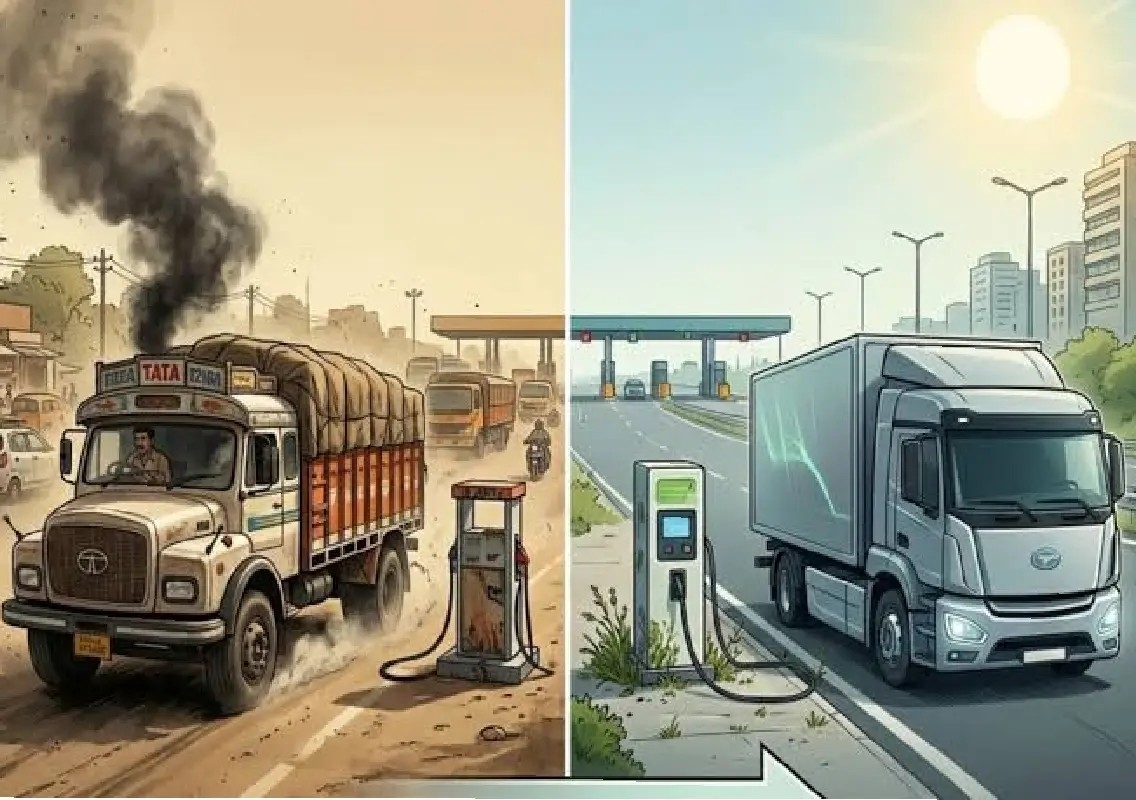


Electric vehicles were once considered unsuitable for heavy freight because of concerns over battery weight, charging time and driving range. New sales data, however, suggests that electric trucks and buses are steadily moving into commercial transport.
Global sales of zero-emission medium- and heavy-duty vehicles rose 86% in 2025 to more than 520,000 units, according to the International Council on Clean Transportation. China accounted for nearly 90% of these sales, while Europe also recorded significant growth.
China is leading the heavy-vehicle shift
China sold about 457,300 zero-emission medium- and heavy-duty vehicles in 2025. Battery-electric heavy truck sales reached nearly 240,000, more than doubling in a year.
Falling battery prices, improvements in energy density and China’s established battery supply chain have helped make electric trucks increasingly competitive. Battery swapping is also being used for applications such as mining, ports and fixed freight routes.
Batteries are gaining ground on hydrogen
Hydrogen fuel cells were once seen as a likely solution for long-distance freight because they promised quick refuelling and avoided very large battery packs. In Europe, however, battery-electric vehicles are currently far ahead.
At the end of 2024, the European Union had more than 15,000 battery-electric trucks compared with about 170 hydrogen trucks. Battery-electric buses have similarly maintained a substantial lead over fuel-cell models.
Charging is now the bigger challenge
Electric trucks still face higher purchase prices, charging requirements and range limitations on some long-distance routes. The main challenge is increasingly the infrastructure needed to support them.
Depot charging can serve many urban and regional operations, while long-haul freight will require powerful chargers along major corridors and stronger electricity networks.
Electric trucks are unlikely to replace every diesel vehicle immediately. Yet growing sales suggest that heavy transport is entering a new phase, with batteries increasingly competing on operating costs and efficiency rather than simply environmental credentials.