









Mechanical foreman Sanjay Sah could have tried to flee when a devastating flood and landslide struck the Upper Trishuli 3A Hydropower Station in Nepal. Instead, he stayed behind to help others escape.
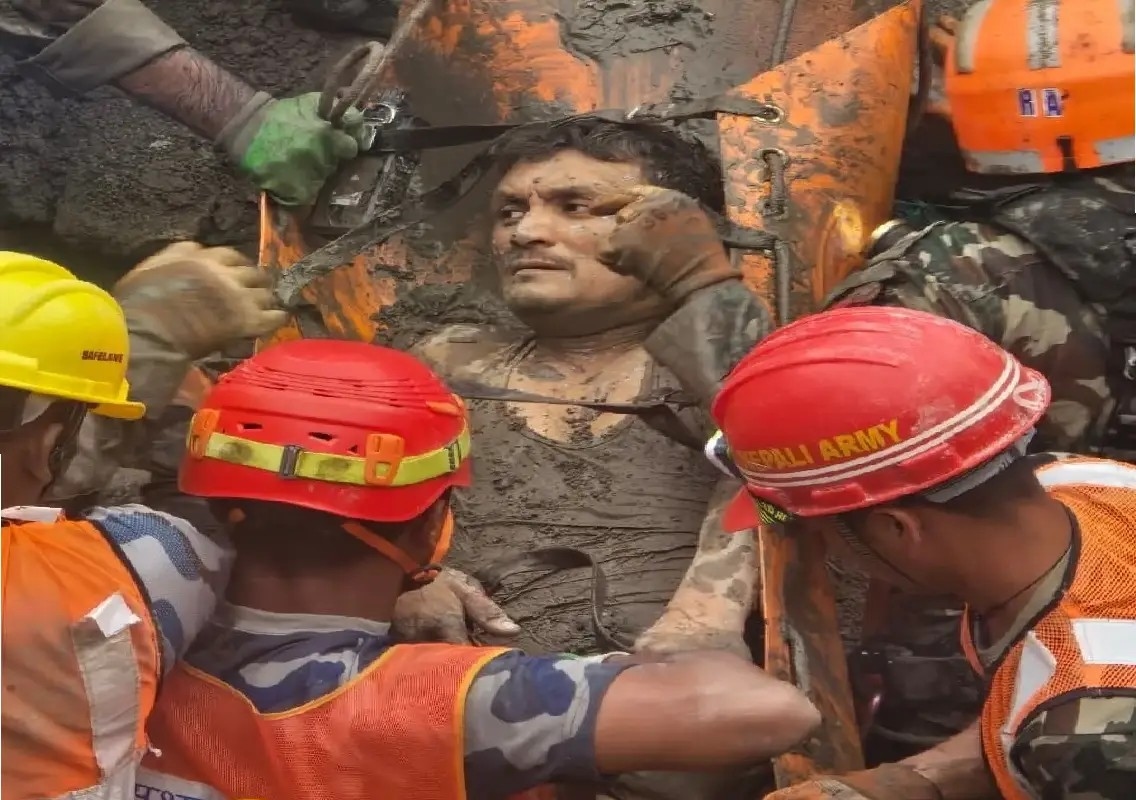
Nine days later, the 30-year-old was rescued alive from the darkness of the tunnel, alongside mechanical supervisor Kabir Maharjan, in a rare moment of hope amid a disaster that has left thousands missing.
‘It was not right for me to run away’
Speaking from a stretcher after his rescue, Sah told Nepal Army officials that he had been in the tunnel’s control room when news of the disaster upstream reached them.
He said there were normally four to six people in the control room, but as many as 40 to 45 workers could have been present that day.
Sah said his responsibility was to help save everyone’s lives. He warned others to leave as soon as he heard about the disaster, but the flood and debris moved too quickly for him to escape.
By the time he tried to flee, the route was already blocked.
Nine days in darkness tested his hope
Trapped underground, Sah survived for nine days in extremely difficult conditions. He said he chanted mantras to maintain hope and remained in contact with three or four other workers somewhere inside the tunnel.
He also believed that more people could still be trapped deeper inside the mountain.
Footage released by the Nepal Army showed Sah being carried out on a worker’s back, with his face covered in mud.
Rescue brings hope to a wider search
Sah and Maharjan became the first workers rescued alive from the hydropower projects affected by the disaster along the Trishuli river.
Officials believe at least 900 people could be trapped in tunnels linked to six hydropower projects in the area.
The disaster has caused widespread devastation in Nepal, with homes, roads and schools swept away by floods and landslides. Thousands of people have been displaced, while more than 5,000 remain missing.
Sah and Maharjan were taken to an army hospital in Kathmandu for treatment.
Their rescue has offered a rare moment of hope to families still waiting for news of loved ones trapped in the disaster-hit region.