


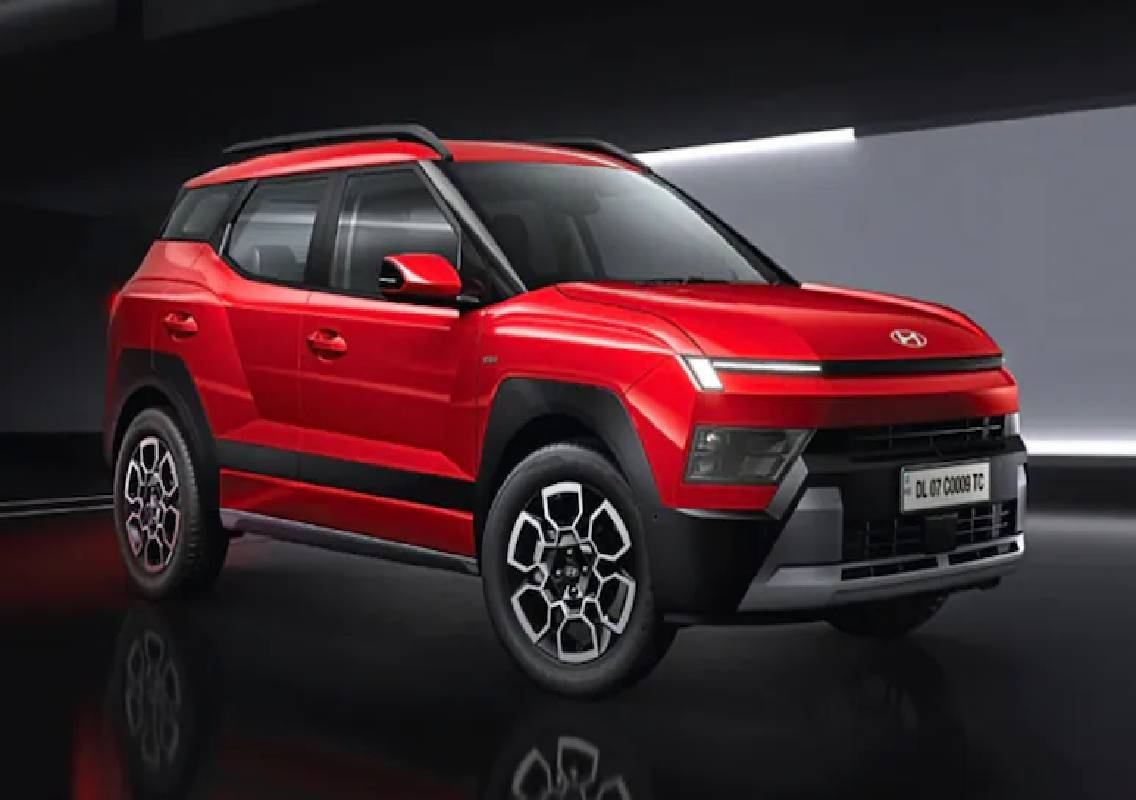


INDIA: Hyundai’s upcoming Bayon SUV is set to introduce several technology-focused features when it launches in India on October 26, 2026. Positioned between the Venue and the Creta in Hyundai’s line-up, the Bayon will offer some equipment that is currently unavailable on the more expensive Creta, including a larger dual-screen setup, wireless smartphone connectivity and a generative AI-powered voice assistant.
The India-spec Bayon has been developed around connected technology and driver assistance features. Hyundai has already confirmed several details ahead of the launch, while the company is yet to announce the SUV’s official prices.
1. Larger dual-screen setup
One of the key highlights of the Hyundai Bayon is its curved panoramic display arrangement, which combines two 12.3-inch screens. One screen serves as the digital instrument cluster, while the other functions as the touchscreen infotainment system.
The connected layout gives the dashboard a more integrated digital appearance and provides a larger display area for driving information, navigation and entertainment.
In comparison, the Hyundai Creta currently features separate 10.25-inch displays for the instrument cluster and infotainment system. The Bayon’s larger screens could therefore appeal to buyers who prioritise an expansive digital cockpit.
The display system is part of Hyundai’s Connected Car Navigation Cockpit, which is accelerated by NVIDIA. It is designed to bring navigation, vehicle information and connected services together through a unified interface.
2. Wireless Apple CarPlay and Android Auto
The second major difference is wireless smartphone connectivity. The Hyundai Bayon will support wireless Apple CarPlay and Android Auto, allowing compatible smartphones to connect to the infotainment system without a physical cable.
This can make everyday use more convenient by reducing the need to plug in a phone whenever the driver enters the vehicle. It also allows users to access compatible navigation apps, music and communication features through the car’s display.
According to the reported comparison, the current Creta does not offer the same built-in wireless smartphone connectivity across its range. Some Creta variants provide wired smartphone integration, while wireless functionality may require an additional adapter or dongle.
The Bayon’s standard connectivity package is therefore one of the features that could distinguish it from its sibling when it enters the market.
3. Generative AI-powered voice assistant
The third highlight is a generative AI-based voice assistant developed using technology from Perplexity AI and SoundHound AI, with NVIDIA powering the connected cockpit system.
Unlike traditional voice assistants that depend largely on fixed commands, the system is designed to support more natural, conversational requests. This could allow occupants to interact with the vehicle more intuitively while accessing supported functions and information.
Hyundai has also confirmed support for more than 500 embedded voice commands in English, Hindi, Hinglish, Tamil and Bengali. The interface across the infotainment and instrument cluster screens supports 10 regional and two international languages.
The company says the Bayon will also feature more than 70 Hyundai Bluelink connected features and over-the-air updates for supported vehicle controllers, allowing certain software enhancements to be delivered remotely.
More advanced driver assistance features
Beyond these three highlights, the Bayon is expected to offer a broader Level 2 advanced driver assistance systems (ADAS) package than the Creta. The NDTV Auto report states that the Bayon will have 23 ADAS functions, compared with 19 in the Creta.
The additional functions include Highway Driving Assist, Forward Collision-Avoidance Assist Direct Oncoming and navigation-based Smart Cruise Control functions designed for curves and designated speed zones.
Highway Driving Assist combines systems such as smart cruise control and lane-following assistance with navigation information to help maintain speed and lane position under suitable conditions. Navigation-based cruise control can use map data to respond to road curves and speed zones.
These systems are driver-assistance technologies and do not replace the need for the driver to remain attentive and in control.
Launch and expected positioning
Hyundai will launch the Bayon in India on October 26, 2026, placing it between the Venue and Creta. Bookings are open through Hyundai dealerships and the company’s official website, with a reported booking amount of Rs 11,000.
The SUV will use a 1.5-litre naturally aspirated petrol engine producing 115 PS and 144 Nm of torque. Buyers will be offered a six-speed manual gearbox or an Intelligent Variable Transmission (IVT).
Hyundai has not yet announced the official price. The Bayon’s final positioning will depend on its variant-wise equipment and pricing, which will become clearer at launch.
With its larger displays, wireless smartphone integration and generative AI voice assistant, the Bayon is set to offer a technology-focused alternative within Hyundai’s SUV range. Its reception will depend on how these features, the powertrain and the final pricing come together for Indian buyers.