


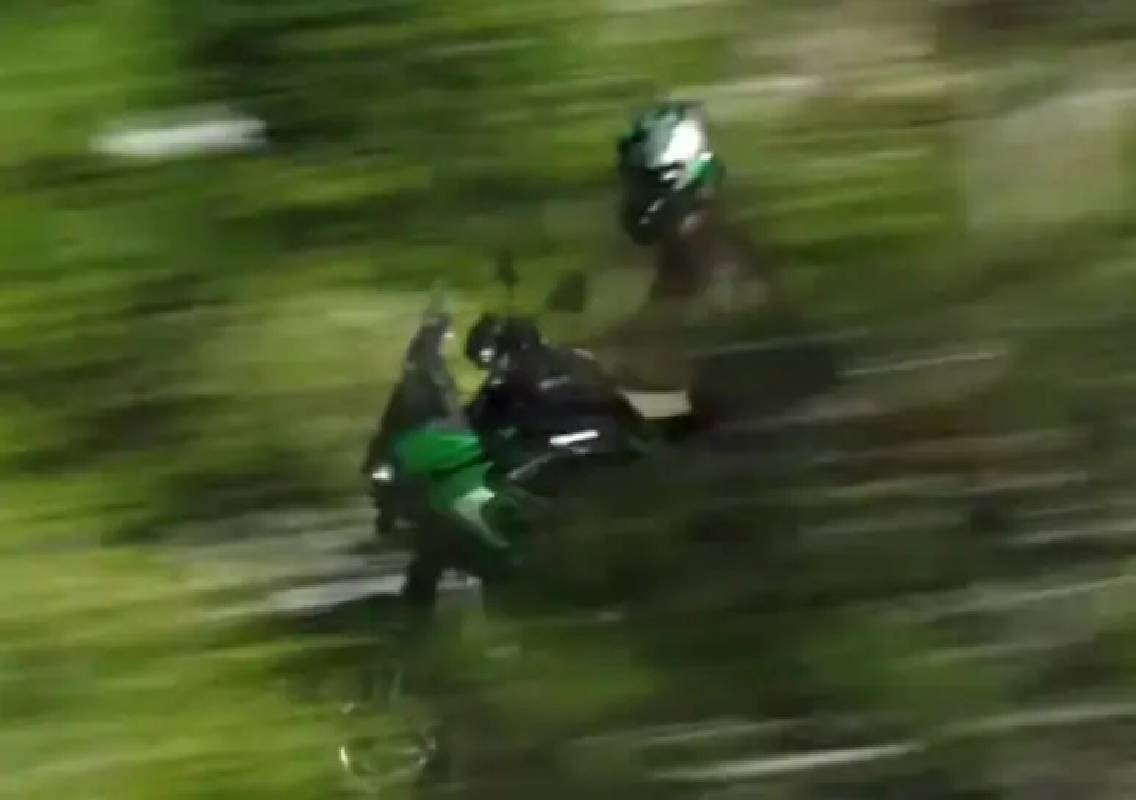


The latest teaser reveals more of the motorcycle’s design, highlighting its touring-focused proportions and comfortable riding setup. The Versys 900 is expected to sit between the Versys 650 and Versys 1100 in Kawasaki’s sport-touring range, offering a potential middle ground for riders seeking a powerful motorcycle for extended journeys.
The bike features a tall windscreen intended to help deflect wind at highway speeds, along with an upright handlebar position that should provide a more relaxed riding posture than the Z900 naked motorcycle. A broad, well-padded seat for both the rider and passenger is also visible.
The teaser further indicates provisions for side panniers and a top box, suggesting that Kawasaki is developing the motorcycle with practical luggage-carrying capability in mind. These features could make it suitable for weekend trips and longer touring holidays.
At the front, the motorcycle appears to have a twin-headlamp arrangement with additional lighting elements. Its styling seems to combine design cues from the Z900 and other Kawasaki models, while the overall bodywork is expected to be more substantial than that of the naked roadster.
Kawasaki Versys 900 Engine and Performance
The upcoming motorcycle is expected to use the 948cc, liquid-cooled, inline-four-cylinder engine from the Kawasaki Z900. In the Z900, this engine produces around 125hp and 98.6Nm of peak torque.
However, Kawasaki has not confirmed whether the Versys 900 will retain the same power and torque figures. The engine could receive revised tuning or gearing to better suit touring requirements, where smooth power delivery and flexibility at different speeds are important.
The Z900’s engine is paired with a six-speed gearbox. Whether the Versys 900 will use an identical transmission setup and the same electronic assistance systems remains to be confirmed.
The use of a four-cylinder engine could distinguish the new motorcycle from some rivals that rely on parallel-twin or three-cylinder powertrains. Its final performance characteristics will depend on the engine tuning, gearing and overall weight of the production model.
Expected Hardware and Equipment
The teaser suggests that the Versys 900 could use 17-inch alloy wheels, radial front brake callipers and suspension with more travel than the Z900. Such a setup would be consistent with a road-oriented sport-tourer designed to balance cornering stability with comfort on uneven surfaces.
Kawasaki could also equip the motorcycle with touring-oriented suspension adjustments and a larger fuel tank. However, these details have not been officially confirmed, and the complete specifications are expected to emerge at the unveiling.
Potential electronic features include riding modes, traction control, cruise control, dual-channel ABS and a bidirectional quickshifter. A colour TFT instrument display is also possible, given the equipment available on the Z900 and other motorcycles in the manufacturer’s range.
These remain expected features rather than a confirmed equipment list. The final package will determine how the Versys 900 compares with established sport-tourers in its segment.
Kawasaki Versys 900 India Launch: What to Expect
Kawasaki has not announced an India launch date or confirmed pricing for the Versys 900. However, an Indian launch is considered possible in 2027, depending on the manufacturer’s plans for the market.
If introduced in India, the motorcycle could be positioned between the Versys 650 and Versys 1100. This would give buyers another option between the more accessible middleweight tourer and the larger, more powerful model.
Its expected rivals could include motorcycles such as the Triumph Tiger 900 and BMW F 900 GS, although the final competitive positioning will depend on the Versys 900’s specifications, pricing and intended use.
The launch price, variant details and availability in India remain unknown. Kawasaki is expected to provide more clarity on the motorcycle’s technical specifications and equipment at its global unveiling on October 13.
For now, the new teaser confirms the direction of the project: a road-focused touring motorcycle with comfortable ergonomics, luggage-carrying provisions and an expected four-cylinder engine. The official reveal should establish how closely the production model matches these early indications.