







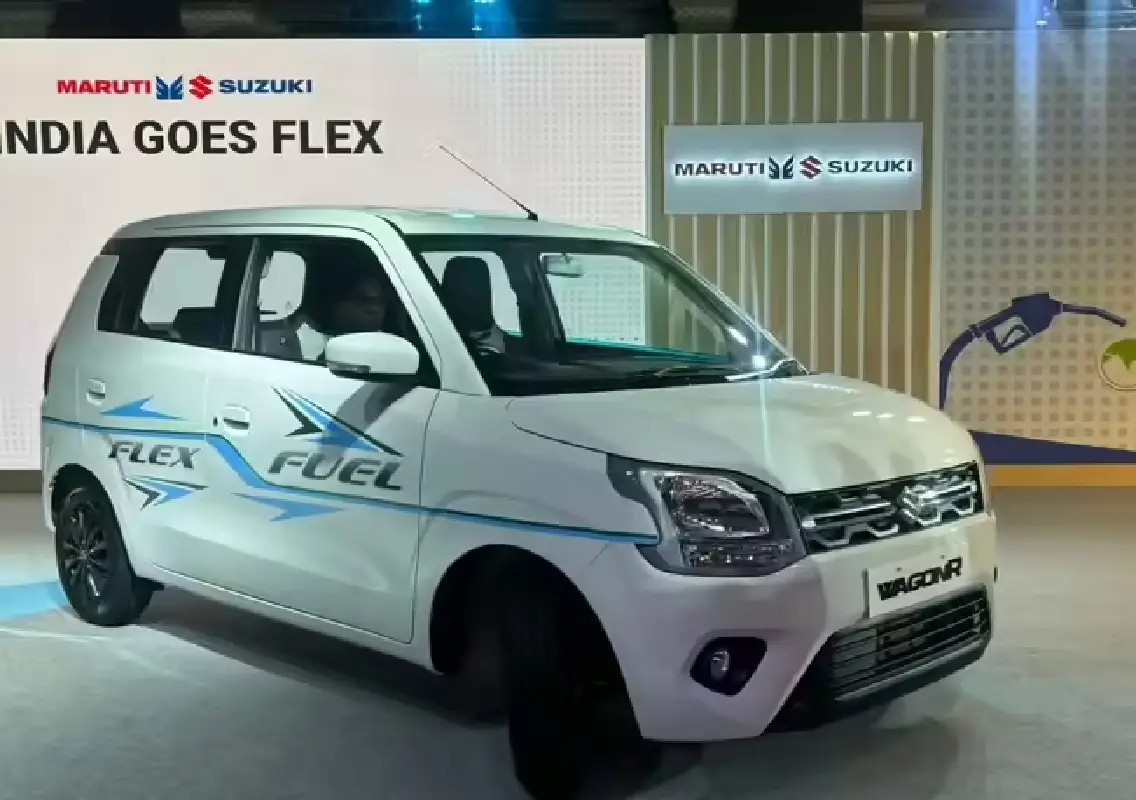


New Delhi: Maruti Suzuki India Limited has launched what it describes as India’s first flex-fuel passenger car, the Maruti Suzuki Wagon R Flex Fuel, marking a significant step in the country’s efforts to reduce crude oil imports, cut carbon emissions and strengthen energy security.
The vehicle was unveiled in the presence of Union Road Transport and Highways Minister Nitin Gadkari and Union Petroleum and Natural Gas Minister Hardeep Singh Puri, both strong advocates of alternative fuels and domestic energy solutions.
New chapter in India’s energy transition
Speaking at the launch, Maruti Suzuki Managing Director and CEO Hisashi Takeuchi described the introduction of the flex-fuel Wagon R as more than just a new vehicle launch.
He said the initiative represents “a new chapter in India’s energy journey” and aligns with the country’s twin objectives of reducing dependence on imported crude oil and lowering carbon emissions.
According to Takeuchi, flex-fuel technology offers a practical solution that supports both goals while promoting self-reliance in energy.
“India has two national objectives: reducing imported crude oil dependence and lowering carbon emissions. Flex-fuel helps achieve both,” he said.
What is a flex-fuel vehicle?
A flex-fuel vehicle (FFV) is designed to operate on varying blends of petrol and ethanol without requiring any modification by the user.
Unlike conventional vehicles currently approved for E20 fuel blends, the Wagon R Flex Fuel can run on fuels ranging from pure petrol to E100, which consists entirely of ethanol.
This flexibility allows consumers to use whichever fuel blend is available while supporting the government’s ethanol-blending programme.
To make the technology viable, engineers redesigned several components of the fuel system because ethanol is more corrosive than petrol and has a greater tendency to absorb moisture.
Specialised materials and fuel system modifications have been incorporated to ensure durability and reliable performance.
Support for farmers and rural economy
Takeuchi credited Nitin Gadkari for consistently promoting biofuels and encouraging the automotive industry to explore alternatives to fossil fuels.
He said flex-fuel technology could create economic opportunities beyond the automobile sector by generating demand for ethanol produced from agricultural feedstock.
According to him, the technology creates a direct connection between clean mobility, rural development and farmer incomes.
“It connects mobility with agriculture, technology with farmers and clean energy with Atmanirbhar Bharat,” he said.
Ecosystem development remains crucial
While launching the vehicle, Maruti Suzuki acknowledged that large-scale adoption of flex-fuel vehicles will depend on the development of a comprehensive ecosystem.
The company said greater availability of ethanol fuel, expansion of dispensing stations, increased consumer awareness and competitive pricing will be critical for widespread acceptance.
Takeuchi noted that market leaders must take the initiative in introducing new technologies even before supporting infrastructure is fully established.
The company expressed confidence that the launch would encourage other manufacturers and stakeholders to invest in the flex-fuel ecosystem.
Part of broader clean mobility strategy
Maruti Suzuki said the Wagon R Flex Fuel forms part of its broader multi-pathway strategy aimed at reducing emissions through multiple technologies.
The company is simultaneously investing in electric vehicles, strong hybrid systems, compressed natural gas (CNG), compressed biogas (CBG) and hydrogen-based solutions.
Takeuchi described compressed biogas as a particularly promising pathway towards net-zero emissions and revealed that Maruti Suzuki has already announced nine CBG plants, two of which are operational.
The flex-fuel vehicle, he said, adds another important component to the company’s clean mobility portfolio.
Government pushes alternative fuels
The launch comes as India accelerates efforts to improve energy security and reduce reliance on imported fossil fuels.
Nitin Gadkari announced that India will soon begin pilot operations of hydrogen-powered buses and trucks on 10 routes across the country.
Major organisations including Reliance Industries Limited, Tata Group, NTPC Limited and Ashok Leyland have joined the initiative.
Gadkari said India has the potential to transition from being an energy-importing nation to an energy-exporting one through investments in ethanol, hydrogen and sustainable aviation fuel (SAF).
He also stated that India currently produces about 78,000 tonnes of sustainable aviation fuel annually and could become a net exporter of SAF within two years.
Ethanol infrastructure expansion planned
Hardeep Singh Puri said flex-fuel vehicles are expected to witness rapid growth following the recognition of E85 fuel as a standard under Bureau of Indian Standards specifications.
The government plans to begin with around 50 to 100 ethanol dispensing stations across the Delhi-NCR and Mumbai-Pune-Nagpur corridors.
The network is expected to expand to approximately 500 stations by the end of this year, creating the infrastructure needed to support flex-fuel vehicle adoption.
Officials believe the combination of ethanol blending, flex-fuel vehicles and hydrogen-based mobility solutions will play a key role in India’s long-term energy transition strategy.
Towards a cleaner and self-reliant future
The launch of the Wagon R Flex Fuel represents a significant milestone in India’s evolving clean mobility landscape.
As the country seeks to reduce fuel imports, lower emissions and strengthen domestic energy production, flex-fuel technology could emerge as an important bridge between conventional internal combustion engines and future zero-emission transportation solutions.
With government support, expanding ethanol infrastructure and increasing industry participation, the success of India’s first flex-fuel passenger car may pave the way for broader adoption of alternative fuel vehicles in the years ahead.