









New Delhi: India could soon witness the launch of its first mass-market passenger vehicle capable of running entirely on ethanol fuel, as Union Minister for Road Transport and Highways Nitin Gadkari announced that a flex-fuel passenger vehicle from Maruti Suzuki will be unveiled on June 5, coinciding with World Environment Day.
The announcement marks a significant development in India’s efforts to expand the use of alternative fuels and reduce dependence on imported fossil fuels. The upcoming vehicle is expected to support E100 fuel, which consists of pure ethanol without petrol blending, representing an important step in the country’s transition towards cleaner mobility solutions.
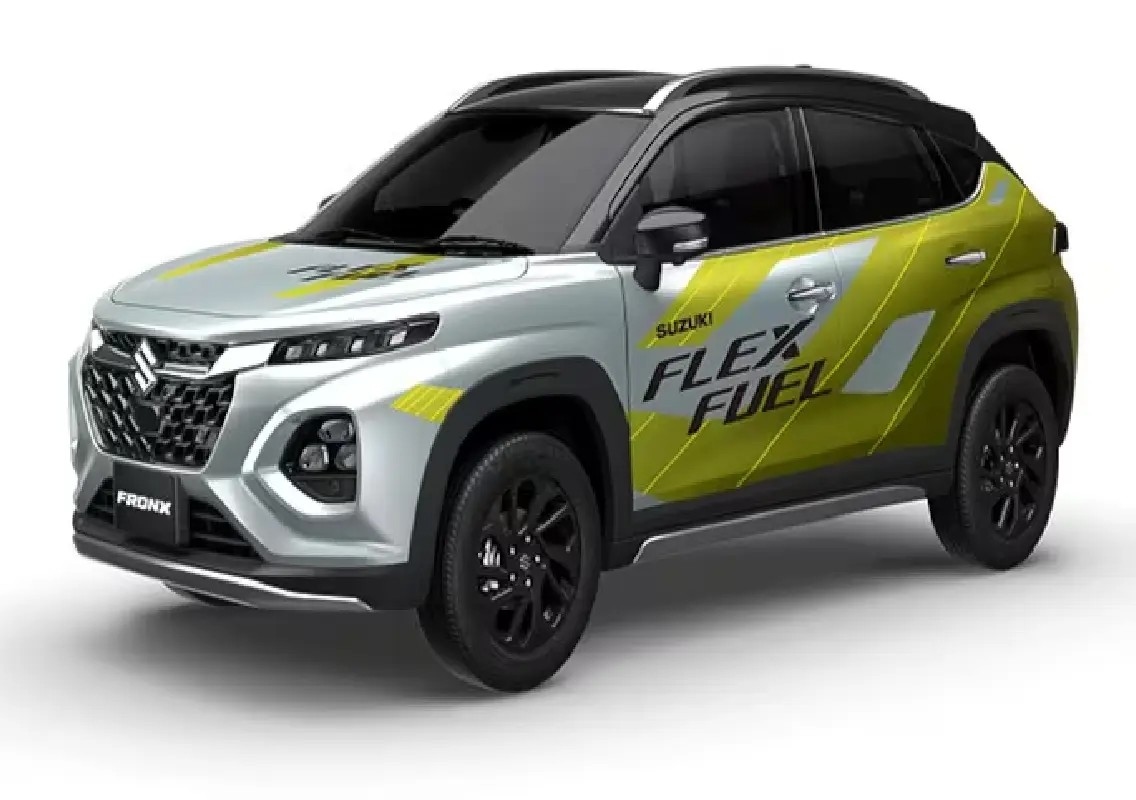
While the company has not officially disclosed the name of the model, reports suggest that flex-fuel versions of WagonR and Fronx are among the likely candidates.
E100 fuel technology to enter passenger vehicle segment
The move follows recent amendments by the Ministry of Road Transport and Highways to vehicle testing and certification regulations, allowing approval for E100-compatible vehicles.
The regulatory changes are expected to enable automobile manufacturers to commercially introduce pure ethanol-powered vehicles in India.
Officials believe the development could help accelerate adoption of alternative fuel technologies and strengthen efforts to diversify the automotive sector beyond conventional petrol and diesel engines.
Industry observers view the launch as a major milestone in India’s clean mobility roadmap.
Government highlights benefits of ethanol fuel
During an event in Nagpur, Gadkari reiterated the government’s objective of reducing dependence on imported fuel.
He stated that approximately 87 per cent of India’s petrol, diesel and gas requirements are currently met through imports, leading to significant foreign exchange expenditure and environmental concerns.
The minister also highlighted the economic advantages associated with ethanol-based mobility, stating that ethanol costs approximately Rs 65 per litre and could reduce vehicle operating expenses compared to conventional fuels.
According to him, increased use of ethanol may also support domestic agriculture by creating stronger demand for ethanol production.
WagonR and Fronx among possible contenders
Although the company has not confirmed the specific model, the WagonR and Fronx have emerged as potential candidates based on previous showcases of flex-fuel technology.
The WagonR flex-fuel prototype had earlier been displayed at automotive exhibitions, while ethanol-compatible versions of the Fronx have also been showcased internationally.
Officials indicated that such vehicles require modifications to fuel system components and engine calibration to safely support high concentrations of ethanol.
Unlike conventional petrol vehicles, E100-compatible models require specially engineered fuel injectors, seals, fuel lines and internal components because ethanol is comparatively more corrosive and absorbs moisture more easily.
Wider industry shift towards flex-fuel technology
Gadkari also stated that several automobile manufacturers are actively working on flex-fuel products for India.
Companies including Toyota, Tata Motors, Mahindra & Mahindra and Suzuki are reportedly developing compatible products.
India currently follows the E20 fuel standard, which contains up to 20 per cent ethanol blending. Authorities are also examining the possibility of gradually increasing ethanol blending levels to E22, E25 and E30 in the future.
The proposed launch of an E100-compatible vehicle is expected to play a significant role in preparing the country’s automotive ecosystem for a larger shift towards sustainable and alternative fuel solutions.