









New Delhi: Maruti Suzuki India Ltd (MSIL) is targeting sales of close to 10 lakh green vehicles in FY27, raising its earlier expectation of 8–9 lakh units as it expands its CNG portfolio and introduces automatic transmission options in popular CNG models.
The country’s largest carmaker is counting on rising crude oil prices and growing demand for lower running costs to support sales of vehicles powered by CNG, along with hybrid and electric models.
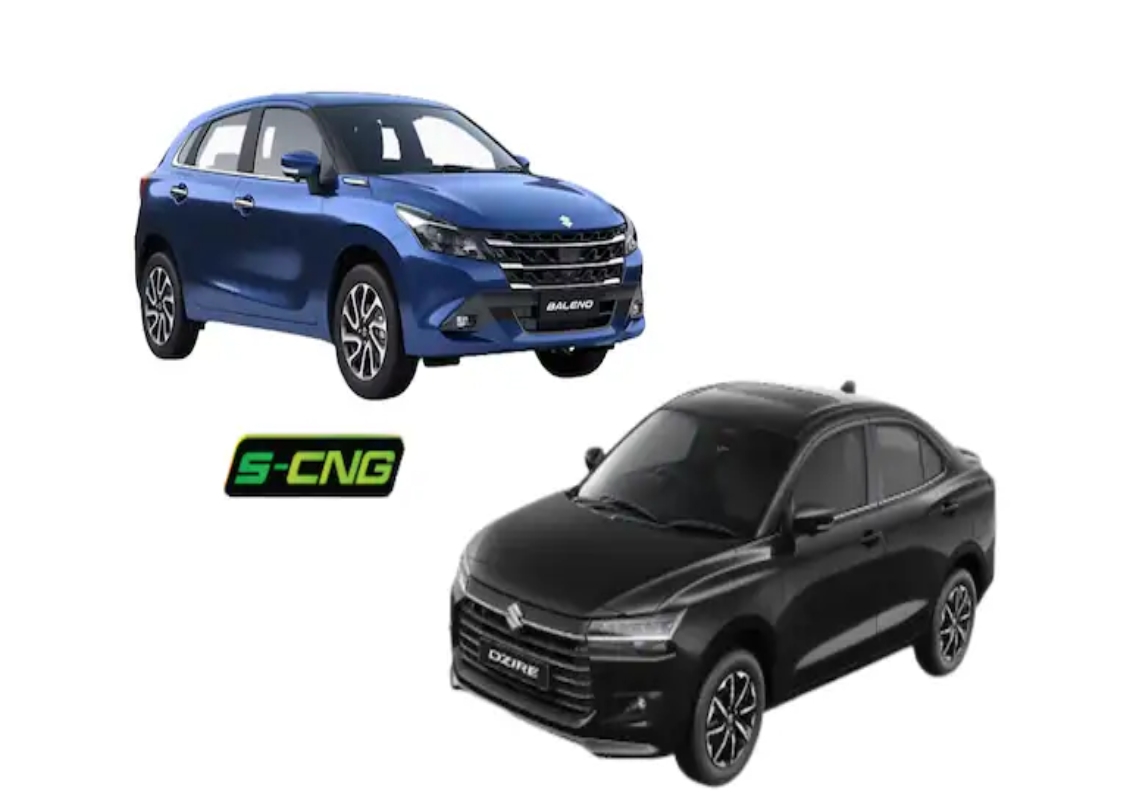
The company has also launched automatic S-CNG versions of the Swift, Dzire and Baleno, addressing a gap in its CNG range where customers had to choose between the lower running costs of CNG and the convenience of an automatic transmission.
Maruti raises green vehicle sales target
Maruti Suzuki had earlier expected to sell around 8 lakh to 9 lakh green vehicles during the current financial year. The company has now raised that projection to close to 10 lakh units.
Partho Banerjee, Senior Executive Officer, Marketing & Sales at Maruti Suzuki, said the new automatic CNG models would help the company reach customers who previously preferred petrol-automatic cars because automatic transmission was not available with the CNG variants.
The company is selling CNG, hybrid and electric vehicles under its broader green vehicle strategy.
Banerjee also pointed to crude oil prices of around USD 100 per barrel as a factor that could encourage consumers to consider vehicles with lower running costs.
CNG remains central to Maruti’s strategy
CNG continues to be a major part of Maruti Suzuki’s green vehicle portfolio.
The company currently holds around 70% market share in the CNG passenger vehicle segment, according to the report. It is selling close to 80,000 CNG vehicles every month.
Within Maruti Suzuki’s own vehicle portfolio, CNG penetration is around 43%, giving the company a substantial existing customer base for expanding sales.
The company believes demand for CNG vehicles is already strong. However, production capacity has emerged as an important constraint.
Banerjee said the company currently has CNG vehicle production capacity of around 18,000 units a month and is managing allocations based partly on waiting periods.
As production capacity increases, Maruti expects to be able to supply more CNG vehicles to the market.
Automatic CNG models target new buyers
The introduction of automatic transmission is one of the key changes in Maruti Suzuki’s CNG strategy.
Until now, customers seeking an automatic car and those looking for a CNG powertrain often had to compromise on one of the two requirements in Maruti’s portfolio.
The company has now addressed this with automatic S-CNG variants of three high-volume models — the Swift, Dzire and Baleno.
Maruti believes the combination could attract buyers who want the running-cost benefits associated with CNG but do not want to switch to a manual gearbox.
The company has described these customers as buyers looking for convenience without giving up the cost advantages of CNG.
Prices of new CNG automatic models
The new automatic S-CNG models have been introduced at the following introductory ex-showroom prices:
| Model | Introductory ex-showroom price |
|---|---|
| Maruti Suzuki Swift S-CNG Automatic | Rs 7.92 lakh |
| Maruti Suzuki Baleno S-CNG Automatic | Rs 8.32 lakh |
| Maruti Suzuki Dzire S-CNG Automatic | Rs 8.53 lakh |
Maruti Suzuki has also claimed that the Dzire automatic S-CNG delivers a fuel efficiency of 36.47 km/kg, making it, according to the company, India’s most fuel-efficient sedan.
The stated prices are introductory ex-showroom prices and may differ from the final on-road cost depending on location, taxes, insurance and other charges.
Supply remains a key challenge
While Maruti Suzuki expects the new models to expand the addressable market for CNG vehicles, the company has acknowledged that increasing supply will be important for achieving higher sales.
With monthly CNG sales already around 80,000 units, the company needs to expand production capacity to meet additional demand.
The company currently has around 18,000 units a month of CNG production capacity in the context cited by Banerjee, and increasing supply could determine how quickly it can raise CNG volumes.
Banerjee also indicated that Maruti could potentially increase CNG’s share within its green vehicle portfolio towards 50%, although achieving that during the current financial year would depend on supply availability.
Crude prices could influence demand
The company’s higher sales target also comes against a backdrop of elevated crude oil prices.
Petrol prices and the overall cost of running a vehicle remain important considerations for Indian car buyers. CNG vehicles can offer lower fuel costs in many markets, although the actual savings depend on local CNG and petrol prices, vehicle usage and availability of refuelling infrastructure.
Maruti is therefore expecting market conditions to support demand for alternative fuel vehicles.
However, the company’s 10-lakh target covers CNG, hybrid and electric vehicles, rather than CNG models alone.
Maruti expands its green vehicle portfolio
The latest CNG automatic launches form part of Maruti Suzuki’s broader effort to increase its presence across lower-emission vehicle technologies.
The company is combining its established CNG portfolio with hybrid technology and electric vehicles as it responds to changing consumer preferences and the industry’s transition towards cleaner powertrains.
For Maruti, CNG provides an existing high-volume business, while hybrid and electric models offer additional pathways for the company’s longer-term product strategy.
The expansion of automatic CNG options also allows the company to target customers who may previously have ruled out CNG because they preferred automatic transmissions.
What it means for Maruti Suzuki
Maruti Suzuki’s revised target of close to 10 lakh green vehicle sales in FY27 reflects its expectation that CNG, hybrid and electric models will account for a significant part of its vehicle sales.
The immediate focus is on expanding the CNG customer base through automatic versions of the Swift, Dzire and Baleno.
However, achieving the target will depend not only on customer demand but also on Maruti’s ability to increase CNG production and manage supplies.
With the company already selling around 80,000 CNG vehicles a month and holding approximately 70% of India’s CNG passenger vehicle market, the next phase of its strategy will depend heavily on how quickly it can expand supply while introducing more green vehicle options.