


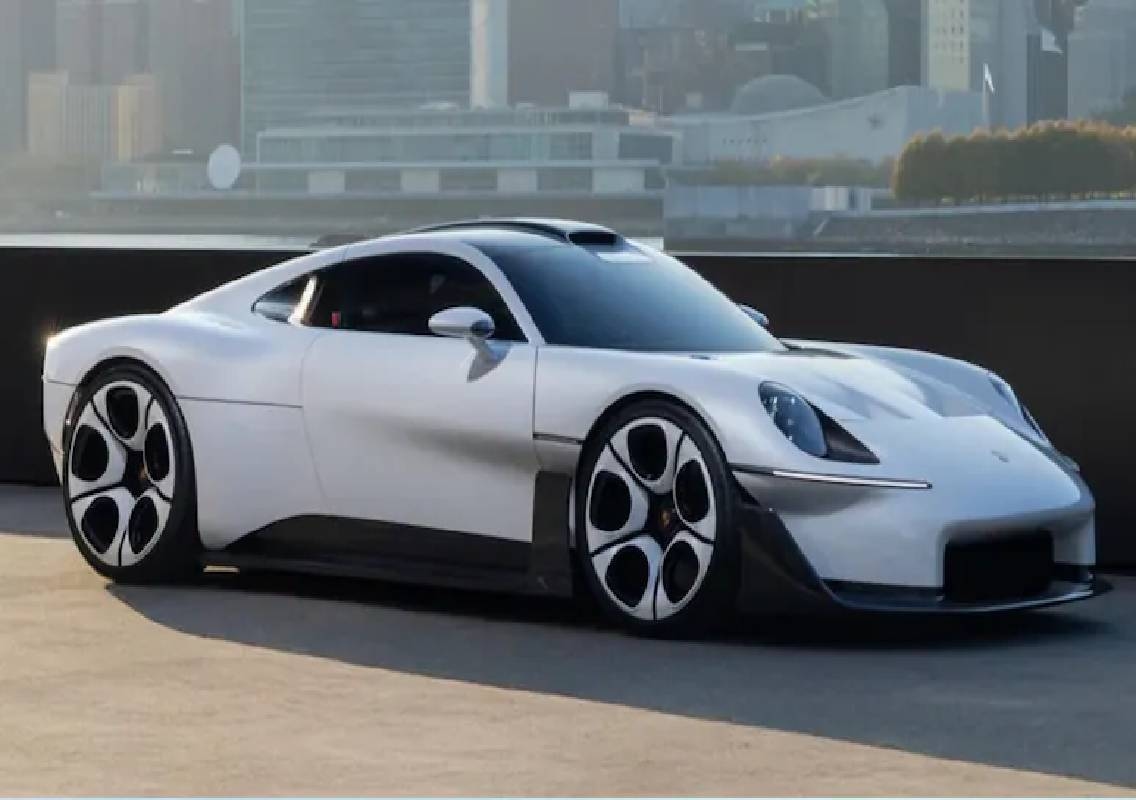


New York: Porsche has unveiled the Mission S concept, offering a first look at a future mid-engined supercar that will sit above the iconic 911 in its model lineup. Revealed on October 15, 2026, the concept showcases the German luxury carmaker’s evolving design direction and its plans to introduce a permanent addition to its high-performance sports car range.
The Mission S is not intended to be a one-off hypercar. Porsche says it previews a new mid-engined supercar platform that will become a regular part of its portfolio, marking an important step in the company’s future product strategy.
The concept also brings together design elements inspired by several historic Porsche models, while exploring a more driver-focused cabin with a combination of analogue controls and digital technology.
Porsche Mission S: Exterior design inspired by heritage
The Mission S features a low front end, rounded headlights and slim LED daytime running lights. Its raised front fenders, described as torpedo-style fenders, sit higher than the bonnet and are designed to help drivers judge the position of the front wheels and the edges of the car.
A large air intake at the front of the roof and sculpted side panels contribute to the concept’s distinctive appearance. The sloping roofline flows towards the rear, where the car features narrow split tail-lights, an integrated active rear wing, a large diffuser and a cooling fan above the engine bay.
The design draws inspiration from Porsche’s motorsport and sports car history. The roofline takes cues from the Porsche 959, while the rear bodywork references the 911 GT1. The wheels feature a telephone-dial design inspired by the Porsche 928.
The rear cooling arrangement also recalls the Porsche 917, a historic racing car. These references combine the brand’s established design identity with a contemporary interpretation of a mid-engined performance car.
Tobias Sühlmann, head of Style Porsche, explained that the raised fenders serve a functional purpose in addition to shaping the car’s appearance. The design follows the principle that form and function should work together, helping drivers better judge the car’s dimensions from behind the steering wheel.
The active rear wing can retract when it is not required, integrating aerodynamic functionality into the overall design.
Cabin combines analogue controls and digital technology
The Mission S interior draws inspiration from classic Porsche sports cars, including the 550 Spyder and the 356. Two connecting lines extend across the dashboard and doors, creating a continuous visual theme throughout the cabin.
The interior uses a white, grey and red colour scheme, while the seats feature an integrated seatbelt buckle in the centre panel.
Behind the steering wheel are five round instruments, including an analogue rev counter. Digital displays sit behind the instruments, with layouts that can change according to the selected driving mode.
Porsche has retained physical buttons and switches for key functions instead of relying entirely on touchscreen controls. Push-pull controls provide access to driving and comfort settings, while a redesigned Sport Chrono element combines analogue styling with digital functionality.
One of the concept’s most distinctive cabin features is the absence of a permanently installed central touchscreen or a dedicated passenger display. Instead, Porsche has incorporated a retractable smartphone holder compatible with Apple MagSafe technology.
The smartphone can be used for navigation and other information, while the My Porsche app allows users to customise the digital designs displayed on the instrument cluster. This approach places greater emphasis on the driving experience while offering flexibility through connected technology.
New mid-engined platform planned for production
The Mission S previews Porsche’s plans for a new super sports car positioned above the 911. According to the company, the future model is intended to become a permanent and versatile addition to its range rather than a limited-production vehicle.
The concept forms part of Porsche’s broader effort to develop its design identity while building on its engineering and motorsport heritage.
However, the company has not disclosed complete technical specifications for the production model, including confirmed engine details, power output, performance figures, pricing or a launch timeline.
The Mission S should therefore be viewed as a preview of the brand’s future direction rather than a fully specified production car. Further details about the final vehicle are expected as development progresses.
With its mid-engined layout, heritage-inspired exterior and driver-focused interior, the Mission S signals Porsche’s intention to expand its sports car offering beyond the 911 while retaining the design characteristics associated with the brand.