







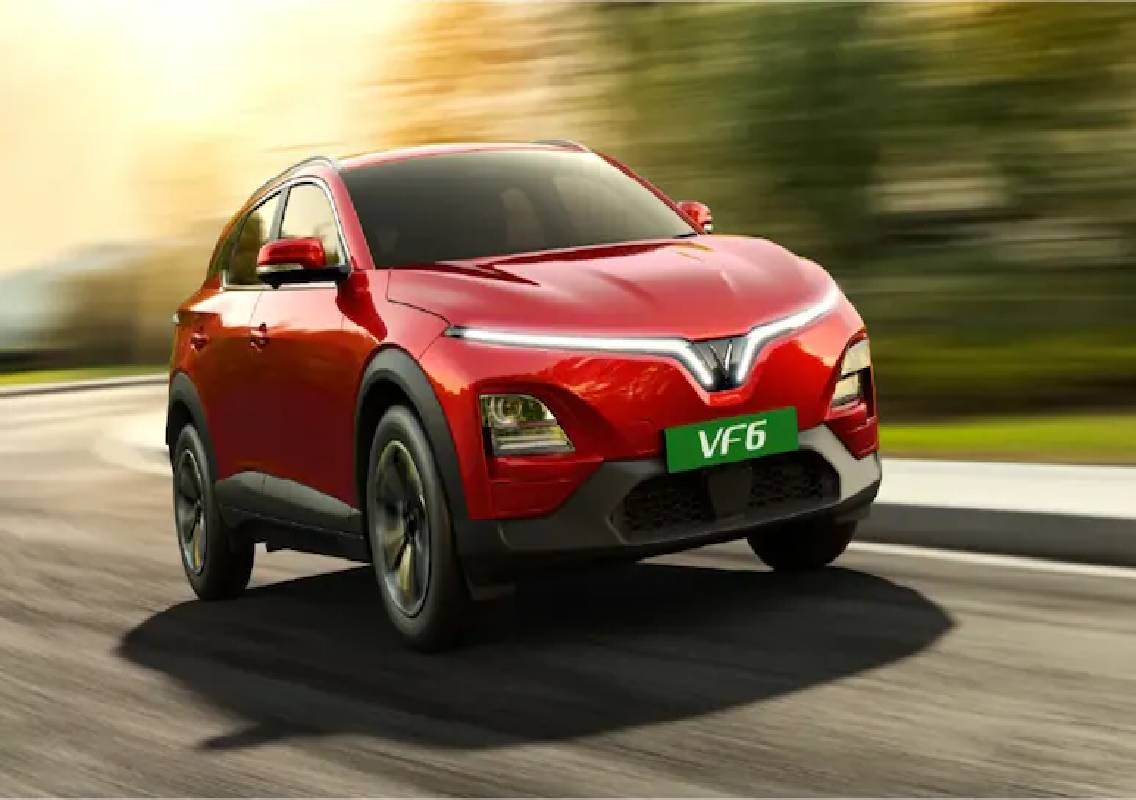


The clarification comes after a Reuters report said the Vietnamese electric vehicle manufacturer had temporarily paused work on local manufacturing programmes for three EV models while reassessing costs. The report had raised questions about VinFast’s localisation strategy in India, particularly for the VF3, VF6 and VF7.
VinFast, however, has maintained that the VF6 and VF7 currently sold in India remain unaffected and will continue to be assembled using completely knocked down (CKD) kits at its Tamil Nadu plant.
VF6 and VF7 assembly to continue
VinFast said there has been no change to its plans for the VF6 and VF7 models available in the Indian market. Both electric SUVs are assembled locally at the company’s Thoothukudi facility using CKD kits.
Under the CKD system, vehicles are brought into the country as separate components and assembled at the local manufacturing facility. The company’s latest clarification therefore indicates that customers in India will continue to have access to locally assembled VF6 and VF7 models.
The clarification is significant because the Reuters report had stated that VinFast instructed suppliers to temporarily stop activities connected with three programmes, including the VF3, VF6 and VF7, as the company reassessed development and sourcing costs.
VinFast did not separately address every programme mentioned in the Reuters report but stressed that its existing India operations for the VF6 and VF7 have not been suspended.
VinFast maintains focus on India
VinFast has described India as an important market in its long-term business and manufacturing strategy. The company said it has carried out market research and customer clinics to understand the requirements of Indian consumers.
Feedback from these activities has been used to make adjustments to its products and future plans for the Indian market. VinFast has also indicated that it wants to move beyond simply bringing existing global products to India and is looking at developing EVs specifically suited to Indian buyers.
The company is also targeting higher levels of local content as it expands its operations. It has been engaging with Indian suppliers and has conducted supplier conferences involving more than 300 Indian suppliers to explore opportunities for local sourcing and deeper integration into the domestic automotive ecosystem.
Cost reassessment raises questions over future localisation
The controversy stems from VinFast’s efforts to establish a larger manufacturing and supplier network in India.
According to Reuters, a July memo sent to suppliers instructed them to temporarily put development work related to the VF3, VF6 and VF7 on hold. Suppliers were also asked to provide details of investments already made on the projects, including expenditure on tooling, engineering and materials.
The reported pause was linked to difficulties in meeting targeted costs for locally developed and sourced components. Localising production was expected to help VinFast reduce its reliance on imported parts and eventually make its electric vehicles more competitive on price.
However, the latest clarification from VinFast makes a distinction between its current CKD assembly operations and its broader plans for local development and sourcing.
Thoothukudi plant remains important
VinFast opened its first manufacturing facility outside Vietnam in Tamil Nadu as part of its expansion strategy. The company had pledged an investment of up to $2 billion for its India operations and positioned the country as a potential manufacturing base for markets across South Asia, the Middle East and Africa.
The Thoothukudi facility initially has an annual production capacity of 50,000 vehicles, with the potential to scale capacity to 1.5 lakh units depending on market demand.
The company has also received approval for the second phase of its plant expansion, which it says will help increase manufacturing capacity and support its long-term investment plans in India.
VinFast entered the Indian market in 2025 with the VF6 and VF7 electric SUVs. The company is now looking to strengthen its presence by focusing on products tailored to Indian customers and increasing local content.
What the clarification means for Indian buyers
For existing and prospective VF6 and VF7 buyers, VinFast’s latest statement provides reassurance that the current assembly operations in India will continue.
The company has not indicated any immediate disruption to the assembly of the two electric SUVs. At the same time, questions remain over the timeline and structure of some of its future localisation programmes following the reported pause in development work.
VinFast’s latest position suggests that the company continues to view India as a strategic market, even as it reassesses the costs involved in developing and sourcing components locally.
The focus now is likely to be on improving localisation, strengthening the domestic supplier base and developing EVs that are specifically suited to Indian customers. For VinFast, maintaining production of its current models while refining its long-term manufacturing strategy could be crucial as competition intensifies in India’s rapidly growing electric vehicle market.